
Skip to Content
MilliporeSigma

112151

2,4-Dichloroaniline

99%

Synonym(s):

2,4-Dichlorophenylamine, 4-Chloro-2-chloroaniline

Sign In to View Organizational & Contract Pricing

Select a Size

5 G

$37.57

100 G

$56.61

500 G

$121.50

$37.57

List Price$44.20Save 15%

Estimated to ship TODAYDetails


Ships Every 4 weeks

About This Item

Linear Formula:
Cl2C6H3NH2
CAS Number:
Molecular Weight:
162.02
Beilstein/REAXYS Number:
386422
EC Number:
MDL number:
UNSPSC Code:
12352100
eCl@ss:
39050667
PubChem Substance ID:
NACRES:
NA.22

Skip To

Technical Service
Need help? Our team of experienced scientists is here for you.
Let Us Assist

Quality Level

assay

99%

form

solid

bp

245 °C (lit.)

mp

59-62 °C (lit.)

functional group

chloro

SMILES string

Nc1ccc(Cl)cc1Cl

InChI

1S/C6H5Cl2N/c7-4-1-2-6(9)5(8)3-4/h1-3H,9H2

InChI key

KQCMTOWTPBNWDB-UHFFFAOYSA-N

Looking for similar products? Visit Product Comparison Guide

Related Categories

Compare Similar Items

View Full Comparison

Show Differences

1 of 4

This Item
477222C22415658820
assay

99%

assay

≥99%

assay

98%

assay

97%

Quality Level

200

Quality Level

100

Quality Level

200

Quality Level

100

form

solid

form

crystals, powder, solid

form

chips, crystals or chunks

form

solid

mp

59-62 °C (lit.)

mp

67-70 °C (lit.)

mp

67-70 °C (lit.)

mp

83-87 °C

bp

245 °C (lit.)

bp

232 °C (lit.)

bp

232 °C (lit.)

bp

-

functional group

chloro

functional group

chloro

functional group

-

functional group

bromo, chloro

General description

2,4-Dichloroaniline is degraded by Delftia tsuruhatensis H1[1]. 2,4-Dichloroaniline metabolite is detected in human urine sample by GC/MS and high performance liquid chromatograph[2].

Application

  • Phototransformation of 2,4-Dichloroaniline: Studies the phototransformation of 2,4-Dichloroaniline in freshwater environments, crucial for understanding its environmental degradation and implications for water purification technologies (Ucun et al., 2021).
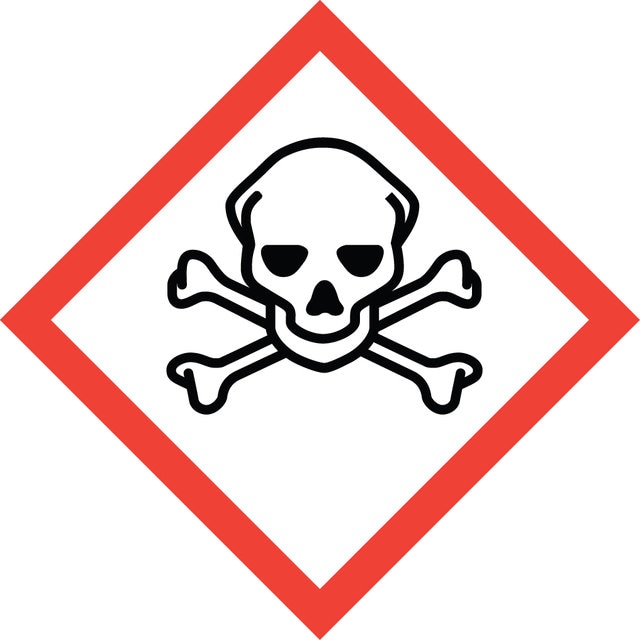
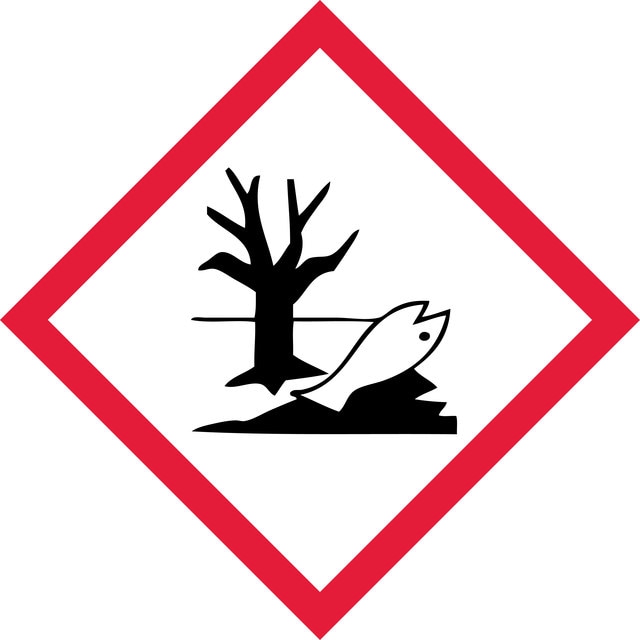
pictograms

Skull and crossbonesEnvironment

signalword

Danger

Hazard Classifications

Acute Tox. 3 Dermal - Acute Tox. 3 Inhalation - Acute Tox. 4 Oral - Aquatic Chronic 2

Storage Class

6.1A - Combustible acute toxic Cat. 1 and 2 / very toxic hazardous materials

wgk_germany

WGK 3

flash_point_f

239.0 °F - closed cup

flash_point_c

115 °C - closed cup


Choose from one of the most recent versions:

Certificates of Analysis (COA)

Lot/Batch Number

Don't see the Right Version?

If you require a particular version, you can look up a specific certificate by the Lot or Batch number.

Already Own This Product?

Find documentation for the products that you have recently purchased in the Document Library.

Visit the Document Library

N Sundaraganesan et al.
Spectrochimica acta. Part A, Molecular and biomolecular spectroscopy, 73(1), 11-19 (2009-03-03)
In this work, the experimental and theoretical study on molecular structure and vibrational spectra of 2,4-dichloroaniline (2,4-DCA) were studied. The Fourier transform infrared (gas phase) and Fourier transform Raman spectra of 2,4-DCA were recorded. The molecular geometry and vibrational frequencies
Michael Kilemade et al.
Aquatic toxicology (Amsterdam, Netherlands), 60(1-2), 43-59 (2002-09-03)
Little or no work has been carried out on primary cell cultures in terms of cellular proliferation and toxicity studies. Cell proliferation represents one of the most relevant cellular functions. Anti-PCNA antibodies have aroused considerable interest recently as potential immunocytochemical
J Struijs et al.
Applied and environmental microbiology, 55(10), 2527-2531 (1989-10-01)
We investigated the transformation of 2,4-dichloroaniline (2,4-DiCA) and 3,4-DiCA to monochloroanilines (CA) in anaerobic pond sediment. Dechlorination of 3,4-DiCA to 3-CA started after a lag period of 3 weeks and was complete after an additional 5 weeks. Although 2,4-DiCA disappeared
I Leguen et al.
Aquatic toxicology (Amsterdam, Netherlands), 53(3-4), 201-214 (2001-06-16)
Their functions and localisation can expose gill cells to volume changes. To maintain their vital functions, these gill cells must regulate their own volume after cellular swelling or shrinkage. Recently, we showed that rainbow trout pavement gill cells in primary
J P Cravedi et al.
Aquatic toxicology (Amsterdam, Netherlands), 53(3-4), 159-172 (2001-06-16)
The metabolism and distribution of 2,4-dichloroaniline (2,4-DCA), prochloraz and 4-n-nonylphenol diethoxylate (NP2EO) were investigated in vivo and in vitro in rainbow trout (Oncorhynchus mykiss). Each compound was administered p.o. (10 mg/kg wet weight) and urine was collected during 48 h

Questions

Reviews

No rating value

Active Filters

Our team of scientists has experience in all areas of research including Life Science, Material Science, Chemical Synthesis, Chromatography, Analytical and many others.

Contact Technical Service