


If this product has an expiration or retest date, it will be shown on the Certificate of Analysis (COA, CofA). If there is no retest or expiration date listed on the product's COA, we do not have suitable stability data to determine a shelf life. For these products, the only date on the COA will be the release date; a retest, expiration, or use-by-date will not be displayed.
For all products, we recommend handling per defined conditions as printed in our product literature and website product descriptions. We recommend that products should be routinely inspected by customers to ensure they perform as expected.
For products without retest or expiration dates, our standard warranty of 1 year from the date of shipment is applicable.
For more information, please refer to the Product Dating Information document: https://www.sigmaaldrich.com/deepweb/assets/sigmaaldrich/marketing/global/documents/418/501/product-dating-information-06-25-mk.pdf
11590

4,4′-Azobis(4-cyanovaleric acid)
≥98.0% (T)
Synonym(s):
4,4′-Azobis(4-cyanopentanoic acid), ABCVA, ACVA
About This Item
Skip To
Quality Level
assay
≥98.0% (T)
form
solid
impurities
≤1% water
mp
118-125 °C (dec.) (lit.)
functional group
azo
carboxylic acid
nitrile
storage temp.
2-8°C
SMILES string
CC(CCC(O)=O)(\N=N\C(C)(CCC(O)=O)C#N)C#N
InChI
1S/C12H16N4O4/c1-11(7-13,5-3-9(17)18)15-16-12(2,8-14)6-4-10(19)20/h3-6H2,1-2H3,(H,17,18)(H,19,20)/b16-15+
InChI key
VFXXTYGQYWRHJP-FOCLMDBBSA-N
Looking for similar products? Visit Product Comparison Guide
Related Categories
1 of 4
This Item | 742481 | 76854 | 96738 |
|---|---|---|---|
| assay ≥98.0% (T) | assay ≥98.0% (HPLC) | assay ≥97.0% (H-NMR) | assay ≥95.0% (H-NMR) |
| Quality Level 200 | Quality Level 100 | Quality Level 100 | Quality Level 100 |
| storage temp. 2-8°C | storage temp. - | storage temp. - | storage temp. - |
| mp 118-125 °C (dec.) (lit.) | mp 208-212 °C | mp - | mp - |
| form solid | form powder | form crystals | form crystals |
| impurities ≤1% water | impurities ≤1.0% water | impurities - | impurities - |
signalword
Danger
hcodes
Hazard Classifications
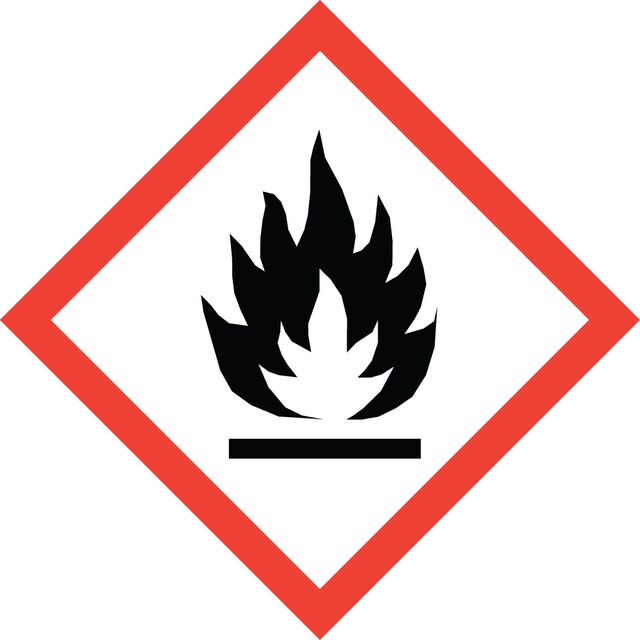
Self-react. D
Storage Class
5.2 - Organic peroxides and self-reacting hazardous materials
wgk_germany
WGK 2
flash_point_f
Not applicable
flash_point_c
Not applicable
ppe
Eyeshields, Gloves, type P3 (EN 143) respirator cartridges
Choose from one of the most recent versions:
Already Own This Product?
Find documentation for the products that you have recently purchased in the Document Library.
Articles
An article regarding common FAQs for initiators and stabilizers.
Micro review of reversible addition/fragmentation chain transfer (RAFT) polymerization.
Protocols
We present an article about RAFT, or Reversible Addition/Fragmentation Chain Transfer, which is a form of living radical polymerization.
Polymerization via ATRP procedures demonstrated by Prof. Dave Haddleton's research group at the University of Warwick.
We presents an article featuring procedures that describe polymerization of methyl methacrylate and vinyl acetate homopolymers and a block copolymer as performed by researchers at CSIRO.
-
How can I determine the shelf life / expiration / retest date of this product?
1 answer-
Helpful?
-
-
How is shipping temperature determined? And how is it related to the product storage temperature?
1 answer-
Products may be shipped at a different temperature than the recommended long-term storage temperature. If the product quality is sensitive to short-term exposure to conditions other than the recommended long-term storage, it will be shipped on wet or dry-ice. If the product quality is NOT affected by short-term exposure to conditions other than the recommended long-term storage, it will be shipped at ambient temperature. As shipping routes are configured for minimum transit times, shipping at ambient temperature helps control shipping costs for our customers. For more information, please refer to the Storage and Transport Conditions document: https://www.sigmaaldrich.com/deepweb/assets/sigmaaldrich/marketing/global/documents/316/622/storage-transport-conditions-mk.pdf
Helpful?
-
Active Filters
Our team of scientists has experience in all areas of research including Life Science, Material Science, Chemical Synthesis, Chromatography, Analytical and many others.
Contact Technical Service