Skip to Content
MilliporeSigma

W296708

Pyroligneous acid

natural (US)

Synonym(s):

Wood vinegar

Sign In to View Organizational & Contract Pricing

Select a Size

Pricing and availability is not currently available.

About This Item

CAS Number:
FEMA Number:
2967
EC Number:
MDL number:
UNSPSC Code:
12164502
NACRES:
NA.21
Organoleptic:
woody; smoky
Grade:
natural (US)
Food allergen:
no known allergens

Skip To

Technical Service
Need help? Our team of experienced scientists is here for you.
Let Us Assist

grade

natural (US)

Quality Level

reg. compliance

FDA 21 CFR 172.515

refractive index

n20/D 1.374 (lit.)

bp

99 °C (lit.)

density

1.08 g/mL at 25 °C (lit.)

application(s)

flavors and fragrances

documentation

see Safety & Documentation for available documents

food allergen

no known allergens

organoleptic

woody; smoky

Related Categories

Compare Similar Items

View Full Comparison

Show Differences

1 of 4

This Item
W267112W222208W200611
organoleptic

woody; smoky

organoleptic

clove; leathery; smoky; spicy; smoky; sweet; vanilla

organoleptic

butter; acidic; rancid

organoleptic

sour

grade

natural (US)

grade

FG, Halal, Kosher, natural

grade

FG, Kosher

grade

FG, Fragrance grade, Halal, Kosher

food allergen

no known allergens

food allergen

no known allergens

food allergen

no known allergens

food allergen

no known allergens

documentation

see Safety & Documentation for available documents

documentation

see Safety & Documentation for available documents

documentation

see Safety & Documentation for available documents

documentation

see Safety & Documentation for available documents

bp

99 °C (lit.)

bp

221-222 °C (lit.)

bp

153-154 °C (lit.)

bp

117-118 °C (lit.)

density

1.08 g/mL at 25 °C (lit.)

density

1.092 g/mL at 25 °C (lit.)

density

0.95 g/mL at 25 °C (lit.)

density

1.04 g/mL at 25 °C (lit.)

General description

Pyroligneous acid is commonly used as a source of wood smoke flavoring and also to inhibit microbial growth.[1]

Disclaimer

For R&D or non-EU Food use. Not for retail sale.

Related product

Product No.
Description
Pricing

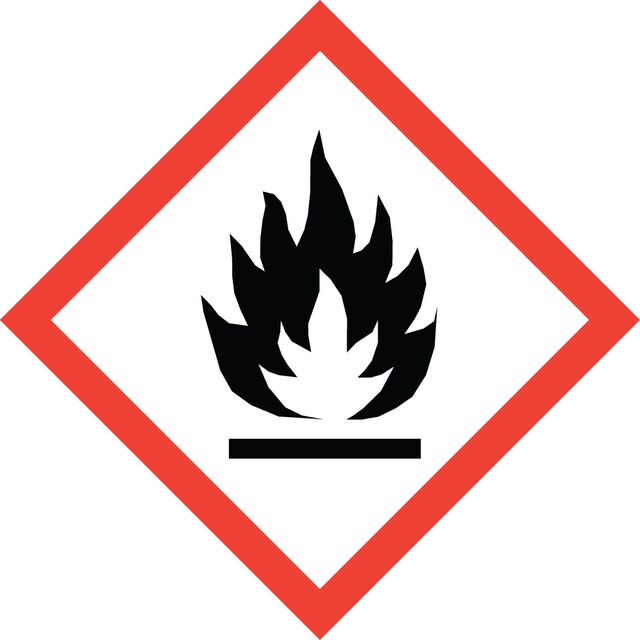
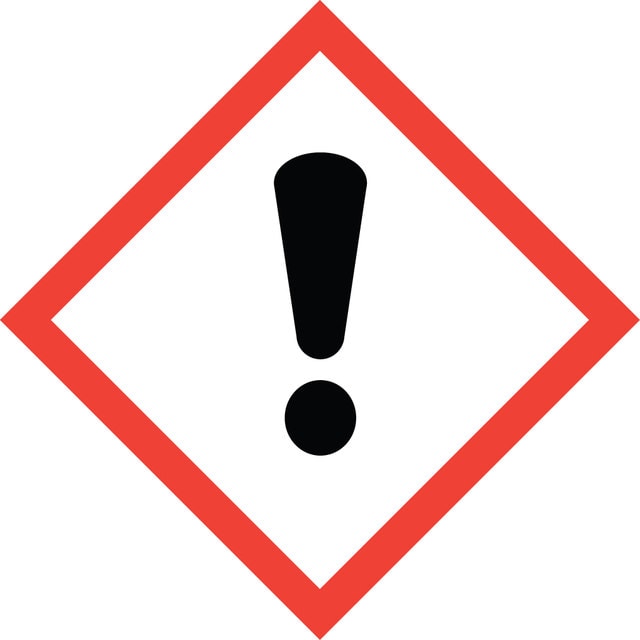
pictograms

FlameExclamation mark

signalword

Warning

Hazard Classifications

Acute Tox. 4 Dermal - Eye Irrit. 2 - Flam. Liq. 3 - Skin Irrit. 2 - STOT SE 3

target_organs

Respiratory system

Storage Class

3 - Flammable liquids

wgk_germany

WGK 3

flash_point_f

111.2 °F - closed cup

flash_point_c

44 °C - closed cup

ppe

Eyeshields, Faceshields, Gloves, type ABEK (EN14387) respirator filter


Choose from one of the most recent versions:

Certificates of Analysis (COA)

Lot/Batch Number

Don't see the Right Version?

If you require a particular version, you can look up a specific certificate by the Lot or Batch number.

Already Own This Product?

Find documentation for the products that you have recently purchased in the Document Library.

Visit the Document Library

Y Takahara et al.
[Nihon koshu eisei zasshi] Japanese journal of public health, 41(2), 147-156 (1994-02-01)
The effectiveness of wood vinegars was studied for controlling offensive odors from piggery wastes. Odorant chemicals and the sense of odors from piggery farm, covered with polyvinylchloride film to prevent the volatilization to ambient air, were measured in both laboratory
Y Takahara et al.
[Nihon koshu eisei zasshi] Japanese journal of public health, 40(1), 29-38 (1993-01-01)
The effectiveness of wood vinegars reducing or eliminating offensive odors, associated with cattle breeding, was studied. The results obtained were as follows: 1. Analyzed were 0.7-7.2% acetic acid and 0.5-1.8% methyl alcohol as main contents. 2. Gaseous odorants, such as
Encyclopedia of Food and Color Additives, 3, 2392-2396 (1997)
A Mekbungwan et al.
Anatomia, histologia, embryologia, 33(1), 11-16 (2004-03-19)
To investigate the effects of dietary charcoal powder including wood vinegar compound liquid (CWVC, 4 : 1) on intestinal villus histology, piglets were fed 0, 1, 3 and 5% dietary CWVC diets for 30 days. Feed intake and body weight
Yong-Seok Choi et al.
Bioresource technology, 120, 328-331 (2012-07-12)
In the present study, wood vinegar was used to extract chromium, copper, and arsenic from chromated copper arsenate (CCA)-treated wood. The extraction efficiency for CCA elements was evaluated using various concentrations of wood vinegar, extraction temperatures, and extraction periods. The

Questions

Reviews

No rating value

Active Filters

Our team of scientists has experience in all areas of research including Life Science, Material Science, Chemical Synthesis, Chromatography, Analytical and many others.

Contact Technical Service