Skip to Content
MilliporeSigma

D174602

2,5-Dimethylphenol

≥99%

Synonym(s):

2-Hydroxy-p-xylene, p-Xylenol

Sign In to View Organizational & Contract Pricing

Select a Size

D174602-5G

$59.00

D174602-100G

$68.50

$59.00


Available to ship TODAYDetails


Request a Bulk Order

About This Item

Linear Formula:
(CH3)2C6H3OH
CAS Number:
Molecular Weight:
122.16
Beilstein/REAXYS Number:
1099260
EC Number:
MDL number:
UNSPSC Code:
12352100
PubChem Substance ID:
NACRES:
NA.22

Skip To

Technical Service
Need help? Our team of experienced scientists is here for you.
Let Us Assist

Quality Level

assay

≥99%

form

crystals

bp

212 °C (lit.)

mp

75-77 °C

SMILES string

Cc1ccc(C)c(O)c1

InChI

1S/C8H10O/c1-6-3-4-7(2)8(9)5-6/h3-5,9H,1-2H3

InChI key

NKTOLZVEWDHZMU-UHFFFAOYSA-N

Looking for similar products? Visit Product Comparison Guide

Compare Similar Items

View Full Comparison

Show Differences

1 of 4

This Item
D175005144134D174009
assay

≥99%

assay

99%

assay

≥99%

assay

98%

Quality Level

100

Quality Level

100

Quality Level

100

Quality Level

100

mp

75-77 °C

mp

43-45 °C (lit.)

mp

61-64 °C (lit.), 65-66 °C

mp

70-73 °C (lit.)

form

crystals

form

powder

form

fibers, solid

form

crystals

bp

212 °C (lit.)

bp

203 °C (lit.)

bp

222 °C (lit.)

bp

217 °C (lit.)

Application

  • Fungicide Metabolism in Wheat: 2,5-Dimethylphenol, a breakdown product of the strobilurin fungicide mandestrobin, was studied for its metabolic pathways in wheat. This research provides insights into the environmental behavior and safety of pesticide residues in agricultural products (Ando et al., 2018).
  • Tropospheric Chemistry of Dimethylphenols: The study on the mass accommodation coefficients and Henry′s law constants of 2,5-dimethylphenol underlines its significant atmospheric reactions, contributing to a better understanding of air quality and environmental chemistry (Diévart et al., 2006).
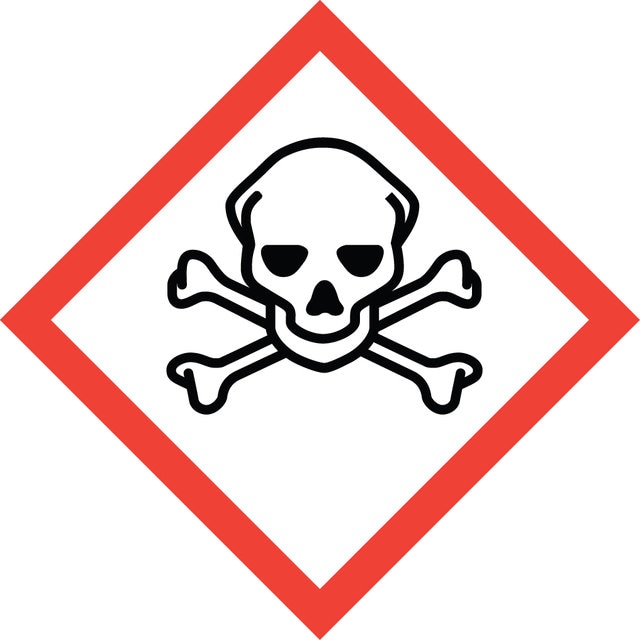
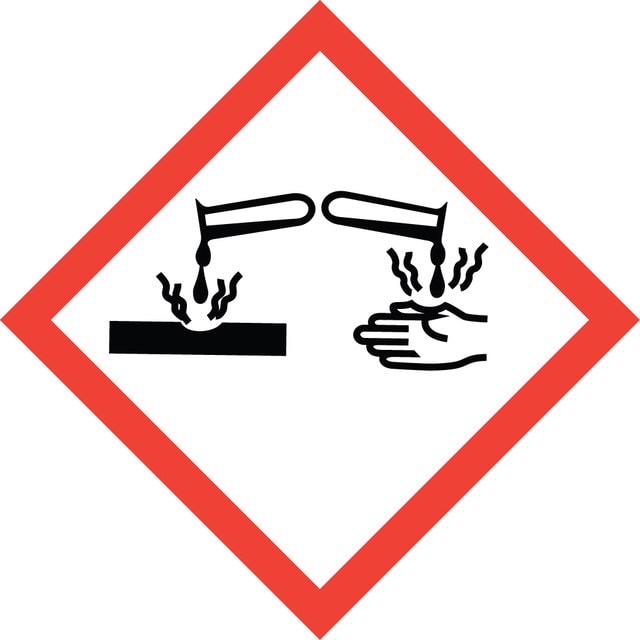
signalword

Danger

Hazard Classifications

Acute Tox. 3 Dermal - Acute Tox. 3 Oral - Aquatic Chronic 2 - Eye Dam. 1 - Skin Corr. 1B

Storage Class

6.1A - Combustible acute toxic Cat. 1 and 2 / very toxic hazardous materials

wgk_germany

WGK 3

ppe

Eyeshields, Faceshields, Gloves, type P3 (EN 143) respirator cartridges


Choose from one of the most recent versions:

Certificates of Analysis (COA)

Lot/Batch Number

Don't see the Right Version?

If you require a particular version, you can look up a specific certificate by the Lot or Batch number.

Already Own This Product?

Find documentation for the products that you have recently purchased in the Document Library.

Visit the Document Library

C C Yeo et al.
Microbiology (Reading, England), 143 ( Pt 8), 2833-2840 (1997-08-01)
Pseudomonas alcaligenes NCIB 9867 (strain P25X), which grows on 2,5-xylenol and harbours the plasmid RP4, was mated with a plasmid-free derivative of Pseudomonas putida NCIB 9869, strain RA713, which cannot grow on 2,5-xylenol. Some RA713 transconjugants, initially selected on 2,5-xylenol
Chew Chieng Yeo et al.
Gene, 312, 239-248 (2003-08-12)
Pseudomonas alcaligenes NCIMB 9867 (strain P25X) produces isofunctional enzymes of the gentisate pathway that enables the degradation of xylenols and cresols via gentisate. Previous reports had indicated that one set of enzymes is constitutively expressed whereas the other set is
Separation and determination of phenol, alpha-naphthol m- and p-, o-cresols and 2,5-xylenol, and catechol in the urine after mixed exposure to phenol, naphthalene, cresols, and xylenols.
G Bieniek et al.
British journal of industrial medicine, 43(8), 570-571 (1986-08-01)
G Bieniek
Occupational and environmental medicine, 51(5), 354-356 (1994-05-01)
Phenol (87.3 mg/l), p-cresol (58.6 mg/l), o-cresol (76.9 mg/l), and 2,5-xylenol (36.7 mg/l) were detected in the urine of workers employed in the distillation of the high temperature phenolic fraction of tar (carbolic oil). The concentrations of these compounds in
B J Day et al.
Research communications in chemical pathology and pharmacology, 76(1), 117-120 (1992-04-01)
Pulmonary metabolites of p-xylene, p-methylbenzyl alcohol (PMBA) and 2,5-dimethylphenol (DMP), were employed to investigate the divergent effects of p-xylene on pulmonary and hepatic metabolism. Rats were given PMBA, DMP, or 10% cremophore (control) ip daily for 3 days, and effects

Questions

Reviews

No rating value

Active Filters

Our team of scientists has experience in all areas of research including Life Science, Material Science, Chemical Synthesis, Chromatography, Analytical and many others.

Contact Technical Service