


There is no enantiomeric purity specified for this product. However, by definition this material is the R enantiomer. The optical rotation for each lot is determined and reported in the Certificate of Analysis.
Fortfahren mit
807796

Cyrene™
BioRenewable, DMF and NMP Substitute
Nachhaltigkeitsmerkmale
Synonym(e):
Dihydrolevoglucosenon
Anmelden zur Ansicht der Organisations- und Vertragspreise.
Größe auswählen
Ansicht ändern
| Größe/SKU | Verfügbarkeit | Preis |
|---|
Über diesen Artikel
Empirische Formel (Hill-System):
C6H8O3
CAS-Nummer:
Molekulargewicht:
128.13
MDL number:
UNSPSC Code:
12191600
NACRES:
NA.21
Assay:
≥98.5% (GC)
Technique(s):
: 0.5% using Water (by Karl Fischer)
Bp:
227 °C
Preise und Verfügbarkeit sind derzeit nicht verfügbar.
Technischer Dienst
Benötigen Sie Hilfe? Unser Team von erfahrenen Wissenschaftlern ist für Sie da.
Unterstützung erhaltenQuality Segment
assay
≥98.5% (GC)
form
liquid
sustainability
Sustainability features
technique(s)
: 0.5% using Water (by Karl Fischer)
bp
227 °C
mp
-18 °C
density
1.25 g/mL
SMILES string
O1[C@H]2OC[C@@H]1CCC2=O
InChI
1S/C6H8O3/c7-5-2-1-4-3-8-6(5)9-4/h4,6H,1-3H2/t4-,6+/m0/s1
InChI key
WHIRALQRTSITMI-UJURSFKZSA-N
General description
Wir verpflichten uns, Ihnen umweltfreundlichere Alternativprodukte anzubieten, die mit einem oder mehreren der „12 Prinzipien der Grünen Chemie“ im Einklang stehen. Dieses Produkt ist bioerneuerbar und steht im Einklang mit den Prinzipien ″Sicherere Lösungsmittel und Hilfsmittel″ sowie ″Nutzung nachwachsender Rohstoffe″. Weitere Informationen finden Sie hier.
Cyren ist ein dipolares, für die End-of-Life-Entsorgung sicheres Lösungsmittel auf biologischer Basis, das zu CO2 und H2O zerfällt. Es ist eine aprotische Alternative zu gängigen Lösungsmitteln, die bedenklich in Hinblick auf den Umweltschutz sind. Cyren™ ist eine Alternative für viele Lösungsmittel, die von REACH als besonders besorgniserregender Stoff (SVHC) eingestuft wurden, z. B. N-Methylpyrrolidon (NMP) und N,N-Dimethylformamid (DMF).
Cyren ist ein dipolares, für die End-of-Life-Entsorgung sicheres Lösungsmittel auf biologischer Basis, das zu CO2 und H2O zerfällt. Es ist eine aprotische Alternative zu gängigen Lösungsmitteln, die bedenklich in Hinblick auf den Umweltschutz sind. Cyren™ ist eine Alternative für viele Lösungsmittel, die von REACH als besonders besorgniserregender Stoff (SVHC) eingestuft wurden, z. B. N-Methylpyrrolidon (NMP) und N,N-Dimethylformamid (DMF).
Application
Cyren wird in einigen Anwendung als Ersatz für NMP und/oder DMS eingesetzt. Zum Beispiel hat sich gezeigt, dass es die Dispergierfähigkeit von NMP für Graphenlösungen aufgrund seiner optimalen Polarität und hohen Viskosität übertrifft und größere und weniger fehlerhafte Graphenflocken bildet. Nachstehend finden Sie weitere Verwendungszwecke für Cyren™.
1. Dispergierfähigkeit für Graphenlösungen.
2. Alternative zu DMF bei der Synthese von metallorganischen Gerüsten.
3. Organische Synthese:
1. Dispergierfähigkeit für Graphenlösungen.
2. Alternative zu DMF bei der Synthese von metallorganischen Gerüsten.
3. Organische Synthese:
- Anellierung vom Cacchi-Typ
- Harnstoffsynthese
- HATU-Amid-Kupplung – Ersatz für DMF bei Amid- und Dipeptid-Kupplungsreaktionen.
- Suzuki-Miyaura-Kupplungsreaktion.
- Sonogashira-Kupplungsreaktion.
- Reduktive Homokupplungsreaktion.
Features and Benefits
- Zu 99 % biologisch abbaubar innerhalb von 28 Tagen
- Während der Verbrennung stabil
- Nicht mutagen oder genotoxisch
- ASTM D6866 – Standardprüfverfahren zur Bestimmung des Gehalts auf biologischer Basis
- Aus dem nachwachsenden Rohstoff Cellulose hergestellt
Legal Information
CYRENE is a trademark of Circa Group Pvt Ltd
1 of 1
Dieser Artikel | |||
|---|---|---|---|
| description BioRenewable, DMF and NMP Substitute | description BioRenewable, DMF and NMP Substitute | description BioRenewable, DMF and NMP Substitute | description puriss. p.a., ACS reagent, anhydrous, ≥99.0% (T) |
| Quality Level 100 | Quality Level - | Quality Level - | Quality Level 200 |
| technique(s) : 0.5% using Water (by Karl Fischer) | technique(s) - | technique(s) - | technique(s) - |
| assay ≥98.5% (GC) | assay - | assay - | assay ≥99.0% (T) |
| form liquid | form liquid | form liquid | form powder or crystals |
| bp 227 °C | bp - | bp - | bp - |
| density 1.25 g/mL | density 1.153 g/mL | density 1.141 g/mL | density - |
Signalwort
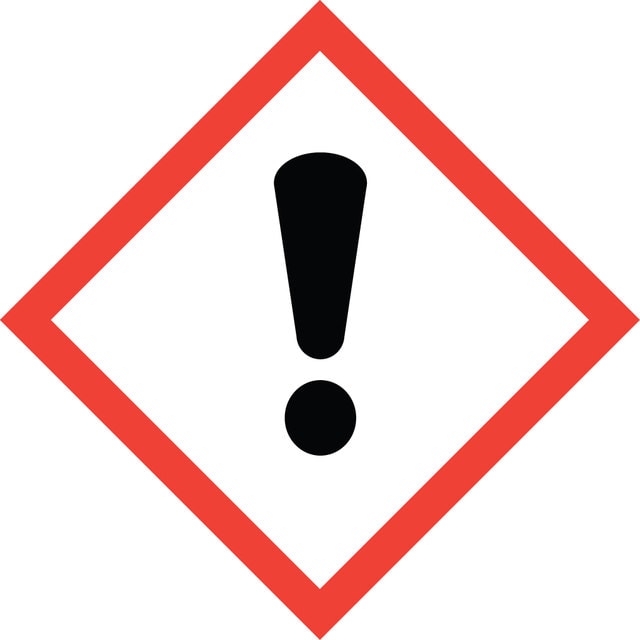
Warning
Gefahrencodes
Sicherheitshinweise
Hazard Classifications
Eye Irrit. 2
Lagerklasse
10 - Combustible liquids
Flammpunkt (°F)
226.4 °F - closed cup
Flammpunkt (°C)
108 °C - closed cup
Hier finden Sie alle aktuellen Versionen:
Besitzen Sie dieses Produkt bereits?
In der Dokumentenbibliothek finden Sie die Dokumentation zu den Produkten, die Sie kürzlich erworben haben.
-
What are is the optical enantiomeric purity of this Cyrene?
1 answer-
Helpful?
-
-
How can I determine the shelf life / expiration / retest date of this product?
1 answer-
If this product has an expiration or retest date, it will be shown on the Certificate of Analysis (COA, CofA). If there is no retest or expiration date listed on the product's COA, we do not have suitable stability data to determine a shelf life. For these products, the only date on the COA will be the release date; a retest, expiration, or use-by-date will not be displayed.
For all products, we recommend handling per defined conditions as printed in our product literature and website product descriptions. We recommend that products should be routinely inspected by customers to ensure they perform as expected.
For products without retest or expiration dates, our standard warranty of 1 year from the date of shipment is applicable.
For more information, please refer to the Product Dating Information document: https://www.sigmaaldrich.com/deepweb/assets/sigmaaldrich/marketing/global/documents/418/501/product-dating-information-06-25-mk.pdfHelpful?
-
-
How is shipping temperature determined? And how is it related to the product storage temperature?
1 answer-
Products may be shipped at a different temperature than the recommended long-term storage temperature. If the product quality is sensitive to short-term exposure to conditions other than the recommended long-term storage, it will be shipped on wet or dry-ice. If the product quality is NOT affected by short-term exposure to conditions other than the recommended long-term storage, it will be shipped at ambient temperature. As shipping routes are configured for minimum transit times, shipping at ambient temperature helps control shipping costs for our customers. For more information, please refer to the Storage and Transport Conditions document: https://www.sigmaaldrich.com/deepweb/assets/sigmaaldrich/marketing/global/documents/316/622/storage-transport-conditions-mk.pdf
Helpful?
-
-
Could you provide information on whether Cyrene has any softening or solubilizing effects on ABS and PET-G plastics?
1 answer-
Unfortunately, the compatibility of Cyrene (Dihydrolevoglucosenone) with materials such as ABS and PET-G has not been investigated. This compound is known to dissolve a number of polymeric materials. Please see the link below to review a publication that may be helpful:
https://www.sciencedirect.com/science/article/pii/S2352554121002187Helpful?
-
-
What is the recommended operating temperature for stripping photoresist on Silicon or GaAs semiconductor wafers when using Cyrene?
1 answer-
It is known that research is currently underway in this area and Cyrene™ has shown promise. However, due to the confidential nature of these processes, a specific recommended operating temperature cannot be provided. Nevertheless, it's worth noting that the safe operating temperature of neat Cyrene™ is below 140 °C. It is advisable for the user to conduct additional safety checks and tests for their specific application.
Helpful?
-
-
What is a BioRenewable solvent?
1 answer-
BioRenewable solvents are sourced from renewable and sustainable biobased materials, such as soy/palm oil, wood waste, hay or corn byproducts, etc. It is important to highlight that our BioRenewable products do not compete with food production.
Helpful?
-
-
Do BioRenewable solvents have a similar quality to petroleum-based solvents?
1 answer-
BioRenewable solvents can have the same or higher purity level compared to traditional solvents. These solvents are free of the many byproducts of petroleum manufacturing, such as benzene, aldehydes, and ethers.
Helpful?
-
-
Why should you use BioRenewable solvents?
1 answer-
You will contribute to create a sustainable world, significantly lowering environmental impact. Biorenewable solvents also decrease petroleum sources dependency, have higher recovery rates, and/or are safer for handling and disposal.
Helpful?
-