[Skip to Content](https://www.sigmaaldrich.com#main-content)
[](https://www.sigmaaldrich.com/US/en)
Products
Cart0
USEN
Products
ProductsApplicationsServicesResourcesSupport
[Login / Register](https://www.sigmaaldrich.com/oidc-sign-in)
[Order Lookup](https://www.sigmaaldrich.com/US/en/order-lookup)
[Quick Order](https://www.sigmaaldrich.com/US/en/quick-order)
Cart0
[Home](https://www.sigmaaldrich.com/US/en)[Applications](https://www.sigmaaldrich.com/US/en/applications)[Analytical Chemistry](https://www.sigmaaldrich.com/US/en/applications/analytical-chemistry)Calibration, qualification and validation
# Calibration, qualification and validation

Reference materials are substances or materials with established properties that are used for example for calibration, method validation, and quality control in chemical analysis. The intended use varies by reference material quality grades as shown below. They ensure the accuracy and reliability of measurements by providing a standard against which other materials can be compared. Additionally, the use of RMs facilitates the comparability of results from different laboratories around the globe, promoting consistency and confidence in analytical outcomes. With various quality grades available, selecting the appropriate one for your specific application can be challenging. This article aims to guide you in determining the best quality grade for your needs.
Strict requirements and procedures must be followed for the manufacturing of reference materials, as they differ from standard lab reagents in terms of certification and data traceability. These requirements are defined in the ISO 17034 and related ISO standards for reference material producers.
Depending on the method requirements or product availability, reference materials are commonly used in three different formats ‒ neat, solution, or matrix.
Reference materials hold an essential role in analytical workflows. They are necessary for various analytical techniques, including chromatography, spectroscopy, and physical property measurements, and are utilized across all analytical sectors, such as pharmaceuticals, clinical testing, environmental monitoring, food and beverage, and cosmetics.
* * *
## Related products
Slide 1 of 8
1 of 2
[
\
Supelco
\
C-161
\
C-Peptide solution](https://www.sigmaaldrich.com/US/en/product/cerillian/c161)
Quick View
[
\
Supelco
\
C-180
\
7-Hydroxy cannabidiol (7-OH-CBD) solution](https://www.sigmaaldrich.com/US/en/product/cerillian/c180)
Quick View
[
\
Supelco
\
79601
\
2-Hydroxy-3-(1*H*-1,2,4-triazol-1-yl)propanoic acid](https://www.sigmaaldrich.com/US/en/product/supelco/79601)
Quick View
[
\
Supelco
\
19041
\
Elemental Impurities according to ICH Q3D oral, Standard 1](https://www.sigmaaldrich.com/US/en/product/sial/19041)
Quick View
[
\
Supelco
\
95636
\
Extractables and Leachables Screening Standard for LC](https://www.sigmaaldrich.com/US/en/product/sial/95636)
Quick View
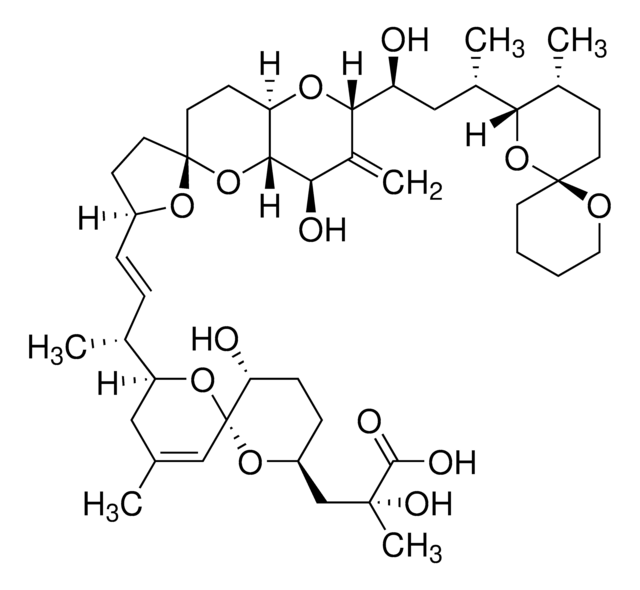
[
\
Supelco
\
39302
\
Okadaic acid solution](https://www.sigmaaldrich.com/US/en/product/sial/39302)
Quick View
[
\
NIST8671
\
NISTmAb, Humanized IgG1k Monoclonal Antibody](https://www.sigmaaldrich.com/US/en/product/sial/nist8671)
Quick View
[
\
Supelco
\
PHR1084
\
Metformin hydrochloride](https://www.sigmaaldrich.com/US/en/product/sial/phr1084)
Quick View
* * *
## Featured categories
[](https://www.sigmaaldrich.com/US/en/products/analytical-chemistry/reference-materials/karl-fischer-standards)
[Karl fischer standards](https://www.sigmaaldrich.com/US/en/products/analytical-chemistry/reference-materials/karl-fischer-standards)
Easily determine water content in solids, liquids, gases using Aquastar® reagents. Accurate results with our water standards for titrations.
[Shop products](https://www.sigmaaldrich.com/US/en/products/analytical-chemistry/reference-materials/karl-fischer-standards)
[](https://www.sigmaaldrich.com/US/en/products/analytical-chemistry/reference-materials/amino-acid-peptide-and-protein-standards)
[Amino acid, peptide and protein standards](https://www.sigmaaldrich.com/US/en/products/analytical-chemistry/reference-materials/amino-acid-peptide-and-protein-standards)
Our analytical standards of proteins, peptides, and amino acids offer accurate and reliable results in biomarker discovery, pharmaceutical research, clinical and diagnostic testing, top-down and bottom-up proteomics, and food authentication applications.
[Shop products](https://www.sigmaaldrich.com/US/en/products/analytical-chemistry/reference-materials/amino-acid-peptide-and-protein-standards)
[](https://www.sigmaaldrich.com/US/en/products/analytical-chemistry/reference-materials/microbiology-standards)
[Microbiology standards](https://www.sigmaaldrich.com/US/en/products/analytical-chemistry/reference-materials/microbiology-standards)
Explore certified microbiological reference materials: VITROIDS™, LENTICULE® discs by Supelco®. Ideal for food, beverage, cannabis testing. Order today.
[Shop products](https://www.sigmaaldrich.com/US/en/products/analytical-chemistry/reference-materials/microbiology-standards)
* * *
Overview
Related articles and protocols
Support
## Reference material quality grades and their features
There are key differences between the definitions of reference materials according to ISO and those established by regulatory bodies in the pharmaceutical industry. To illustrate these distinctions, we present two parallel hierarchical pyramids representing the quality grades of reference materials. The ISO quality grades align with the International System of Units (SI), whereas the pharmaceutical quality grades are based on definitions specific to the pharmaceutical sector described in the different Pharmacopoeias. This visualization highlights the unique frameworks each system employs to ensure the quality and reliability of reference materials in their respective contexts.

__Figure 1.__Quality hierarchy structure for Reference Materials and pharmaceutical standards
__National metrology standard__ (e.g. NIST, JRC, NMI Australia)
__Compendial standard__ (e.g. USP, EP, BP, JP, IP)
- Issued by an authorized body
- Considered to provide the highest level of accuracy and traceability
__Certified reference material__ (CRM) (ISO 17034, 17025)
- Considered to provide the highest level of accuracy, uncertainty, and traceability to an SI unit of measurement
- Manufactured by an accredited Reference Material Producer
__Reference material__ (RM) (ISO 17034)
- Fulfilling ISO requirements which are less demanding than for CRMs
- Manufactured by an accredited Reference Material Producer
__Analytical standard__ (ISO 9001)
- Certificate of Analysis available
- Level of certification varies
__Reagent grade / research chemical__
- May come with a Certificate of Analysis
- Are not characterized for use as reference materials
The main characteristics that describe and differentiate the different quality grades are traceability, stability, homogeneity and measurement uncertainty. These will be further evaluated in the following.
## Traceability
A crucial concept for understanding reference materials is metrological traceability. This means that a value of a material is traceable to a universally accepted basic unit through an unbroken chain of measurements.
__Certified Reference Materials (CRMs)__ must be traceable to the SI. They may be manufactured by metrology institutes or by commercial reference material producers holding an ISO 17034 accreditation. Note that for the lower quality grades in Fig. 1 (the left), i.e. Reference Material (RM) and Analytical Standard, metrological traceability is not a mandatory requirement.
In __pharmaceutical quality control__, specific compendial (e.g. USP, EP, BP etc.) primary standards have to be used. Alternatively, secondary or working standards that are traceable to the corresponding pharmacopoeia primary standards are also accepted. While SI traceability is not a requirement, Compendial primary or secondary standards should only be used for the monograph methods they are intended for, as defined by the Pharmacopeia.
## Homogeneity
Homogeneity is a critical property for reference materials (RMs) that ensures consistency across all units of the material. According to ISO 17034, Reference Material Producers must specify acceptance criteria for and assess the homogeneity of their materials. This includes appropriate sampling procedures to evaluate homogeneity. A homogeneous reference material allows users to obtain reliable and comparable results regardless of which unit they use, which is essential for quality control and method validation purposes.
## Stability
Stability is another crucial characteristic of reference materials. Ensuring stability means that the properties of the reference material remain constant over time within specified limits. This is vital because users need to trust that the certified values of the RM remain valid throughout its shelf life. This is typically ensured by monitoring samples at different temperatures (accelerated stress test, real-time stability test).
## Measurement uncertainties
Understanding and quantifying uncertainties is fundamental in the production and use of certified reference materials (CRMs). Reference Material Producers must establish uncertainty budgets and estimate uncertainties of certified value(s). This is crucial because every measurement has some degree of uncertainty, and users of the reference material need to know the range in which the true value is likely to lie.
All factors that contribute to the overall uncertainty must be considered which can be visualized in a so-called fish bone or Ishikawa diagram.
Properly evaluated and reported uncertainties allow users to make informed decisions about the suitability of the reference material for their specific application.
By addressing these 4 key aspects –traceability, homogeneity, stability, and uncertainties - reference material producers ensure the quality and reliability of their products, which in turn supports accurate and comparable measurements across various fields in science and industry.
The table below shows the different quality grades of reference materials and their requirements with respect to the parameters just described. As mentioned before, __certified reference materials__ (CRMs) need to be traceable to the SI and the values must be reported with an uncertainty; stability and homogeneity has to be assessed. The requirements for the __RM (Reference Material)__ quality grade are less demanding, where metrological traceability and uncertainty are not mandatory. The same is true for __Analytical Standards__ while stability and homogeneity tests are optional.
For __Pharmaceutical primary standards__, values are also reported with no uncertainty and the values are not traceable to SI.
Notably, our __PHR products__ are traceable not only to the current lot of one or more pharmacopoeia primary standards, but also carry an SI-traceable certified value. Thus, these products are also certified reference materials in addition to pharma secondary standards and can be used in either the ISO or the pharmacopoeia context.
ParametersAnalytical
StandardRMCRMPharma
Secondary
(PHR)Pharma
Primary
Standards
(USP, EP, BP)
Purity and Identity✓✓✓✓✓
Stability✓✓✓✓✓
Homogeneity✓✓✓✓✓
Uncertainty ✓✓
Metrological Traceability ✓✓
Traceability to Pharmacopoeia
(USP, EP, BP) ✓✓
ISO 9001 ISO Pharmacopoeia
Note: 'Uncertainty' - Only for SI traceable value.
## Selection of reference materials based on testing purpose
Selecting the right reference material is of critical importance to a laboratory's testing application, as results are only as accurate as the reference used. The choice of reference material depends on the specific task at hand.
For __instrument qualification and calibration__, traceability must be established and maintained. The selected reference material plays a key role in helping a laboratory achieve this.
In __daily routine system suitability testing__, it is important to choose a reference material that is practical, easy to use, reliable, and cost-effective for everyday use.
In __method validation__, the use of highly accurate and precise reference materials is essential to demonstrate that the laboratory method is fit for purpose.
For __identity confirmation__ and screening purposes, key attributes of reference materials include proven authenticity and well-established identity.
In applications involving __quantitation, assays, or stability assessments__, stable and accurate Certified Reference Materials (CRMs) are required.
Type of TestUse of Ref. Mat.ExamplesRequirements of Ref. Material
Instrument Qualification/Calibration Establish system performance
Measurement accuracyAnnual Qualifications
Routine balance calibrationsTraceable
Routine Calibration/System SuitabilityDaily/Weekly
System/Method Specific
Establish Routine Performance
Pre-use balance calibrations
System performance checks for LC-UV/MS; GC-FID...Qualify as suitable for use
Method ValidationAccuracy
Precision
Specificity & Interferences
LOD/LOQ & LinearityPharma QC; Environmental testing
Standards of the analyte(s), interferences, impuritiesAccurate
Traceable
IdentityComparison of unknown to knownIncoming raw materials in pharma, food, etc.
Screening testsAuthenticity
Content or AssayQuantitation of analytesPesticide/toxin limits
Pharma QC - API contentCertifies content
Traceable
Stability AssessmentMonitor product stabilityPharma QCStable, homogenous
Internal Quality ControlMethod accuracyRoutine quantitation of analytes - pharma/pesticides/diagnosticsCertified content
Traceable
Table 1.Use for reference materials - type of test
The selection of Fit-for-purpose reference materials can depend on several factors such as regulatory requirements, availability, type of testing application, level of accuracy, and sample matrix.
| | | | | | | | |
|------------------------------------------|--------------|---------------------|-----|----|---------------------|------------------|-------------------------------------------|
| Type of Test | NMI Standard | Compendial Standard | CRM | RM | Analytical Standard | Reagent Chemical | Attribute |
| Intrument Qualification / Calibration | ✓ | ✓ | ✓ | | | | Traceability & Accuracy |
| Routine Calibration / System Suitability | ✓ | ✓ | ✓ | ✓ | Maybe | | Qualified Standard (Primary or Secondary) |
| Method Validation | ✓ | ✓ | ✓ | ✓ | | | Accuracy, Precision, Bias |
| Identitiy | ✓ | ✓ | ✓ | ✓ | ✓ | ✓ | Authenticity |
| Content or Assay | ✓ | ✓ | ✓ | ✓ | Maybe | | Qualified Standard |
| Stability Assessment | ✓ | ✓ | ✓ | ✓ | Maybe | | Qualified Standard |
| Internal Quality Control | ✓ | ✓ | ✓ | ✓ | Maybe | | Qualified Standard |
| Regulatory / Accreditation | ✓ | ✓ | ✓ | ✓ | | | Qualified Standard |
Table 2.Fit for purpose guidance in standard selection
## Additional information: Key ISO documents for Reference Material Producers (RMPs)
Below you can find an overview of the relevant ISO documents describing the procedures that must or may be followed by Reference Material Producers accredited under ISO 17034. Our company holds ISO 17034 accreditation at three manufacturing sites globally.
## ISO 17034 - general requirements for the competence of reference material producers
- __Purpose:__ This is the primary normative document specifying the general requirements for the competence and consistent operation of RMPs.
- __Scope:__ It covers all types of reference materials (RMs), including certified reference materials (CRMs).
- __Benefits:__ Implementing ISO 17034 demonstrates a producer's commitment to quality, accuracy, and consistency, building user confidence and meeting regulatory requirements. 17034 has to be followed for accreditation, the other ones are not mandatory but help the RMPs to fulfill ISO 17034.
__ISO Guide 30 - Reference materials — selected terms and definitions__
__Purpose:__ This guide provides essential definitions and terminology for reference materials and their associated concepts, ensuring clear and consistent communication within the field.
__ISO 33401:2024 (Formerly ISO Guide 31__) __- Reference materials — contents of certificates, labels and accompanying documentation__
- __Purpose:__ This document outlines the information that must be included on the certificates and labels for reference materials. This ensures that comprehensive and standardized information about the RM's properties and intended use is provided.
__ISO 33403:2024 (Formerly ISO Guide 33) - Reference materials — requirements and recommendations for use__
- __Purpose:__ This document describes good practice in using reference materials (RMs), and certified reference materials (CRMs) in particular, in measurement processes including the assessment of precision and trueness of measurement methods; quality control; assigning values to materials; calibration and establishing conventional scales.
__ISO 33405:2024 (Formerly ISO Guide 35) - Reference materials — approaches for characterization and assessment of homogeneity and stability__
- __Purpose:__ This guide provides a framework for the processes involved in certifying reference materials, including principles for characterization, homogeneity and stability assessment, and the statistical principles used for assigning certified values and uncertainties.
__ISO 33406:2024 Approaches for the production of reference materials with qualitative properties__
- __Purpose:__ This document provides concepts to the following aspects of the production of reference materials (RMs): the assessment of homogeneity; the assessment of stability and the management of the risks associated with possible stability issues related to the properties of interest; the characterization and value assignment of properties of an RM; the evaluation of uncertainty for certified values; the establishment of the metrological traceability of certified values.
[](https://www.sigmaaldrich.com/documents-search)
[Looking for more specific information?](https://www.sigmaaldrich.com/documents-search)
Visit our document search for data sheets, certificates and technical documentation.
[Find documents](https://www.sigmaaldrich.com/documents-search)
## Related articles
- [Elemental Impurities - Certified Ref. Materials](https://www.sigmaaldrich.com/US/en/technical-documents/technical-article/analytical-chemistry/calibration-qualification-and-validation/elemental-impurities)
Control elemental impurities in drug products with analytical methods and materials to ensure patient safety.
- [Choosing Correct Reference Material Quality Grade](https://www.sigmaaldrich.com/US/en/technical-documents/technical-article/analytical-chemistry/calibration-qualification-and-validation/how-to-choose-the-correct-reference-material-quality-grade)
Reference materials, standards and certified reference materials are critical for analytical testing. We can help you to choose the ideal reference material for your application, whether you are using reference materials for calibration or quantitative analysis.
- [Importance of Volumetric Solution Standardization](https://www.sigmaaldrich.com/US/en/technical-documents/technical-article/analytical-chemistry/calibration-qualification-and-validation/standardizationof-volumetric-solutions)
The titer determination or standardization of a titration solution is essential for accurate and reliable titration results.
- [NMR Reference Standards](https://www.sigmaaldrich.com/US/en/technical-documents/technical-article/analytical-chemistry/calibration-qualification-and-validation/nmr-reference-standards)
NMR reference standards ensure proper instrument performance. Review key operational parameters for these standards such as pw90, sensitivity, resolution and line shape.
- [Certified Reference Materials for ¹⁹F NMR](https://www.sigmaaldrich.com/US/en/technical-documents/technical-article/analytical-chemistry/calibration-qualification-and-validation/the-international-system-of-units)
Introduction of 19F qNMR certified reference materials for complex molecule certification.
- [See All (62)](https://www.sigmaaldrich.com/US/en/search/facet-search?focus=sitecontent&term=facet-search)
## Related protocols
- [FAME Standard for Optimizing GC System Performance](https://www.sigmaaldrich.com/US/en/technical-documents/protocol/analytical-chemistry/calibration-qualification-and-validation/fame-standard-for)
FAME Standard for Optimizing GC System Performance
- [Neonicotinoids](https://www.sigmaaldrich.com/US/en/technical-documents/protocol/analytical-chemistry/calibration-qualification-and-validation/neonicotinoids-bee-pesticides)
Learn more about Neonicotinoids - active substances used in plant protection products to control harmful insects.
- [Fast and Reliable Environmental Analysis of Aldehyde and Ketone Air Pollutants](https://www.sigmaaldrich.com/US/en/technical-documents/protocol/analytical-chemistry/calibration-qualification-and-validation/fast-and-reliable)
Aldehydes and ketones are ubiquitous air pollutants. Along with esters and ethers, they are major components of indoor air pollution and are therefore important for industrial hygiene applications.
- [Analysis of Alkylphenols Using New Internal Standards](https://www.sigmaaldrich.com/US/en/technical-documents/protocol/analytical-chemistry/calibration-qualification-and-validation/analysis-of-alkylphenols)
Alkylphenols are used in various industries like paper manufacturing and pesticide formulations.
- [Allergenic Fragrance Testing – Certified Materials](https://www.sigmaaldrich.com/US/en/technical-documents/protocol/analytical-chemistry/calibration-qualification-and-validation/allergenic-fragrance-testing)
IFRA method introduces new CRMs for allergenic fragrances, analyzed by GC with ionic liquid capillary column for selectivity.
- [See All (62)](https://www.sigmaaldrich.com/US/en/search/facet-search?focus=sitecontent&term=facet-search)
### Find More Articles and Protocols
Enter Keywords
Search
## How can we help?
In case of any questions, please submit a [customer support request](https://www.sigmaaldrich.com/US/en/support/customer-support)
or talk to our customer service team:
Email [custserv@sial.com](mailto:custserv@sial.com)
or call +1 (800) 244-1173
## Additional support
- [Chromatogram search](https://www.sigmaaldrich.com/chromatogram-search)
Use the Chromatogram Search to identify unknown compounds in your sample.
- [Calculators and apps](https://www.sigmaaldrich.com/US/en/support/calculators-and-apps)
Web Toolbox - science research tools and resources for analytical chemistry, life science, chemical synthesis and materials science.
- [Customer support request](https://www.sigmaaldrich.com/US/en/support/customer-support)
Customer support including help with orders, products, accounts, and website technical issues.
- [FAQ](https://maestro.my.site.com/knowledgeportal/s/)
Explore our frequently asked questions for answers to commonly asked questions about our products and services.
[
\
Small change. Smaller footprint.
\
Performance you trust with bio-based solvents.
\
Available now](https://www.sigmaaldrich.com/US/en/campaigns/bio-based-hplc-solvents)
* * *
__Featured Articles__
[Elemental Impurities - Certified Ref. Materials](https://www.sigmaaldrich.com/US/en/technical-documents/technical-article/analytical-chemistry/calibration-qualification-and-validation/elemental-impurities)
Control elemental impurities in drug products with analytical methods and materials to ensure patient safety.
[Choosing Correct Reference Material Quality Grade](https://www.sigmaaldrich.com/US/en/technical-documents/technical-article/analytical-chemistry/calibration-qualification-and-validation/how-to-choose-the-correct-reference-material-quality-grade)
Reference materials, standards and certified reference materials are critical for analytical testing. We can help you to choose the ideal reference material for your application, whether you are using reference materials for calibration or quantitative analysis.
[Importance of Volumetric Solution Standardization](https://www.sigmaaldrich.com/US/en/technical-documents/technical-article/analytical-chemistry/calibration-qualification-and-validation/standardizationof-volumetric-solutions)
The titer determination or standardization of a titration solution is essential for accurate and reliable titration results.
[NMR Reference Standards](https://www.sigmaaldrich.com/US/en/technical-documents/technical-article/analytical-chemistry/calibration-qualification-and-validation/nmr-reference-standards)
NMR reference standards ensure proper instrument performance. Review key operational parameters for these standards such as pw90, sensitivity, resolution and line shape.
Top
__Sign In To Continue__
To continue reading please sign in or create an account.
Sign In__Don't Have An Account?__Register
Support[Customer Support](https://www.sigmaaldrich.com/US/en/support/customer-support)[Contact Us](https://www.sigmaaldrich.com/US/en/collections/offices)[FAQ](https://maestro.my.site.com/knowledgeportal/s/)[Safety Data Sheets (SDS)](https://www.sigmaaldrich.com/US/en/documents-search?tab=sds)[Certificates (COA/COO)](https://www.sigmaaldrich.com/US/en/documents-search?tab=coa)[Quality & Regulatory](https://www.sigmaaldrich.com/US/en/life-science/quality-and-regulatory-management)[Calculators & Apps](https://www.sigmaaldrich.com/US/en/support/calculators-and-apps)[Webinars](https://www.sigmaaldrich.com/US/en/collections/webinars)
Orders[Order Lookup](https://www.sigmaaldrich.com/US/en/order-lookup)[Quick Order](https://www.sigmaaldrich.com/US/en/quick-order)[Custom Products](https://www.sigmaaldrich.com/US/en/services/custom-products)[eCommerce Solutions](https://www.sigmaaldrich.com/US/en/life-science/ecommerce/ecommerce-solutions)
Company[About Us](https://www.sigmaaldrich.com/US/en/life-science/about-us)[Responsibility](https://www.sigmaaldrich.com/US/en/life-science/ssbi)[Events](https://www.sigmaaldrich.com/US/en/collections/events)[Press Releases](https://www.sigmaaldrich.com/US/en/collections/press)[Programs](https://www.sigmaaldrich.com/US/en/life-science/partnership-programs)[Careers](https://careers.merckgroup.com/global/en)[Offices](https://www.sigmaaldrich.com/US/en/collections/offices)
Social Media
[](https://www.linkedin.com/company/merck-life-science)
[](https://x.com/Merck_lifesci)
[](https://www.facebook.com/Merck.lifescience)
[](https://www.instagram.com/mercklifescience/)
[](https://www.youtube.com/@MerckLifeScience/featured)
MilliporeSigma
__Research. Development. Production.__
We are a leading supplier to the global Life Science industry with solutions and services for research, biotechnology development and production, and pharmaceutical drug therapy development and production.
[](https://www.sigmaaldrich.com/US/en)
[Sigma-Aldrich® Solutions](https://www.sigmaaldrich.com/US/en/life-science/sigma-aldrich)[BioReliance® Solutions](https://www.sigmaaldrich.com/US/en/life-science/bioreliance)[Millipore® Solutions](https://www.sigmaaldrich.com/US/en/life-science/millipore)[SAFC® Solutions](https://www.sigmaaldrich.com/US/en/life-science/safc)[Milli-Q® Solutions](https://www.sigmaaldrich.com/US/en/life-science/milliq)[Supelco® Solutions](https://www.sigmaaldrich.com/US/en/life-science/supelco)
© 2026 Merck KGaA, Darmstadt, Germany and/or its affiliates. All Rights Reserved, including Text and Data Mining for AI training and similar technologies.
Reproduction of any materials from the site is strictly forbidden without permission.
[Site Use Terms](https://www.sigmaaldrich.com/US/en/life-science/legal/site-use-terms)|[Privacy Policy](https://www.sigmaaldrich.com/US/en/life-science/legal/privacy-statement)|[General Terms and Conditions of Sale](https://www.sigmaaldrich.com/US/en/life-science/legal/terms-and-conditions)|[Copyright Consent](https://www.sigmaaldrich.com/US/en/life-science/legal/copyright-consent) |[Site Map](https://www.sigmaaldrich.com/US/en/site-map)