


This product includes ethyl cellulose as a stabilizing polymer. The ethyl cellulose may be removed after spin coating using photonic or thermal annealing. For thermal annealing, heat to 300°C for 30 minutes in an oxidizing environment (e.g., ambient air, oxygen, etc.).
900960

Graphene dispersion

Greener Alternative
for spin/spray-coating, photonic annealing
Synonym(s):
Conductive ink, Graphene ink
Sign In to View Organizational & Contract Pricing.
Select a Size
Change View
| Size/SKU | Availability | Price |
|---|---|---|
10 mL | Check Cart for Availability | $382.00 |
About This Item
UNSPSC Code:
12141908
NACRES:
NA.23
Product Name
Graphene ink for spin/spray coating photonically annealable, for spin-coating, spray-coating, photonic annealing
description
Electrodes
Quality Segment
form
dispersion (black)
greener alternative product characteristics
Design for Energy Efficiency
Learn more about the Principles of Green Chemistry.
sustainability
Greener Alternative Product
concentration
1.8-3.0 wt. % solids
resistivity
0.003-0.005 Ω-cm, sample prepared by spin-coating at 2000 rpm/30 s for 5 coats, followed by thermal annealing at 300 °C in air for 30 minutes
particle size
≤3 μm
viscosity
2-8 mPa.s(25 °C) (1000 s-1)
bp
78 °C (ethanol)
density
0.78-0.88 g/mL at 25 °C
greener alternative category
, Enabling
General description
We are committed to bringing you Greener Alternative Products, which adhere to one or more of The 12 Principles of Greener Chemistry. This product belongs to Enabling category of greener alternatives thus aligns with "Design for energy efficency". Graphene inks are highly conductive, low cost and super flexible. Click here for more information.
Application
Spin-coating:
Spin-coating a single layer at 2000-5000 rpm yields a final film thickness of 40-60 nm. To achieve thicker films, multiple layers can be applied without a baking step. This is recommended over using a lower spin speed to maintain film uniformity. This ink should work on almost any substrate.
Electrical performance:
Following a baking step at 300 °C for 30 minutes in air, the spin-coated films exhibit sheet resistance of 300-800 Ω/sq, corresponding to a resistivity of 0.003-0.004 Ω−cm. With 5 coats at 2000 rpm, a 200 nm thick film with a sheet resistance of 160 Ω/sq. is obtained.
General guidelines:
Ethanol is recommended for cleaning up the ink and dried films, as well as dilution. Bath sonication (5-10 minutes) of the ink prior to use is recommended following extended periods of disuse.
Spin-coating a single layer at 2000-5000 rpm yields a final film thickness of 40-60 nm. To achieve thicker films, multiple layers can be applied without a baking step. This is recommended over using a lower spin speed to maintain film uniformity. This ink should work on almost any substrate.
Electrical performance:
Following a baking step at 300 °C for 30 minutes in air, the spin-coated films exhibit sheet resistance of 300-800 Ω/sq, corresponding to a resistivity of 0.003-0.004 Ω−cm. With 5 coats at 2000 rpm, a 200 nm thick film with a sheet resistance of 160 Ω/sq. is obtained.
General guidelines:
Ethanol is recommended for cleaning up the ink and dried films, as well as dilution. Bath sonication (5-10 minutes) of the ink prior to use is recommended following extended periods of disuse.
1 of 1
This Item | |||
|---|---|---|---|
| description for spin-coating, spray-coating, photonic annealing | description for inkjet printing, photonically annealable | description inkjet printable | description screen printable |
| particle size ≤3 μm | particle size ≤3 μm | particle size 80-500 nm (exfoliated graphene flakes) | particle size 500-1500 nm (exfoliated graphene flakes) |
| form dispersion (black) | form liquid | form liquid | form liquid |
| Quality Level 100 | Quality Level 100 | Quality Level 100 | Quality Level 100 |
| greener alternative category , Enabling | greener alternative category , Enabling | greener alternative category , Enabling | greener alternative category |
| sustainability Greener Alternative Product | sustainability Greener Alternative Product | sustainability Greener Alternative Product | sustainability Greener Alternative Product |
| description Electrodes | description Electrodes | description Electrodes | description Electrodes |
Still not finding the right product?
Explore all of our products under Graphene ink for spin/spray coating photonically annealable
signalword
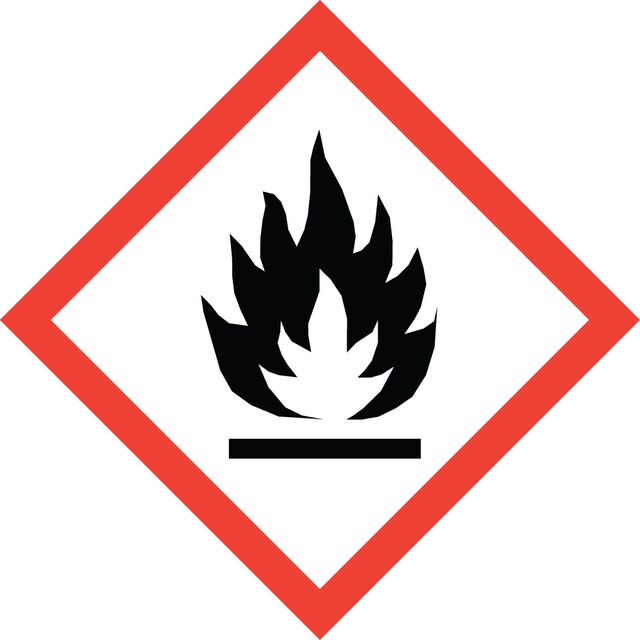
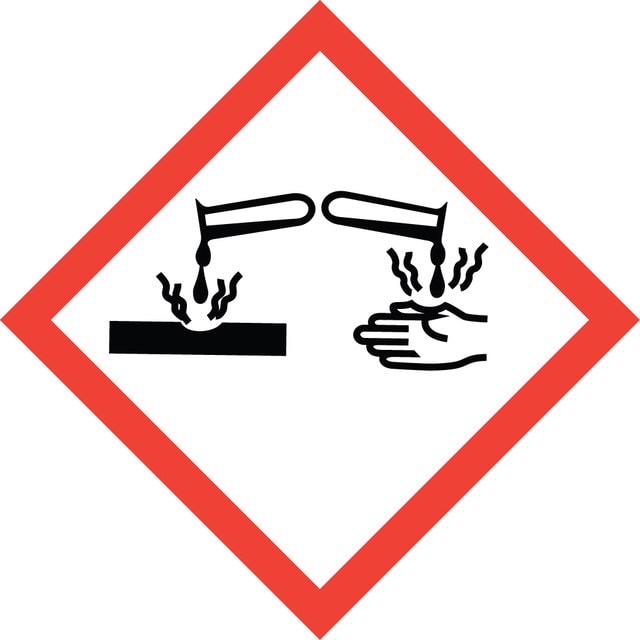
Danger
hcodes
Hazard Classifications
Eye Dam. 1 - Flam. Liq. 2 - Skin Irrit. 2
Storage Class
3 - Flammable liquids
wgk
WGK 1
flash_point_f
54.5 °F - closed cup
flash_point_c
12.5 °C - closed cup
Choose from one of the most recent versions:
Already Own This Product?
Find documentation for the products that you have recently purchased in the Document Library.
-
Does it contain surfactant?
1 answer-
Helpful?
-
-
Is there a documented recipe available for spin coating 900960, including details on the substrates it works well with (specifically regular glass slides), any pre-processing required to promote adhesion, the quantities needed, and the spin rpm-thickness characteristics?
1 answer-
As per the supplier, for spin-coating on glass, a standard iterative solvent cleaning protocol is recommended, involving 5 minutes of sonic cleaning in acetone, ethanol, and isopropanol, followed by blow-drying with N2 between each step, and then ozone plasma treatment (medium power for 2-5 minutes) to promote adhesion. The ink is also compatible with spin-coating on Si/SiO2 substrates, which can undergo the same pre-treatment protocol. When using the spin coater, spinning a single layer at 2000-5000 rpm results in a final film thickness of 40-60 nm. To achieve thicker films, multiple layers can be applied without a baking step, which is recommended over using a lower spin speed to maintain film uniformity. With 5 coats at 2000 rpm, a 200 nm thick film is obtained after baking at 300 °C for 30 minutes in air.
Helpful?
-