

great service with customer service, great service with customer service
68340

Hexylene glycol
puriss., ≥99.0% (GC)
1 of 1 reviewers took part in a promotion
Synonym(s):
(±)-2-Methyl-2,4-pentanediol, MPD
Sign In to View Organizational & Contract Pricing.
Select a Size
Change View
| Size/SKU | Availability | Price |
|---|---|---|
100 mL | Available to ship TODAY | $35.10 |
500 mL | Available to ship TODAY | $83.10 |
About This Item
Linear Formula:
CH3CH(OH)CH2C(CH3)2OH
CAS Number:
Molecular Weight:
118.17
UNSPSC Code:
12352100
NACRES:
NA.22
PubChem Substance ID:
EC Number:
203-489-0
Beilstein/REAXYS Number:
1098298
MDL number:
Assay:
≥99.0% (GC)
Form:
viscous liquid
$35.10
Available to ship TODAYDetails
Subscriptions are currently unavailable.
Ships Every 4 weeks
vapor density
4.1 (vs air)
Quality Segment
vapor pressure
0.02 mmHg ( 20 °C)
grade
puriss.
assay
≥99.0% (GC)
form
viscous liquid
expl. lim.
7.4 %
refractive index
n20/D 1.427 (lit.), n20/D 1.428
bp
197 °C (lit.)
mp
−40 °C (lit.)
density
0.925 g/mL at 25 °C (lit.)
functional group
hydroxyl
SMILES string
CC(O)CC(C)(C)O
InChI
1S/C6H14O2/c1-5(7)4-6(2,3)8/h5,7-8H,4H2,1-3H3
InChI key
SVTBMSDMJJWYQN-UHFFFAOYSA-N
Application
Hexylene glycol can also be used as a solvent in the preparation of CuO doped on TiO2/silica gel photocatalyst.
1 of 1
This Item | |||
|---|---|---|---|
| description puriss., ≥99.0% (GC) | description pharmaceutical secondary standard, certified reference material | description United States Pharmacopeia (USP) Reference Standard | description BioXtra, ≥99% (GC) |
| assay ≥99.0% (GC) | assay - | assay - | assay ≥99% (GC) |
| Quality Level 200 | Quality Level 300 | Quality Level - | Quality Level 200 |
| density 0.925 g/mL at 25 °C (lit.) | density 0.925 g/mL at 25 °C (lit.) | density 0.925 g/mL at 25 °C (lit.) | density 0.925 g/mL at 25 °C (lit.) |
| mp −40 °C (lit.) | mp −40 °C (lit.) | mp −40 °C (lit.) | mp −40 °C (lit.) |
| bp 197 °C (lit.) | bp 197 °C (lit.) | bp 197 °C (lit.) | bp 197 °C (lit.) |
| refractive index n20/D 1.427 (lit.), n20/D 1.428 | refractive index n20/D 1.427 (lit.) | refractive index n20/D 1.427 (lit.) | refractive index n20/D 1.427 (lit.) |
Still not finding the right product?
Explore all of our products under Hexylene glycol
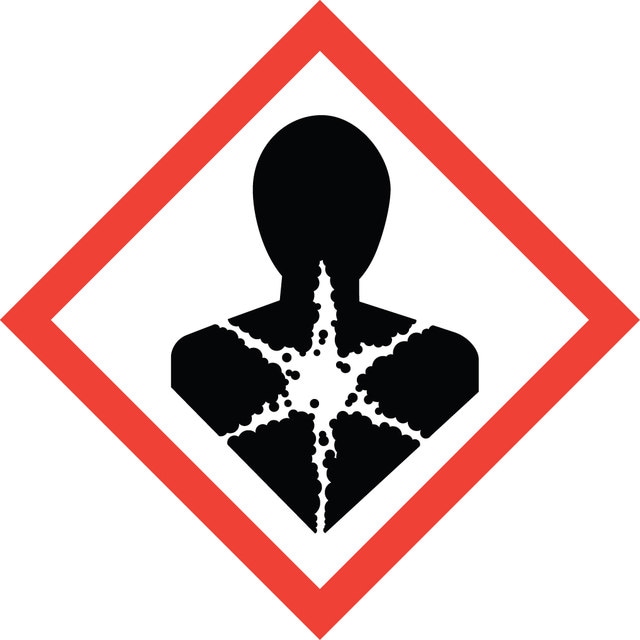
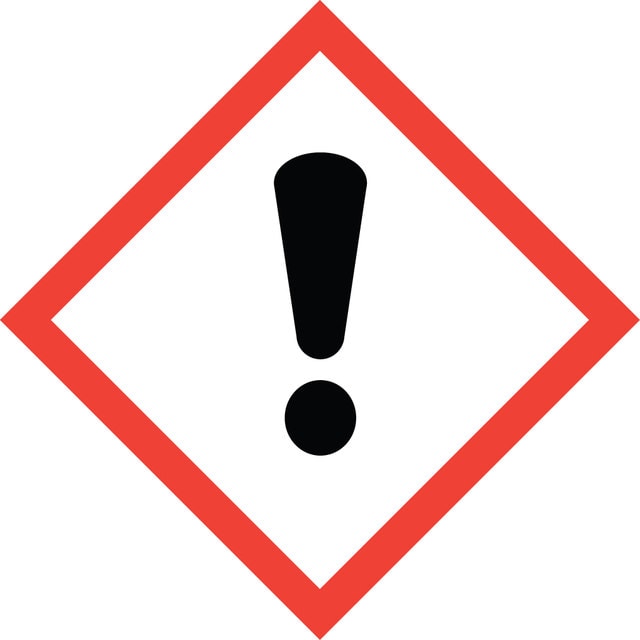
Signal Word
Warning
Hazard Codes
Precautionary Statements
Hazard Classifications
Eye Irrit. 2 - Repr. 2 - Skin Irrit. 2
Storage Class
10 - Combustible liquids
WGK
WGK 1
Flash Point (°F)
201.2 °F - closed cup
Flash Point (°C)
94 °C - closed cup
PPE (personal protective equipment)
Eyeshields, Gloves, type ABEK (EN14387) respirator filter
Choose from one of the most recent versions:
Already Own This Product?
Find documentation for the products that you have recently purchased in the Document Library.