


If this product has an expiration or retest date, it will be shown on the Certificate of Analysis (COA, CofA). If there is no retest or expiration date listed on the product's COA, we do not have suitable stability data to determine a shelf life. For these products, the only date on the COA will be the release date; a retest, expiration, or use-by-date will not be displayed.
For all products, we recommend handling per defined conditions as printed in our product literature and website product descriptions. We recommend that products should be routinely inspected by customers to ensure they perform as expected.
For products without retest or expiration dates, our standard warranty of 1 year from the date of shipment is applicable.
For more information, please refer to the Product Dating Information document: https://www.sigmaaldrich.com/deepweb/assets/sigmaaldrich/marketing/global/documents/418/501/product-dating-information-06-25-mk.pdf
335681

Ethylene glycol dimethacrylate
98%, cross-linking reagent polymerization reactions, methacrylate, 90-110 ppm monomethyl ether hydroquinone as inhibitor
Synonym(s):
Polyethylene glycol, 1,2-Ethanediol dimethacrylate, Ethylene dimethacrylate
Select a Size
$53.90
$69.10
$185.00
About This Item
Skip To
Product Name
Ethylene glycol dimethacrylate, 98%, contains 90-110 ppm monomethyl ether hydroquinone as inhibitor
vapor density
>1 (vs air)
Quality Level
vapor pressure
<0.1 mmHg ( 21.1 °C)
assay
98%
form
liquid
contains
90-110 ppm monomethyl ether hydroquinone as inhibitor
reaction suitability
reagent type: cross-linking reagent
reaction type: Polymerization Reactions
refractive index
n20/D 1.454 (lit.)
bp
98-100 °C/5 mmHg (lit.)
density
1.051 g/mL at 25 °C (lit.)
Ω-end
methacrylate
α-end
methacrylate
polymer architecture
shape: linear
functionality: homobifunctional
storage temp.
2-8°C
SMILES string
CC(=C)C(=O)OCCOC(=O)C(C)=C
InChI
1S/C10H14O4/c1-7(2)9(11)13-5-6-14-10(12)8(3)4/h1,3,5-6H2,2,4H3
InChI key
STVZJERGLQHEKB-UHFFFAOYSA-N
Looking for similar products? Visit Product Comparison Guide
Related Categories
1 of 4
This Item | 8.18847 | 409006 | 437468 |
|---|---|---|---|
| assay 98% | assay ≥97.5% (GC) | assay 95% | assay - |
| polymer architecture shape: linear | polymer architecture - | polymer architecture shape: linear | polymer architecture shape: linear |
| form liquid | form liquid | form liquid | form liquid |
| Quality Level 300 | Quality Level 200 | Quality Level 200 | Quality Level 200 |
| reaction suitability reagent type: cross-linking reagent | reaction suitability - | reaction suitability reagent type: cross-linking reagent | reaction suitability reagent type: cross-linking reagent |
| storage temp. 2-8°C | storage temp. 2-30°C | storage temp. - | storage temp. 2-8°C |
General description
Application
- A terpolymer system, poly(acrylonitrile-co-Ethyleneglycol dimethacrylate-co-vinylbenzyl chloride), which is applicable as a sorbentin pharmaceuticals adsorption.
- PVA (polyvinyl alcohol) based hydrogel by free-radicalcopolymerization. These PVA polymer networks can be used as drug deliverysystems.
signalword
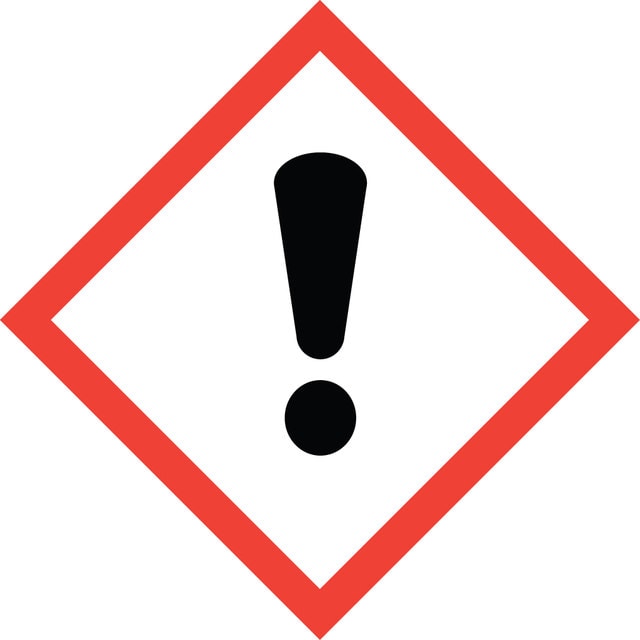
Warning
hcodes
Hazard Classifications
Skin Sens. 1 - STOT SE 3
target_organs
Respiratory system
Storage Class
10 - Combustible liquids
wgk_germany
WGK 1
flash_point_f
219.2 °F - Pensky-Martens closed cup
flash_point_c
104 °C - Pensky-Martens closed cup
ppe
Eyeshields, Faceshields, Gloves, type ABEK (EN14387) respirator filter
Choose from one of the most recent versions:
Already Own This Product?
Find documentation for the products that you have recently purchased in the Document Library.
Articles
Monomers for ophthalmic use aim for purity, reliability, and comfort, driving innovation for affordable contact lenses.
Discover hydrogels, biocompatible materials for drug delivery, tissue engineering, wound care, and 3D bioprinting in innovative biomedical applications
-
How can I determine the shelf life / expiration / retest date of this product?
1 answer-
Helpful?
-
-
How is shipping temperature determined? And how is it related to the product storage temperature?
1 answer-
Products may be shipped at a different temperature than the recommended long-term storage temperature. If the product quality is sensitive to short-term exposure to conditions other than the recommended long-term storage, it will be shipped on wet or dry-ice. If the product quality is NOT affected by short-term exposure to conditions other than the recommended long-term storage, it will be shipped at ambient temperature. As shipping routes are configured for minimum transit times, shipping at ambient temperature helps control shipping costs for our customers. For more information, please refer to the Storage and Transport Conditions document: https://www.sigmaaldrich.com/deepweb/assets/sigmaaldrich/marketing/global/documents/316/622/storage-transport-conditions-mk.pdf
Helpful?
-
-
Is the ethylene glycol dimethacrylate a toxic crosslinker for human?
1 answer-
The toxicological information for product 335681 can be reviewed in the SDS.
See the link below, section 13, to review this information:
https://www.sigmaaldrich.com/sds/aldrich/335681There are articles available in the literature as well. See the link to the following publication for an example:
https://pubmed.ncbi.nlm.nih.gov/29107684/Helpful?
-
Active Filters
Our team of scientists has experience in all areas of research including Life Science, Material Science, Chemical Synthesis, Chromatography, Analytical and many others.
Contact Technical Service