Skip to Content
Merck

SL2

Sigmacote®

siliconizing reagent for glass and other surfaces

Synonym(s):

chlorinated organopolysiloxane in heptane, siliconizing reagent for glass

Sign In to View Organizational & Contract Pricing

Select a Size

25 ML

€ 97,30

100 ML

€ 243,00

€ 97,30


Check Cart for Availability

Request a Bulk Order

About This Item

UNSPSC Code:
41116121
NACRES:
NA.47

Skip To

Technical Service
Need help? Our team of experienced scientists is here for you.
Let Us Assist

biological source

synthetic

color

colorless

density

0.68 g/cm3

application(s)

hematology
histology

storage temp.

2-8°C

Compare Similar Items

View Full Comparison

Show Differences

1 of 4

This Item
4423752630639303
biological source

synthetic

biological source

-

biological source

-

biological source

-

color

colorless

color

-

color

-

color

-

density

0.68 g/cm3

density

0.875 g/mL at 20 °C (lit.)

density

0.764 g/mL at 20 °C (lit.)

density

-

application(s)

hematology
histology

application(s)

-

application(s)

-

application(s)

-

storage temp.

2-8°C

storage temp.

-

storage temp.

-

storage temp.

-

Quality Level

200

Quality Level

200

Quality Level

200

Quality Level

100

General description

Sigmacote® is a solution of a chlorinated organopolysiloxane in heptane that readily forms a covalent, microscopically thin film on glass. The film repels water, retards the clotting of blood or plasma, and prevents surface adsorption of many basic proteins. Ready to use without dilution; reusable if kept free of moisture.

Application

Sigmacote® has been used to prevent adhesion of the growth factors to plasticware.[1] It has also been used to coat coverslip in order to prevent the adhesion of larval brain during squashing.[2]

Biochem/physiol Actions

Sigmacote® is ideal for glass[3], ceramics and fiber optics. It is used to treat GC injection glass inserts.

Legal Information

Sigmacote is a registered trademark of Merck KGaA, Darmstadt, Germany

related product

Signal Word

Danger

Hazard Classifications

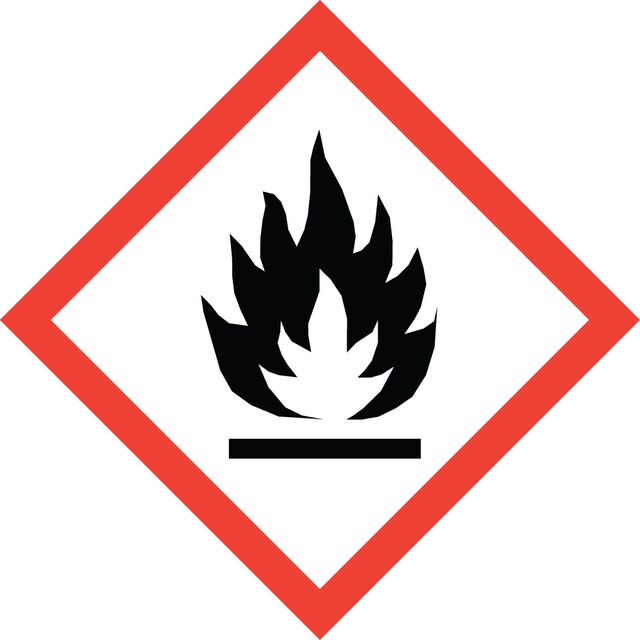
Aquatic Acute 1 - Aquatic Chronic 1 - Asp. Tox. 1 - Eye Irrit. 2 - Flam. Liq. 2 - Skin Irrit. 2 - STOT SE 3

Target Organs

Central nervous system

Storage Class Code

3 - Flammable liquids

WGK

WGK 2

Flash Point(F)

24.8 °F - closed cup

Flash Point(C)

-4 °C - closed cup


Choose from one of the most recent versions:

Certificates of Analysis (COA)

Lot/Batch Number

Don't see the Right Version?

If you require a particular version, you can look up a specific certificate by the Lot or Batch number.

Already Own This Product?

Find documentation for the products that you have recently purchased in the Document Library.

Visit the Document Library

Isolation of adult stem cells and their differentiation to Schwann cells
Progenitor Cells, 47-57 (2012)
Analysis of protein S-acylation by gas chromatography-coupled mass spectrometry using purified proteins
Sorek, Nadav and Yalovsky, Shaul
Nature Protocols, 5(5), 834-834 (2010)
Comparative analysis of satellite DNA in the Drosophila melanogaster species complex
Jagannathan M, et al.
G3 (Bethesda, Md.), g3-116 (2016)

Related Content

Informationen über die klinische Untersuchung von Blut, blutbildenden Organen und Blutkrankheiten, einschließlich deren Behandlung und Prävention, sowie über Farbstoffe und Färbemittel für die Hämatologie.

Learn about the clinical study of blood, blood-forming organs, and blood diseases including the treatment, prevention, and stains and dyes used in hematology testing.

Questions

1–10 of 20 Questions  
  1. Hello is sigmacote hygroscopic? I keep finding particulates in open bottles so I am wondering if moisture in the ambient air is the problem. Thank you!

    1 answer
    1. Sigmacote is stated to be sensitive to moisture. Its Product Information Sheet notes: "Store Sigmacote at 2–8°C. The active chlorinated organopolysiloxane component in this solution is sensitive to moisture and alcohols. It will react with water and alcohols to form hydrochloric acid (HCl)." If the particulates are found only in open bottles, the expectation would be that either the surfaces of the glass to be coated are not thoroughly dry, or the Sigmacote is picking up moisture from the atmosphere. Once the coating procedure is complete, promptly return the coating solution to the stock bottle and tightly cap.

      Helpful?

  2. Hello, we would like to use Sigmacote on 304 grade stainless steel. Do you know if Sigmacote can be safely used on stainless steel or whether it would even coat stainless steel? Thank you!

    1 answer
    1. The product is intended for use on glass. Instructions For Use note that the product might work on some plastics. There is no information on file for using on any type of stainless steel or other metals. You can try using the published procedure for glass with your cleaned and dried stainless steel. After coating the metal, place a drop of colored liquid onto its surface. If the water beads on the surface, the product has coated the metal. Absence of beading indicates the product has not coated the metal.

      Helpful?

  3. How long does a coated 250 ml glass vessel need to be rinsed for the solution/byproduct to be considered gone? Can residual sigmacote negatively impact proliferation and differentiation of cells, and how can we be sure to avoid this?

    1 answer
    1. Simply rinsing a vessel coated with Sigmacote will not remove the siliconized coating from the glass surface. Once a surface has been treated, the surfaced can be rinsed to remove any unbound silicon from the surface. To remove the coating it is recommended that the surface be exposed to 10-20% aqueous or alcoholic potassium hydroxide or sodium hydroxide solutions. Physical abrasion can also be used. The only way to tell if the coating has been removed is to place a colored solution on the glassware surface. If the colored solution beads, the silicon coating is intact. If the colored solution does not bead, the silicon coating is not present. No testing has been performed to determine whether the coating is toxic to cultured cells. Quality control testing for this product does not include cell culture testing.

      Helpful?

  4. Can Sigmacote be used to coat plastic containers that will be subjected to agitation (100 rpm) for at least 5 days, possibly longer? Will these conditions affect the integrity of the coating?

    1 answer
    1. The suitability of this product for use on plastics has not been examined. Some types of plastics may not be compatible with the heptane solvent used to prepare this product. Please see the link below to review a publication regarding the use of SigmaCote on plasticware: https://link.springer.com/protocol/10.1007/978-1-61779-980-8_5#Sec7

      Helpful?

  5. How to best keep the solution moisture free upon opening bottle? Particularly if the solution has to be decanted in another container to allow coating of long glass capillaries, how badly it would be affected if is to be re-used. Any advice?

    1 answer
    1. The product should be stored in the bottle tightly capped when not in use. As the coating is nearly instantaneous, do not leave the product exposed to air longer than required. As an exact length of the capillary tubes was not stated, it is hard to know exactly how "long" it is. If the capillary tubes are a few centimeters long, it is probably easiest to submerge the capillary tubes in the product for a short period of time. If the capillary tubes are meters long, the product will need to be pumped or somehow run through the capillary tube. Once the coating is complete, return the product to the bottle(s). and tightly close the cap.

      The Safety Data Sheet shows the active ingredient is dissolved in n-heptane.. Section 7 of the SDS does not listed the product as hygroscopic, although the Product Information Sheet does state that it will react with water and alcohols to form hydrochloric acid. Do not reuse the product if it turns cloudy or if water fails to bead on a dry glass surface that has been treated with it. As heptane is less dense than water, if water were to be absorbed, it might be possible to see water droplets at the bottom of the solution.

      Helpful?

  6. Can Sigmacoat be used to coat glassware that will be used for organotypic brain slice cultures being treated with growth factors or is it toxic to the slices?

    1 answer
    1. Sigmacote (SL2) is not claimed to be cell culture grade. There is heptane present in the coating solution. The solution itself is not considered sterile. After coating the glassware with SL2, the glassware should be dried thoroughly. After drying, the glassware should be rinsed well in water to remove any remaining traces of heptane. To sterilize the glassware, it would be possible to use an autoclave with dry heat to sterilize the glassware. The Product Information Sheet states that autoclaving does provide a more durable coating.

      Helpful?

  7. Approximately, how much Sigmacote would be required to coat a 500 mL vessel?

    1 answer
    1. The specific amount required has never been determined. In the coating procedure, Sigmacote is added to the glass container, swirled around to coat the glass surface, and then returned to the bottle. The detailed procedure is provided below:

      Procedure:

      1. The glass surface to be siliconized must be clean and dry.
      2. Cover or immerse the glass surface in Sigmacote (undiluted). The reaction is almost instantaneous, and excess solution can be removed for reuse.
      3. Allow the treated glass surface to air dry in a hood. No heating is required.
      4. Rinse the siliconized articles with water to remove the HCl byproducts before use.

      Notes:

      1.After the heptane has evaporated, the siliconized articles can be oven dried at 100°C for 30 minutes, resulting in a slightly more durable coating.
      2. The siliconized coating can be removed with an overnight treatment using 10–20% (w/v) aqueous or alcoholic potassium hydroxide or sodium hydroxide solutions. The removal of the silicon coating can be monitored at various time intervals by rinsing the glass item and observing the "beading" or "sheeting" of water. It may also be possible to remove the coating by physical abrasion, such as scrubbing or vigorously brushing the glass surface. Autoclaving will not destroy the coating.
      3. There are no claims regarding the effectiveness of Sigmacote on plastic surfaces. Also, some types of plastics may not be compatible with the heptane in this product.
      4.In practice, Sigmacote is reused until the coating is determined not to be acceptable or the volume of reagent remaining is insufficient to coat the glass surface. To check whether the coating is effective, a drop of water or color solution can be added to the glassware. If the coating is effective, the water or color solution should bead. If the solution spreads out over the surface of the glass, the coating is no longer effective.


      Helpful?

  8. After coating with Sigmacote SL2, how many times can a bioreactor or shaking flask be used?

    1 answer
    1. The number of times glassware can be reused after the initial coating with Sigmacote is not specified. A more durable coating may be achieved by heating the dried and coated product at 100°C for 30 minutes. The recommended approach is to clean and thoroughly dry the bioreactors and shaker flasks after coating with Sigmacote and then test the effectiveness of the coating using a colored aqueous solution. If the coating is intact, the colored solution should bead. If the solution does not bead over the entire surface of the bioreactor or shaker flasks, it means the coating is not intact, and the coating has to be stripped. After stripping the coating, Sigmacote may be reapplied.

      Helpful?

  9. What is the bond strength of Sigmacote for glass and plastic? Would this product be suitable for create a surface for a 3D printing?

    1 answer
    1. Sigmacote (SL2) is primarily designed to prevent proteins and other negatively charged substances from binding to glass surfaces. There are no specific claims about its effectiveness in preventing proteins and other charged substances from binding to plastic. Regarding its use for a 3D printing application, there is no available data on file to determine whether Sigmacote would serve the intended purpose.

      Helpful?

  10. Is the film created by Sigmacote safe to touch once the heptane has evaporated?

    1 answer
    1. Sigmacote contains product that has hazard warnings for skin corrosion and serious eye damage. Therefore, adequate precautions should be taken when handling either liquid. However, once the glassware has been coated and dried, there is no solvent or liquid present on the glass slide.

      Helpful?

1–10 of 20 Questions  

Reviews

No rating value

Active Filters

Our team of scientists has experience in all areas of research including Life Science, Material Science, Chemical Synthesis, Chromatography, Analytical and many others.

Contact Technical Service