Skip to Content
Merck

49825

DMACA Reagent

suitable for microbiology

Synonym(s):

4-(Dimethylamino)-cinnamaldehyde solution

Sign In to View Organizational & Contract Pricing.

Select a Size

Pricing and availability is not currently available.

About This Item

Empirical Formula (Hill Notation):
C11H13NO
CAS Number:
Molecular Weight:
175.23
UNSPSC Code:
41171621
NACRES:
NA.85
PubChem Substance ID:
MDL number:
Beilstein/REAXYS Number:
2208002

Skip To

Technical Service
Need help? Our team of experienced scientists is here for you.
Let Us Assist

Product Name

DMACA Reagent, suitable for microbiology

InChI key

RUKJCCIJLIMGEP-ONEGZZNKSA-N

SMILES string

[H]C(=O)\C=C\c1ccc(cc1)N(C)C

InChI

1S/C11H13NO/c1-12(2)11-7-5-10(6-8-11)4-3-9-13/h3-9H,1-2H3/b4-3+

technique(s)

microbe id | specific enzyme detection: suitable

application(s)

agriculture
environmental
food and beverages

microbiology

suitability

Escherichia coli
Streptococcus spp.

Quality Level

Compare Similar Items

View Full Comparison

Show Differences

1 of 4

This Item
673099300919933
suitability

Escherichia coli, Streptococcus spp.

suitability

Escherichia coli, coliforms

suitability

Escherichia coli, coliforms

suitability

Escherichia coli, Klebsiella spp., Pseudomonas spp., Salmonella spp., coliforms

technique(s)

microbe id | specific enzyme detection: suitable

technique(s)

microbe id | specific enzyme detection: suitable

technique(s)

microbe id | specific enzyme detection: suitable

technique(s)

microbe id | specific enzyme detection: suitable

application(s)

agriculture
environmental
food and beverages, microbiology

application(s)

agriculture
clinical testing
environmental
food and beverages, microbiology

application(s)

agriculture
environmental
food and beverages, microbiology

application(s)

agriculture
environmental
food and beverages, microbiology

Quality Level

100

Quality Level

200

Quality Level

100

Quality Level

100

Application

Used to determine the ability of an organism to split indole from the tryptophan molecule.

General description

DMACA is basically a selective staining reagent. It helps identify the flavanols by staining them blue in color.

Other Notes

Composition per 100 ml:
Dimethylaminocinnamaldehye 1 g
Hydrochloric acid (concentrated) 1.0 ml
distilled water 99.0 ml
Reagent for the rapid identification of Streptococci.[1][2]

pictograms

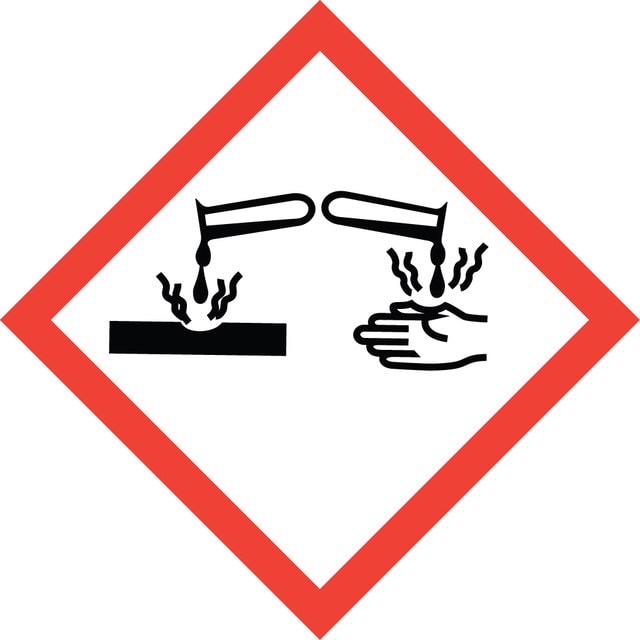
Corrosion

signalword

Warning

hcodes

Hazard Classifications

Met. Corr. 1

Storage Class

8B - Non-combustible corrosive hazardous materials

wgk

WGK 2

flash_point_f

Not applicable

flash_point_c

Not applicable

ppe

Faceshields, Gloves, Goggles


Choose from one of the most recent versions:

Certificates of Analysis (COA)

Lot/Batch Number

Don't see the Right Version?

If you require a particular version, you can look up a specific certificate by the Lot or Batch number.

Already Own This Product?

Find documentation for the products that you have recently purchased in the Document Library.

Visit the Document Library

J.F. MacFaddin
Biochemical Tests for Identification of Medical Bacteria (2000)
Camille Melissa Johnston et al.
BMC genomics, 19(1), 600-600 (2018-08-11)
Direct molecular cloning of full-length cDNAs derived from viral RNA is an approach to identify the individual viral genomes within a virus population. This enables characterization of distinct viral haplotypes present during infection. In this study, we recover individual genomes
C-H Chiang et al.
The international journal of tuberculosis and lung disease : the official journal of the International Union against Tuberculosis and Lung Disease, 24(9), 922-927 (2020-11-07)
BACKGROUND: Disseminated Mycobacterium avium complex infection (DMAC) has symptoms and microscopic findings similar to those of TB in HIV patients. To inform a clinical algorithm-based differential diagnosis, we aimed to characterise the clinical features of DMAC.METHODS: This was a retrospective
Urška Jug et al.
Antioxidants (Basel, Switzerland), 10(1) (2021-01-23)
The antioxidant activities of Japanese knotweed rhizome bark extracts, prepared with eight different solvents or solvent mixtures (water, methanol, 80% methanol(aq), acetone, 70% acetone(aq), ethanol, 70% ethanol(aq), and 90% ethyl acetate(aq)), were determined using a 2,2-diphenyl-1-picrylhydrazyl (DPPH) free radical-scavenging assay.
Davide De Francisci et al.
Bioresource technology, 176, 56-64 (2014-12-03)
The anaerobic digestion process is often inhibited by alteration of substrates and/or organic overload. This study aimed to elucidate changes of microbial ecology in biogas reactors upon radical changes of substrates and to determine their importance to process imbalance. For

Related Content

Questions

Reviews

No rating value

Active Filters

Our team of scientists has experience in all areas of research including Life Science, Material Science, Chemical Synthesis, Chromatography, Analytical and many others.

Contact Technical Service