



If this product has an expiration or retest date, it will be shown on the Certificate of Analysis (COA, CofA). If there is no retest or expiration date listed on the product's COA, we do not have suitable stability data to determine a shelf life. For these products, the only date on the COA will be the release date; a retest, expiration, or use-by-date will not be displayed.
For all products, we recommend handling per defined conditions as printed in our product literature and website product descriptions. We recommend that products should be routinely inspected by customers to ensure they perform as expected.
For products without retest or expiration dates, our standard warranty of 1 year from the date of shipment is applicable.
For more information, please refer to the Product Dating Information document: https://www.sigmaaldrich.com/deepweb/assets/sigmaaldrich/marketing/global/documents/418/501/product-dating-information-06-25-mk.pdf
1.06018

Methanol
≥99.8% (GC), HPLC grade, suitable for HPLC, LiChrosolv®
Synonym(s):
MeOH, Hydroxymethane, Carbinol, Methyl alcohol
Select a Size
About This Item
410 mmHg ( 50 °C)
97.68 mmHg ( 20 °C)
Skip To
Product Name
Methanol, for liquid chromatography LiChrosolv®
grade
HPLC grade
Quality Level
vapor density
1.11 (vs air)
vapor pressure
128 hPa ( 20 °C)
410 mmHg ( 50 °C)
97.68 mmHg ( 20 °C)
description
isocratic
product line
LiChrosolv®
Assay
≥99.8% (GC)
form
liquid
autoignition temp.
725 °F
potency
5628 mg/kg LD50, oral (Rat)
17100 mg/kg LD50, skin (Rabbit)
expl. lim.
36 %
technique(s)
HPLC: suitable
impurities
≤0.0002 meq/g Acidity
≤0.0002 meq/g Alkalinity
≤0.03% Water
evapn. residue
≤3.0 mg/L
color
APHA: ≤10
transmittance
225 nm, ≥50%
240 nm, ≥80%
265 nm, ≥98%
refractive index
n20/D 1.329 (lit.)
kinematic viscosity
0.54-0.59 cSt(20 °C)
bp
64.7 °C (lit.)
mp
−98 °C (lit.)
transition temp
flash point 9.7 °C
density
0.791 g/mL at 25 °C (lit.)
format
neat
storage temp.
2-30°C
SMILES string
CO
InChI
1S/CH4O/c1-2/h2H,1H3
InChI key
OKKJLVBELUTLKV-UHFFFAOYSA-N
Looking for similar products? Visit Product Comparison Guide
1 of 4
This Item | 1.06007 | 1.13351 | PHR1372 |
|---|---|---|---|
| technique(s) HPLC: suitable | technique(s) HPLC: suitable | technique(s) - | technique(s) HPLC: suitable, gas chromatography (GC): suitable |
| Quality Level 100 | Quality Level 200 | Quality Level 200 | Quality Level 300 |
| grade HPLC grade, isocratic | grade gradient grade | grade for chromatography, for preparative HPLC, for preparative liquid chromatography | grade certified reference material, pharmaceutical secondary standard |
| assay ≥99.8% (GC) | assay ≥99.9% (GC) | assay ≥99.8% (GC) | assay - |
| form liquid | form liquid | form liquid | form - |
| bp 64.7 °C (lit.) | bp 64.7 °C (lit.) | bp 64.7 °C (lit.) | bp 64.7 °C (lit.) |
General description
Application
Featured in method development of:
- Benazepril - USP Method Benazepril RS
- Betamethasone - USP Method Betamethasone Valerate Assay
- Irbesartan - USP Method Irbesartan Assay
- Lamivudine - USP Method Lamivudine RS
- Lansoprazole - USP Method Lansoprazole RS
- Levofloxacin - USP Method Levofloxacin RS - USP Method Levofloxacin Assay
- Nifedipine - USP Method Nifedipine RS - USP Method Nifedipine Assay
- Pharmacopoeia Monograph Methods - HPLC and UHPLC methods for Regulated Drug Analysis
- Pioglitazone - USP Method Pioglitazone HCl RS - USP Method Pioglitazone HCl Assay
Features and Benefits
- suitability tested and specified for UHPLC-MS and UHPLC-UV: for analytical flexibility
- specified quality in positive and negative in positive and negative electrospray ionization (ESI) and atmospheric-pressure chemical ionization-mass spectrometry (APCI-MS) for lowest detection limits and confidence in analyses for all important MS modes (test 1)
—ESI/APCI (+) < 2 ppb
—ESI/APCI (-) < 10 ppb - lowest impurity profile: for interference-free baselines (test 2)
- microfiltered through 0.2 μm filter (test 3) to provide:
—A long lifespan to filters and mechanical parts of HPLC systems
––reduced risk of column clogging - packaged in borosilicate glass bottles for minimized metal ion contaminations
- lowest levels of trace metal impurities for a minimum metal ion adduct formation
—<5 ppb - lowest level of polyethylene glycol (PEG) impurities in UHPLC-MS solvent lineup (PEG S/N signal-to-noise-ratio < 50)
Preparation Note
Analysis Note
Identity (IR): conforms
Evaporation residue: ≤ 3.0 mg/l
Water: ≤ 0.03 %
Color: ≤ 10 Hazen
Acidity: ≤ 0.0002 meq/g
Alkalinity: ≤ 0.0002 meq/g
Transmission (at 225 nm): ≥ 50 %
Transmission (at 240 nm): ≥ 80 %
Transmission (from 265 nm): ≥ 98 %
Filtered by 0.2 µm filter
Other Notes
Legal Information
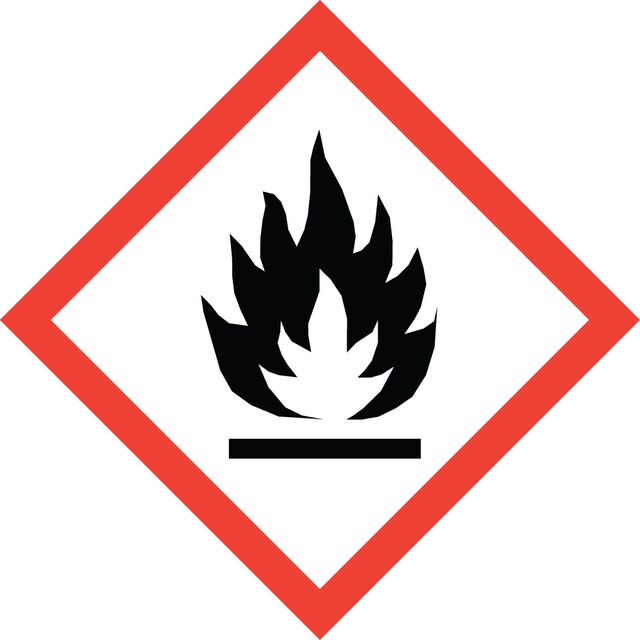
Signal Word
Danger
Hazard Statements
Precautionary Statements
Hazard Classifications
Acute Tox. 3 Dermal - Acute Tox. 3 Inhalation - Acute Tox. 3 Oral - Flam. Liq. 2 - STOT SE 1
Target Organs
Eyes,Central nervous system
Storage Class Code
3 - Flammable liquids
WGK
WGK 2
Flash Point(F)
49.5 °F - closed cup
Flash Point(C)
9.7 °C - closed cup
Certificates of Analysis (COA)
Search for Certificates of Analysis (COA) by entering the products Lot/Batch Number. Lot and Batch Numbers can be found on a product’s label following the words ‘Lot’ or ‘Batch’.
Already Own This Product?
Find documentation for the products that you have recently purchased in the Document Library.
Articles
HPTLC separation followed by UV detection of the bitter acid content in various hop samples.
This application note describes the HPTLC-based identification of fixed oils using octadecyl silyl silica gel as the coating substance, following USP 43 NF 38 monograph method containing USP general chapter <202>.
Validated HPLC method (based on Ph. Eur. Monograph 2668) for quantifying catechins and caffeine in decaffeinated green tea using a Chromolith® High Resolution RP-18e column with advantages in terms of backpressure and matrix robustness.
An HPTLC method for rapid urea detection in milk using a TLC plate scanner and Silica Gel 60 F254 HPTLC plate.
Protocols
In the present study we demonstrate compliance of silica gel 60 F254 HPTLC plates with USP requirements, and how HPTLC plates are suitable for the Sildenafil citrate-Limit of Imidazole test.
GB method with Ascentis® Express C30 column achieves baseline resolution for Vitamin A and E critical pair.
Folic acid vs. folate differences and biological activities; implications in fortified foods and supplements for human health.
HPTLC was used to analyze caffeine in coffee. Filtration of coffee through a PTFE syringe filter was the only sample preparation. Quantitation was conducted with a TLC scanner.
-
How can I determine the shelf life / expiration / retest date of this product?
1 answer-
Helpful?
-
-
How is shipping temperature determined? And how is it related to the product storage temperature?
1 answer-
Products may be shipped at a different temperature than the recommended long-term storage temperature. If the product quality is sensitive to short-term exposure to conditions other than the recommended long-term storage, it will be shipped on wet or dry-ice. If the product quality is NOT affected by short-term exposure to conditions other than the recommended long-term storage, it will be shipped at ambient temperature. As shipping routes are configured for minimum transit times, shipping at ambient temperature helps control shipping costs for our customers. For more information, please refer to the Storage and Transport Conditions document: https://www.sigmaaldrich.com/deepweb/assets/sigmaaldrich/marketing/global/documents/316/622/storage-transport-conditions-mk.pdf
Helpful?
-
Active Filters
Our team of scientists has experience in all areas of research including Life Science, Material Science, Chemical Synthesis, Chromatography, Analytical and many others.
Contact Technical Service