
Z-2139

ZytoLight® SPEC FOXO1 Dual Color Break Apart Probe
green to orange, pkg of 0.05 mL
Sinónimos:
FISH probe, dual color FISH probe
Iniciar sesión para ver los precios por organización y contrato.
Seleccione un Tamaño
Cambiar Vistas
| Talla/SKU | Disponibilidad | Precio |
|---|
En este momento no podemos mostrarle ni los precios ni la disponibilidad
Servicio técnico
¿Necesita ayuda? Nuestro equipo de científicos experimentados está aquí para ayudarle.
Permítanos ayudarlepackaging
pkg of 0.05 mL, pkg of 5 tests
storage condition
protect from light
color
green to orange
application(s)
research use
storage temp.
2-8°C
General description
The ZytoLight® SPEC FOXO1 Dual Color Break Apart Probe (PL96) is a direct-labeled FISH probe for the qualitative detection of translocations of the FOXO1 gene at 13q14.11 in formalin-fixed, paraffin-embedded specimens using fluorescence in situ hybridization (FISH). The probe is intended for use with the ZytoLight FISH-Tissue Implementation Kit.
ZytoLight® probes enable the precise identification of genetic abnormalities, including translocations, deletions, amplifications, and chromosomal aneuploidies, in formalin-fixed, paraffin-embedded (FFPE) tissue sections or cytology specimens, without the need for additional antibody-based detection.
Components
The ZytoLight SPEC FOXO1 Dual Color Break Apart Probe comprises:
Principle
The fluorescence in situ hybridization (FISH) method enables the identification and visualization of particular nucleic acid sequences within cell samples. DNA fragments labeled with fluorescent dyes, known as FISH probes, are co-denatured with their complementary target DNA strands in the sample and then allowed to hybridize. Following hybridization, non-specific and unbound probe fragments are removed through stringency washes. The DNA is then counterstained with DAPI, and the hybridized probes are detected using a fluorescence microscope equipped with filters matched to the specific fluorochromes used to label the FISH probes.
ZytoLight® probes enable the precise identification of genetic abnormalities, including translocations, deletions, amplifications, and chromosomal aneuploidies, in formalin-fixed, paraffin-embedded (FFPE) tissue sections or cytology specimens, without the need for additional antibody-based detection.
Components
The ZytoLight SPEC FOXO1 Dual Color Break Apart Probe comprises:
- ZyGreen (excitation 503 nm/emission 528 nm) labeled polynucleotides (~10 ng/µl), targeting sequences mapping in 13q14.11* (chr13:40,285,558-41,132,595) proximal to the FOXO1 breakpoint region;
- ZyOrange (excitation 547 nm/emission 572 nm) labeled polynucleotides (~4.5 ng/µl), targeting sequences mapping in 13q14.11* (chr13:41,246,917-42,054,781) distal to the FOXO1 breakpoint region;
- Formamide based hybridization buffer
Principle
The fluorescence in situ hybridization (FISH) method enables the identification and visualization of particular nucleic acid sequences within cell samples. DNA fragments labeled with fluorescent dyes, known as FISH probes, are co-denatured with their complementary target DNA strands in the sample and then allowed to hybridize. Following hybridization, non-specific and unbound probe fragments are removed through stringency washes. The DNA is then counterstained with DAPI, and the hybridized probes are detected using a fluorescence microscope equipped with filters matched to the specific fluorochromes used to label the FISH probes.
Application
This probe is intended for use in formalin-fixed, paraffin-embedded specimens to qualitatively detect translocations of the FOXO1 gene at 13q14.11, via FISH.
Analysis Note
Using suitable filter sets, the hybridization signals of the probe appear green near the FOXO1 breakpoint region and orange away from the FOXO1 breakpoint region.
- Normal scenario: in normal cells during interphase or cells without a translocation of the FOXO1 gene region, two green/orange fusion signals are observed.
- Aberrant scenario: one translocated FOXO1 gene region is shown by one separate green and orange signal each.
Legal Information
ZytoLight is a registered trademark of ZytoVision GmbH in Germany
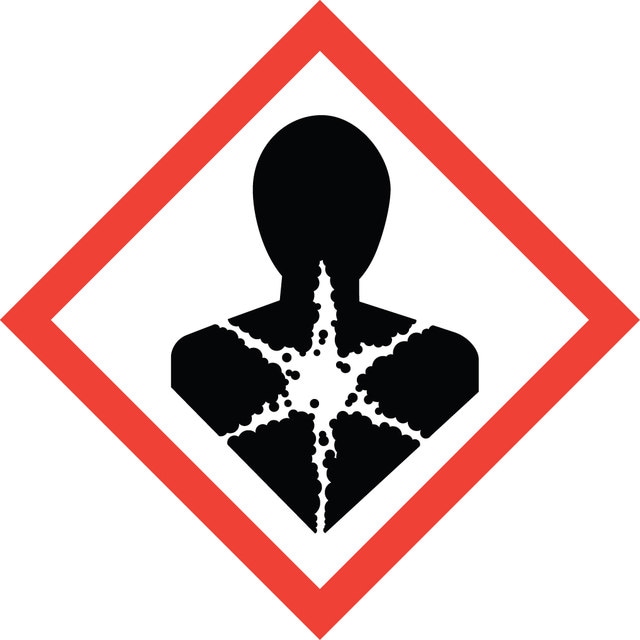
Palabra de advertencia
Danger
Códigos de peligro
Indicaciones de precaución
Hazard Classifications
Carc. 2 - Repr. 1B - STOT RE 2 Oral
Órganos diana
Blood
Clase de almacenamiento
6.1C - Combustible acute toxic Cat.3 / toxic compounds or compounds which causing chronic effects
Punto de inflamación (°F)
Not applicable
Punto de inflamación (°C)
Not applicable
Elija entre una de las versiones más recientes:
¿Ya tiene este producto?
Encuentre la documentación para los productos que ha comprado recientemente en la Biblioteca de documentos.