
Skip to Content
MilliporeSigma

Skip To

306452

Reactive Black 5

Dye content ≥50 %

Synonym(s):

Remazol Black B

Sign In to View Organizational & Contract Pricing.

Select a Size

Change View
Size/SKUAvailabilityPrice
100 g

Available to ship TODAYfromMILWAUKEE

$73.00

About This Item

Empirical Formula (Hill Notation):
C26H21N5Na4O19S6
CAS Number:
Molecular Weight:
991.82
NACRES:
NA.47
PubChem Substance ID:
UNSPSC Code:
12171500
EC Number:
241-164-5
MDL number:

$73.00


Available to ship TODAYDetails


​
Request a Custom Order
Technical Service
Need help? Our team of experienced scientists is here for you.
Let Us Assist


Quality Segment

form

powder

composition

Dye content, ≥50%

technique(s)

microbe id | staining: suitable

mp

>300 °C (lit.)

density

1.21 g/cm3 at 20 °C

λmax

597 nm

application(s)

diagnostic assay manufacturing
hematology
histology

storage temp.

room temp

SMILES string

[Na+].[Na+].[Na+].[Na+].Nc1c(N=Nc2ccc(cc2)S(=O)(=O)CCOS([O-])(=O)=O)c(cc3cc(c(N=Nc4ccc(cc4)S(=O)(=O)CCOS([O-])(=O)=O)c(O)c13)S([O-])(=O)=O)S([O-])(=O)=O

InChI

1S/C26H25N5O19S6.4Na/c27-23-22-15(13-20(53(37,38)39)24(23)30-28-16-1-5-18(6-2-16)51(33,34)11-9-49-55(43,44)45)14-21(54(40,41)42)25(26(22)32)31-29-17-3-7-19(8-4-17)52(35,36)12-10-50-56(46,47)48;;;;/h1-8,13-14,32H,9-12,27H2,(H,37,38,39)(H,40,41,42)(H,43,44,45)(H,46,47,48);;;;/q;4*+1/p-4

InChI key

HFIYIRIMGZMCPC-UHFFFAOYSA-J

General description

Reactive Black 5 is a reactive dye belonging to vinyl sulphone type. Such reactive dyes serve as colorants for many industries including paper. The functional group of the dye forms a covalent link with substrate functional group.
Reactive Black 5 belongs to the class of textile azo dyes. It can be biodegraded by the laccase enzyme in Ganoderma lucidum.

Application

Reactive Black 5 (RB5) has been:
  • used in an optimization study on the photocatalytic degradation of RB5 dye in synthetic greywater effluent (i.e. aqueous RB5 in distilled water), in order to understand the effects of different photoreactor parameters on the degradation kinetics.
  • as a textile dye to investigate the anaerobic reduction in upflow stirred packed-bed reactors (USPBRs) with biological activated carbon (BAC) system
  • used in the performance evaluation of dye removal forlarge molecule substance

Compare Similar Items

View Full Comparison

Show Differences

1 of 1

This Item
R8001306509
description

Dye content ≥50 %

description

anthraquinone dye

description

Dye content ≥70 %

technique(s)

microbe id | staining: suitable

technique(s)

-

technique(s)

-

form

powder

form

powder

form

powder

application(s)

diagnostic assay manufacturing
hematology
histology

application(s)

diagnostic assay manufacturing
hematology
histology

application(s)

diagnostic assay manufacturing
hematology
histology

Quality Level

100

Quality Level

200

Quality Level

200

composition

Dye content, ≥50%

composition

Dye content, ~40-65%

composition

Dye content, ≥70%

storage temp.

room temp

storage temp.

room temp

storage temp.

room temp


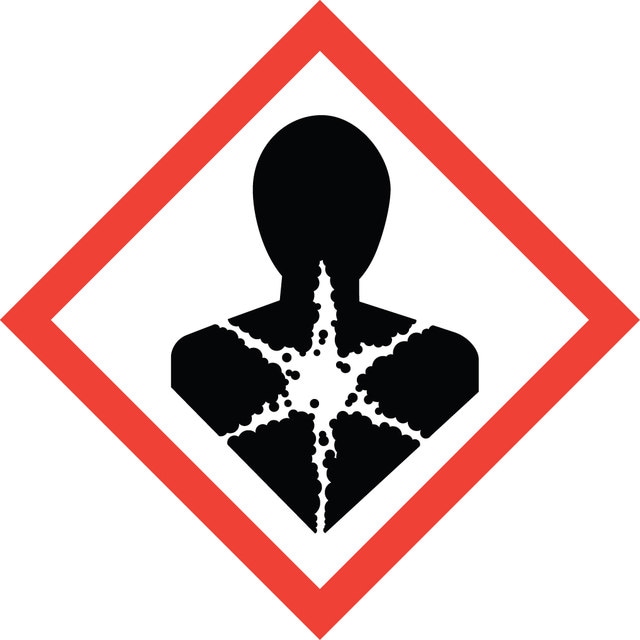
Pictograms

Health hazard

Signal Word

Danger

Hazard Codes

Hazard Classifications

Resp. Sens. 1A - Skin Sens. 1

Storage Class

11 - Combustible Solids

Flash Point (°F)

No data available

PPE (personal protective equipment)

dust mask type N95 (US), Eyeshields, Faceshields, Gloves

Flash Point (°C)

No data available


Choose from one of the most recent versions:

Certificates of Analysis (COA)

Lot/Batch Number

It looks like we've run into a problem, but you can still download Certificates of Analysis from our Documents section.

If you need assistance, please contact Customer Support

Already Own This Product?

Find documentation for the products that you have recently purchased in the Document Library.

Visit the Document Library


Questions

  1. Are the Amino Activated Dyes in stock? If yes, please provide the part numbers and SDS?

    1 answer
    1. there are limited procedures available for the identification of amino acids. An amino acid consists of a basic amino group (−NH2), an acidic carboxyl group (−COOH), and an organic R group (or side chain) unique to each amino acid. There are no dyes specifically designed to stain just the -NH2 group. Industrial dyes such as the Reactive and Brilliant dye series are typically used for industrial dyeing and may not specifically react to amino groups.

      Helpful?

Reviews

No rating value

Active Filters