Z-2266

ZytoLight® SPEC NUP98 Dual Color Break Apart Probe
green to orange, pkg of 0.05 mL
Synonym(s):
FISH, probe
Sign In to View Organizational & Contract Pricing.
Select a Size
Change View
packaging
pkg of 0.05 mL, pkg of 5 tests
storage condition
protect from light
color
green to orange
application(s)
research use
storage temp.
2-8°C
General description
The ZytoLight® SPEC NUP98 Dual Color Break Apart Probe (PL223) is used for the qualitative detection of translocations involvingthe human NUP98 gene at 11p15.4 in cytologic specimens.
The ZytoLight SPEC CCND1 Dual Color Break Apart Probe is composedof:
- ZyGreen (excitation 503 nm/emission 528 nm) labeled polynucleotides (~10 ng/µl), which target sequences mapping in11q13.2-q13.3* (chr11:68,249,010-68,705,283) proximal to the CCND1 breakpoint region
- ZyOrange (excitation 547 nm/emission 572 nm) labeled polynucleotides (~4.5 ng/µl), which target sequences mapping in11q13.3* (chr11:69,453,301-70,031,240) distal to the CCND1 breakpoint region
- Formamide based hybridization buffer
The fluorescence in situ hybridization (FISH) technique allows for the detection and visualization of specific nucleic acid sequences in cell preparations. Fluorescently-labeled DNA fragments, so called FISH probes,and their complementary target DNA strands in the preparations are codenatured and subsequently allowed to anneal during hybridization. Afterwards, unspecific and unbound probe fragments are removed bystringency washing steps. After counterstaining the DNA with DAPI, hybridized probe fragments are visualized using a fluorescence microscope equipped with excitation and emission filters specific for the fluorochromes with which the FISH probe fragments have been directly labeled.
The fluorescence in situ hybridization (FISH) technique enables the detection and visualization of specific nucleic acid sequences within cell preparations. In this method, fluorescently labeled DNA fragments known as FISH probes are codenatured with their complementary target DNA strands in the samples and allowed to anneal during the hybridization process. Following this, non-specific and unbound probe fragments are eliminated through stringent washing steps. After counterstaining the DNA with DAPI, the hybridized probe fragments can be visualized using a fluorescence microscope equipped with filters that are specific for the excitation and emission wavelengths of the fluorochromes used to label the FISH probes.
ZytoLight SPEC NUP98 Dual Color Break Apart Probe is composed of:
- ZyGreen (excitation 503 nm/emission 528 nm) labeled polynucleotides (~10.0 ng/µl), which target sequences mapping in11p15.4-p15.5* (chr11:2,773,748-3,363,120) distal to the NUP98 breakpoint region
- ZyOrange (excitation 547 nm/emission 572 nm) labeled polynucleotides (~4.5 ng/µl), which target sequences mapping in11p15.4* (chr11:3,829,054-4,142,792) proximal to the NUP98 breakpoint region
- Formamide based hybridization buffer
Application
For the qualitative detection of translocations involving the human NUP98 gene at 11p15.4 by fluorescence in situ hybridization (FISH)
Analysis Note
- With the use of appropriate filter sets, the hybridization signals of the probeappear green (distal to the NUP98 breakpoint region) and orange(proximal to the NUP98 breakpoint region).
- Normal situation: In interphases of normal cells or cells without atranslocation involving the NUP98 gene region, two green/orange fusionsignals appear
- In specimens from normal tissue split signalshave occasionally been observed. It is therefore important to define cut-offspecifications carefully in order to avoid false positive results.
- Aberrant situation: One NUP98 gene region affected by a translocation isindicated by one separate green signal and one separate orange signal
- Red blood cells present in the specimen might exhibit autofluorescencewhich hinders signal recognition
Legal Information
ZytoLight is a registered trademark of ZytoVision GmbH in Germany
Precautionary Statements
Hazard Classifications
Carc. 2 - Repr. 1B - STOT RE 2 Oral
Target Organs
Blood
Hazard Codes
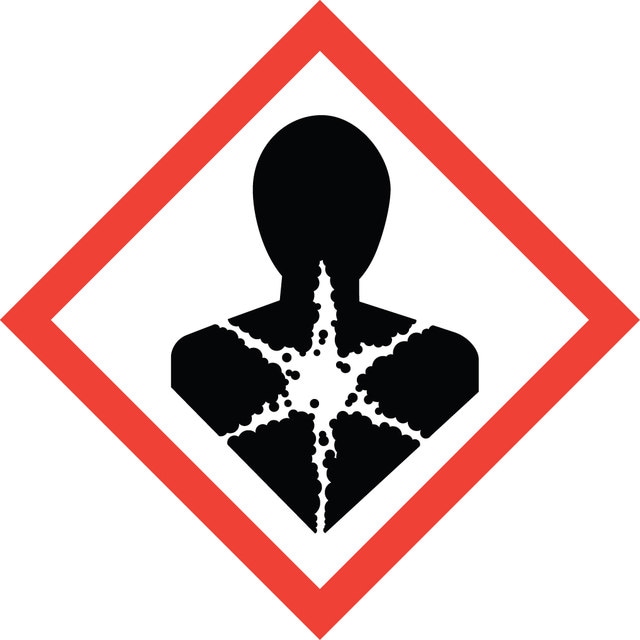
Signal Word
Danger
Storage Class
6.1C - Combustible acute toxic Cat.3 / toxic compounds or compounds which causing chronic effects
Flash Point (°F)
Not applicable
Flash Point (°C)
Not applicable
Choose from one of the most recent versions:
Already Own This Product?
Find documentation for the products that you have recently purchased in the Document Library.