Skip to Content
Merck

296317

Hexadecane

anhydrous, ≥99%

Synonym(s):

n-Hexadecane, Cetane

Sign In to View Organizational & Contract Pricing.

Select a Size

100 ML

$278.00

1 L

$366.00

2 L

$448.00

$278.00

PRICE WITHOUT NATIONAL TAXES

Check Cart for Availability

Request a Bulk Order

About This Item

Linear Formula:
CH3(CH2)14CH3
CAS Number:
Molecular Weight:
226.44
UNSPSC Code:
12352001
NACRES:
NA.21
PubChem Substance ID:
EC Number:
208-878-9
Beilstein/REAXYS Number:
1736592
MDL number:
Grade:
anhydrous
Assay:
≥99%
Bp:
287 °C (lit.)
Vapor pressure:
1 mmHg ( 105.3 °C)

Skip To

Technical Service
Need help? Our team of experienced scientists is here for you.
Let Us Assist

Product Name

Hexadecane, anhydrous, ≥99%

InChI key

DCAYPVUWAIABOU-UHFFFAOYSA-N

InChI

1S/C16H34/c1-3-5-7-9-11-13-15-16-14-12-10-8-6-4-2/h3-16H2,1-2H3

SMILES string

CCCCCCCCCCCCCCCC

grade

anhydrous

vapor density

7.8 (vs air)

vapor pressure

1 mmHg ( 105.3 °C)

assay

≥99%

form

liquid

autoignition temp.

395 °F

impurities

<0.003% water
<0.005% water (100 mL pkg)

refractive index

n20/D 1.434 (lit.)

bp

287 °C (lit.)

mp

18 °C (lit.)

transition temp

solidification point 17.5-18.5 °C

density

0.773 g/mL at 25 °C (lit.)

Quality Level

Looking for similar products? Visit Product Comparison Guide

Compare Similar Items

View Full Comparison

Show Differences

1 of 4

This Item
HX0200CRM78293128503
assay

≥99%

assay

≥99.0% (GC)

assay

-

assay

99%

Quality Level

100

Quality Level

200

Quality Level

300

Quality Level

100

grade

anhydrous

grade

-

grade

certified reference material, TraceCERT®

grade

-

form

liquid

form

liquid

form

-

form

-

vapor density

7.8 (vs air)

vapor density

-

vapor density

7.8 (vs air)

vapor density

8.3 (vs air)

impurities

<0.003% water, <0.005% water (100 mL pkg)

impurities

-

impurities

-

impurities

-

Application

Hexadecane may be used as a solvent for trioctylamine-based synthesis of indium antimonide (InSb) nanocrystals.[1] It may also be used as an internal standard for the synthesis of poly(9,9-
dioctylfluorene)-b-poly(3-hexylthiophene) via Grignard metathesis chain growth polymerization.[2]

pictograms

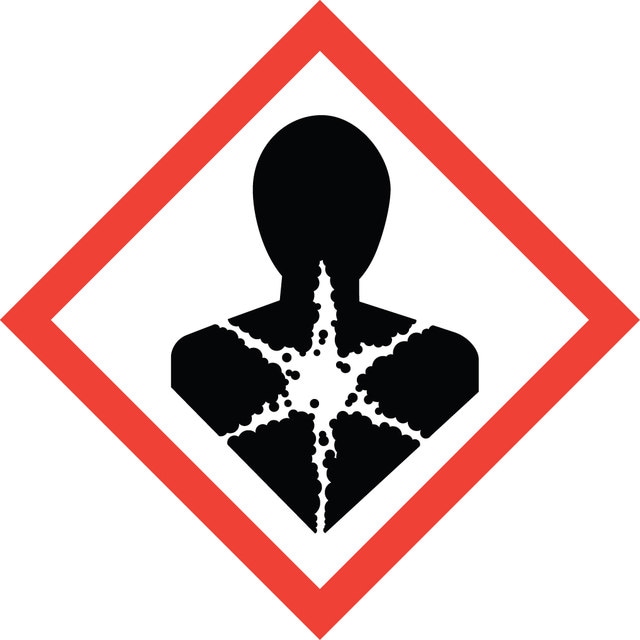
Health hazard

signalword

Danger

hcodes

Hazard Classifications

Asp. Tox. 1

supp_hazards

Storage Class

10 - Combustible liquids

wgk

WGK 1

flash_point_f

233.6 °F

flash_point_c

112 °C

ppe

Faceshields, Gloves, Goggles, type ABEK (EN14387) respirator filter


Choose from one of the most recent versions:

Certificates of Analysis (COA)

Lot/Batch Number

Don't see the Right Version?

If you require a particular version, you can look up a specific certificate by the Lot or Batch number.

Already Own This Product?

Find documentation for the products that you have recently purchased in the Document Library.

Visit the Document Library

Colloidal synthesis of InSb nanocrystals with controlled polymorphism using indium and antimony amides.
Yarema M and Kovalenko MV
Chemistry of Materials, 25(9), 1788-1792 (2013)
Excess volumes for n-alkanols+ n-alkanes IV. Binary mixtures of decan-1-ol+ n-pentane,+ n-hexane,+ n-octane,+ n-decane, and+ n-hexadecane.
Treszczanowicz AJ, et al.
The Journal of Chemical Thermodynamics, 13(3), 253-260 (1981)
Maartje L J Steegmans et al.
Langmuir : the ACS journal of surfaces and colloids, 25(17), 9751-9758 (2009-07-09)
Emulsification in microdevices (microfluidic emulsification) involves micrometer-sized droplets and fast interface expansion rates. In addition, droplets are formed in less than milliseconds, and therefore traditional tensiometric techniques cannot be used to quantify the actual interfacial tension. In this paper, monodisperse
Comparison of Pt/zeolite catalysts for n-hexadecane hydroisomerization.
Park KC and Ihm SK.
Applied Catalysis A: General, 203(2), 201-209 (2000)
Hajime Shinoda et al.
Communications biology, 4(1), 476-476 (2021-04-21)
CRISPR-based nucleic-acid detection is an emerging technology for molecular diagnostics. However, these methods generally require several hours and could cause amplification errors, due to the pre-amplification of target nucleic acids to enhance the detection sensitivity. Here, we developed a platform

Protocols

Separation of Decane; Dodecane; Tetradecane; Hexadecane; Octadecane; Eicosane; Docosane; Tetracosane; Hexacosane; Octacosane

Questions

Reviews

No rating value

Active Filters

Our team of scientists has experience in all areas of research including Life Science, Material Science, Chemical Synthesis, Chromatography, Analytical and many others.

Contact Technical Service