Skip to Content
Merck

185566

m-Xylene

ReagentPlus®, 99%

Synonym(s):

1,3-Dimethylbenzene

Sign In to View Organizational & Contract Pricing.

Select a Size

1 L

$297.00

4 L

$509.00

$297.00


Check Cart for Availability

Request a Bulk Order

About This Item

Linear Formula:
C6H4(CH3)2
CAS Number:
Molecular Weight:
106.17
UNSPSC Code:
12352002
NACRES:
NA.21
PubChem Substance ID:
EC Number:
203-576-3
Beilstein/REAXYS Number:
605441
MDL number:
Assay:
99%
Bp:
138-139 °C (lit.)
Vapor pressure:
16 mmHg ( 37.7 °C)

Skip To

Technical Service
Need help? Our team of experienced scientists is here for you.
Let Us Assist

Product Name

m-Xylene, ReagentPlus®, 99%

InChI key

IVSZLXZYQVIEFR-UHFFFAOYSA-N

InChI

1S/C8H10/c1-7-4-3-5-8(2)6-7/h3-6H,1-2H3

SMILES string

Cc1cccc(C)c1

vapor density

3.7 (vs air)

vapor pressure

16 mmHg ( 37.7 °C)

product line

ReagentPlus®

assay

99%

form

liquid

autoignition temp.

982 °F

expl. lim.

7 %

dilution

(for general lab use)

refractive index

n20/D 1.497 (lit.)

bp

138-139 °C (lit.)

mp

−48 °C (lit.)

density

0.868 g/mL at 25 °C (lit.)

Quality Level

Looking for similar products? Visit Product Comparison Guide

Compare Similar Items

View Full Comparison

Show Differences

1 of 4

This Item
PHR13132963258.22337
assay

99%

assay

-

assay

≥99%

assay

≥99% (GC)

Quality Level

100

Quality Level

300

Quality Level

100

Quality Level

200

form

liquid

form

-

form

liquid

form

liquid

mp

−48 °C (lit.)

mp

−48 °C (lit.)

mp

−48 °C (lit.)

mp

-48 °C

bp

138-139 °C (lit.)

bp

138-139 °C (lit.)

bp

138-139 °C (lit.)

bp

139.1 °C/1013 hPa

refractive index

n20/D 1.497 (lit.)

refractive index

n20/D 1.497 (lit.)

refractive index

n20/D 1.497 (lit.)

refractive index

-

Application

m-Xylene may be used in the synthesis of isophthalic acid[1] and phthalaldehyde.[2]

General description

m-Xylene is an isomeric form of xylene. Experimental values of density (ρ) and speed of sound (u) of its binary mixtures with diethyl carbonate (DEC) have been evaluated over the temperature range of 298.15-323.15K and at 0.1MPa atmospheric pressure.†

Legal Information

ReagentPlus is a registered trademark of Merck KGaA, Darmstadt, Germany

signalword

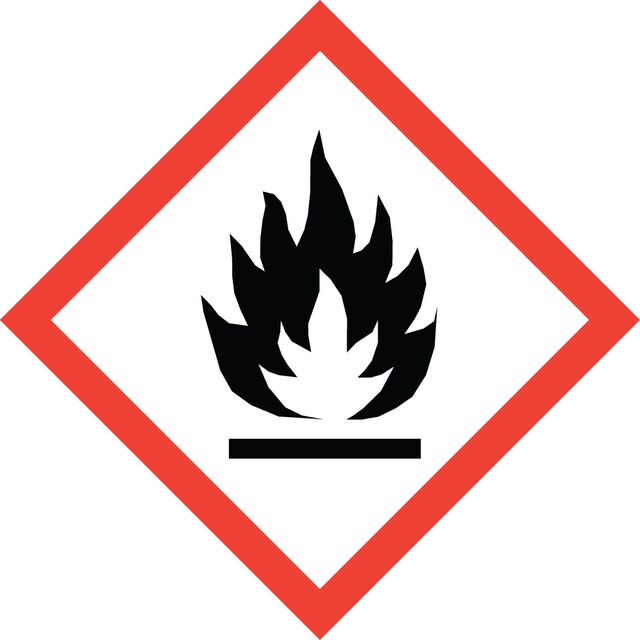
Danger

Hazard Classifications

Acute Tox. 4 Dermal - Acute Tox. 4 Inhalation - Aquatic Chronic 3 - Asp. Tox. 1 - Eye Irrit. 2 - Flam. Liq. 3 - Skin Irrit. 2 - STOT SE 3

target_organs

Respiratory system

Storage Class

3 - Flammable liquids

wgk

WGK 2

flash_point_f

80.6 °F - closed cup

flash_point_c

27 °C - closed cup


Choose from one of the most recent versions:

Certificates of Analysis (COA)

Lot/Batch Number

Don't see the Right Version?

If you require a particular version, you can look up a specific certificate by the Lot or Batch number.

Already Own This Product?

Find documentation for the products that you have recently purchased in the Document Library.

Visit the Document Library

Riccardo Salvio et al.
The Journal of organic chemistry, 76(13), 5438-5443 (2011-05-27)
Artificial phosphodiesterases that combine a guanidinium unit with a general base connected by a m-xylylene linker catalyze the transesterification of the RNA model compound 2-hydroxypropyl p-nitrophenyl phosphate (HPNP). The bifunctional catalysts presented in this work show varying extents of cooperation
Sulak Sumitsawan et al.
Environmental science & technology, 45(16), 6970-6977 (2011-07-19)
Titanium dioxide (TiO(2)) is a preferred catalyst for photocatalytic oxidation of many air pollutants. In an effort to enhance its photocatalytic activity, TiO(2) was modified by pulsed plasma treatment. In this work, TiO(2) nanoparticles, coated on a glass plate, were
Dragana Bozinovski et al.
FEMS microbiology ecology, 81(1), 134-144 (2012-03-01)
A sulfate-reducing consortium maintained for several years in the laboratory with m-xylene as sole source of carbon and energy was characterized by terminal restriction fragment length polymorphism (T-RFLP) fingerprinting of PCR-amplified 16S rRNA genes and stable isotope probing of proteins
Rafael Silva-Rocha et al.
Environmental microbiology, 13(9), 2389-2402 (2011-03-18)
The regulatory and metabolic networks that rule biodegradation of pollutants by environmental bacteria are wired to the rest of the cellular physiology through both transcriptional factors and intermediary signal molecules. In this review, we examine some formalisms for describing catalytic/regulatory
Fei Yu et al.
Journal of hazardous materials, 192(3), 1370-1379 (2011-08-13)
The purified and oxidized multi-walled carbon nanotubes (MWCNTs) with different oxygen contents are employed as adsorbents to study their physicochemical properties and adsorption behaviors of toluene, ethylbenzene and m-xylene (TEX) in aqueous solutions. The results demonstrate that adsorption capacity is

Questions

Reviews

No rating value

Active Filters

Our team of scientists has experience in all areas of research including Life Science, Material Science, Chemical Synthesis, Chromatography, Analytical and many others.

Contact Technical Service