

The length of the rod is 100 mm.
299405

Magnesium
rod, diam. 6 mm, ≥99.9% trace metals basis
Sign In to View Organizational & Contract Pricing.
About This Item
Empirical Formula (Hill Notation):
Mg
CAS Number:
Molecular Weight:
24.31
Beilstein:
4948473
EC Number:
MDL number:
UNSPSC Code:
12352300
PubChem Substance ID:
NACRES:
NA.22
Skip To
vapor pressure
1 mmHg ( 621 °C)
Quality Level
Assay
≥99.9% trace metals basis
form
rod
autoignition temp.
950 °F
reaction suitability
reagent type: reductant
resistivity
4.46 μΩ-cm, 20°C
diam.
6 mm
bp
1090 °C (lit.)
mp
648 °C (lit.)
density
1.74 g/mL at 25 °C (lit.)
SMILES string
[Mg]
InChI
1S/Mg
InChI key
FYYHWMGAXLPEAU-UHFFFAOYSA-N
Looking for similar products? Visit Product Comparison Guide
1 of 4
This Item | 723312 | 254126 | 403148 |
|---|---|---|---|
| assay ≥99.9% trace metals basis | assay - | assay 98% | assay 99.95% trace metals basis |
| reaction suitability reagent type: reductant | reaction suitability reagent type: reductant | reaction suitability reagent type: reductant | reaction suitability reagent type: reductant |
| Quality Level 100 | Quality Level 100 | Quality Level 100 | Quality Level 200 |
| density 1.74 g/mL at 25 °C (lit.) | density 1.74 g/mL at 25 °C (lit.) | density 1.74 g/mL at 25 °C (lit.) | density 1.74 g/mL at 25 °C (lit.) |
| mp 648 °C (lit.) | mp 648 °C (lit.) | mp 648 °C (lit.) | mp 648 °C (lit.) |
| form rod | form turnings | form powder or granules, turnings | form turnings |
General description
Magnesium is the most common mineral found in the human body. It is a cofactor for more than 300 enzymes and is known to regulate physiological functions like blood pressure, muscle contraction, and neuromuscular conduction.[1][2] It can be used in the preparation of many biomaterials for biomedical applications.[3]
Application
Preparation Note
10 g = 2 × 100 mm; 50 g = 10 × 100 mm
Signal Word
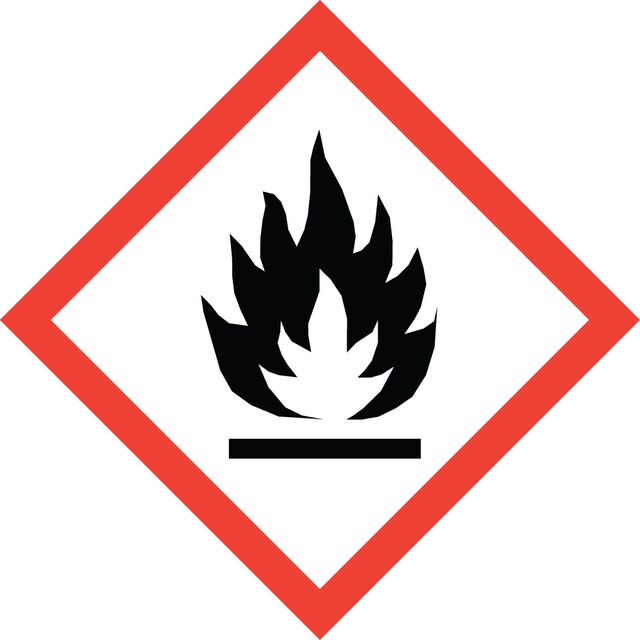
Danger
Hazard Statements
Precautionary Statements
Hazard Classifications
Flam. Sol. 1 - Self-heat. 1 - Water-react 2
Storage Class Code
4.2 - Pyrophoric and self-heating hazardous materials
WGK
nwg
Flash Point(F)
Not applicable
Flash Point(C)
Not applicable
Choose from one of the most recent versions:
Already Own This Product?
Find documentation for the products that you have recently purchased in the Document Library.
The importance of magnesium in clinical healthcare
Schwalfenberg GK and Genuis SJ
Scientifica, 2017 (2017)
Electrodeposition of Li and electrochemical formation of Mg--Li alloys from the eutectic LiCl-KCl
Chen Z, et al.
Journal of alloys and compounds, 464(1-2), 174-178 (2008)
Magnesium and human health: perspectives and research directions
Al Alawi AM, et al.
International Journal of Endocrinology, 2018 (2018)
Factors influencing the electroreductive polymerization of di-n-hexyldichlorosilane
Martins L, et al.
Applied Organometallic Chemistry, 16(2), 76-83 (2002)
Review of magnesium-based biomaterials and their applications
Sezer N, et al.
Journal of Magnesium and Alloys, 6(1), 23-43 (2018)
Articles
Mechanochemical Effect of Severe Plastic Deformations: Metal Alloys, Hydrides and Molecular Solids
Higher transition metal silicides are ideal for anisotropic thermoelectric conversion due to their Seebeck coefficient anisotropy and mechanical properties.
-
What is the length of the rod?
1 answer-
Helpful?
-
Active Filters
Our team of scientists has experience in all areas of research including Life Science, Material Science, Chemical Synthesis, Chromatography, Analytical and many others.
Contact Technical Service