


If this product has an expiration or retest date, it will be shown on the Certificate of Analysis (COA, CofA). If there is no retest or expiration date listed on the product's COA, we do not have suitable stability data to determine a shelf life. For these products, the only date on the COA will be the release date; a retest, expiration, or use-by-date will not be displayed.
For all products, we recommend handling per defined conditions as printed in our product literature and website product descriptions. We recommend that products should be routinely inspected by customers to ensure they perform as expected.
For products without retest or expiration dates, our standard warranty of 1 year from the date of shipment is applicable.
For more information, please refer to the Product Dating Information document: https://www.sigmaaldrich.com/deepweb/assets/sigmaaldrich/marketing/global/documents/418/501/product-dating-information-06-25-mk.pdf
S9133

Sodium selenite
γ-irradiated, lyophilized powder, BioXtra, suitable for cell culture
Synonym(s):
Disodium salt of selenous acid, disodium selenite
About This Item
Skip To
Product Name
Sodium selenite, γ-irradiated, lyophilized powder, BioXtra, suitable for cell culture
InChI
1S/2Na.H2O3Se/c;;1-4(2)3/h;;(H2,1,2,3)/q2*+1;/p-2
InChI key
BVTBRVFYZUCAKH-UHFFFAOYSA-L
SMILES string
[Na+].[Na+].[O-][Se]([O-])=O
sterility
γ-irradiated
product line
BioXtra
assay
≥97.0%
form
lyophilized powder
technique(s)
cell culture | mammalian: suitable
mp
>350 °C (lit.)
Quality Level
Looking for similar products? Visit Product Comparison Guide
1 of 4
This Item | 71950 | 214485 | 796948 |
|---|---|---|---|
| form lyophilized powder | form powder | form - | form powder |
| assay ≥97.0% | assay ≥90.0% (RT) | assay 99% | assay 95% |
| Quality Level 200 | Quality Level 200 | Quality Level 300 | Quality Level 100 |
| mp >350 °C (lit.) | mp >350 °C (lit.) | mp >350 °C (lit.) | mp - |
| sterility γ-irradiated | sterility - | sterility - | sterility - |
| product line BioXtra | product line - | product line - | product line - |
signalword
Danger
Hazard Classifications
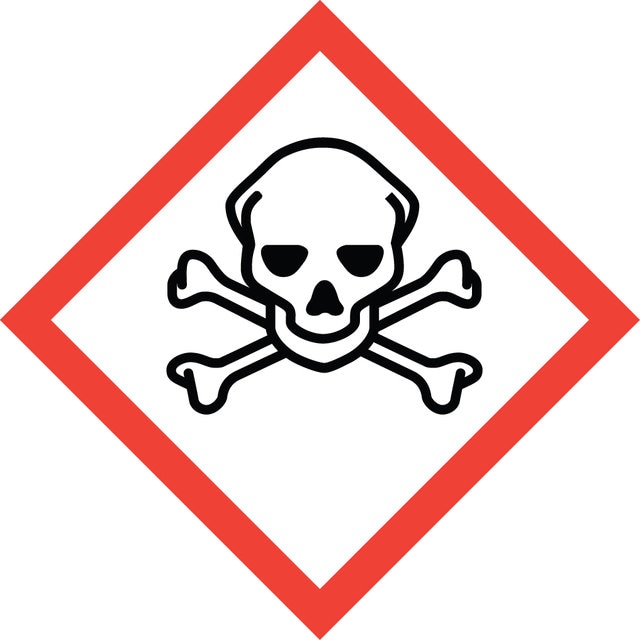
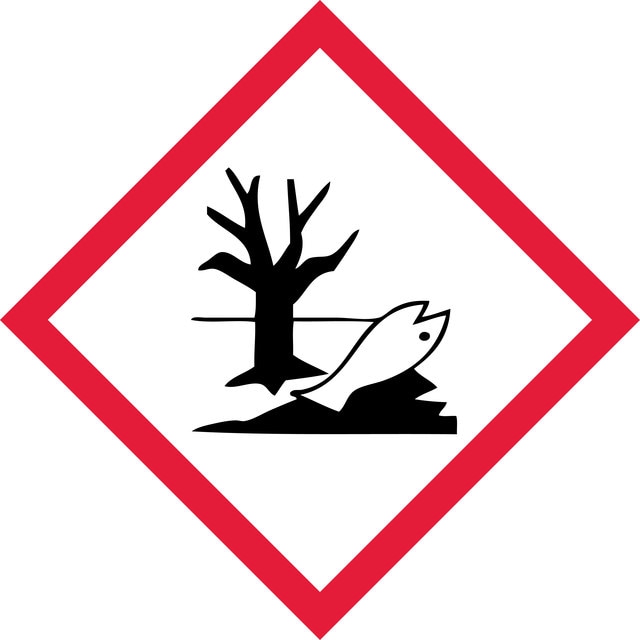
Acute Tox. 2 Inhalation - Acute Tox. 2 Oral - Aquatic Chronic 2 - Eye Irrit. 2 - Skin Irrit. 2 - Skin Sens. 1
supp_hazards
Storage Class
6.1B - Non-combustible acute toxic Cat. 1 and 2 / very toxic hazardous materials
wgk
WGK 2
flash_point_f
Not applicable
flash_point_c
Not applicable
Choose from one of the most recent versions:
Already Own This Product?
Find documentation for the products that you have recently purchased in the Document Library.
Articles
Antioxidants protect biological systems from oxidative damage produced by oxygen-containing free radicals and from redoxactive transition metal ions such as iron, copper, and cadmium.
Understand the role of selenium in cell culture media formulations. The Media Expert library explains how culture media ingredients support cell growth.
Protocols
Discover our primary human hepatocytes and plating and maintenance media formulations. Explore our protocol for plateable primary hepatocyte cell culture.
Discover our protocol for thawing, plating, and forming hepatocyte spheroids from human spheroid-qualified plateable hepatocytes. Find the formulation for hepatocyte spheroid maintenance media.
Related Content
Explore our protocol for suspension primary hepatocyte cell culture. Discover our primary human hepatocytes and plating and maintenance media formulations.
-
How can I determine the shelf life / expiration / retest date of this product?
1 answer-
Helpful?
-
-
What is the recommended method of reconstitution? I am currently dissolving the entire 1 mg contents of the bottle in 100 mL distilled water to yield a final solution concentration of 10 micrograms/mL.
1 answer-
This product is tested for solubility at 50 mL per vial in water, where 1 vial contains 1 mg of material. Historically, preparation instructions recommend adding 50 mL of sterile culture medium to prepare a 20 µg/mL stock solution.
Helpful?
-
-
Is there a datasheet for this product? Is it soluble in water like the other sodium selenite products (50 mg/ml), and can stock solutions be frozen at -20C?
1 answer-
A Datasheet is not available for this product. See the link below to review the datasheet available for the non-irradiated version of this product. The information provided applies to both items. The material is soluble in water at 50 mg/mL. Stock solutions are stable up to 30 days when refrigerated at 2 - 8 °C. Aliquots may also be stored frozen at -20°C, Avoid repeated freeze/ thaw cycles.
S5261 datasheet
https://www.sigmaaldrich.com/deepweb/assets/sigmaaldrich/product/documents/245/224/s5261pis.pdfHelpful?
-
-
How is shipping temperature determined? And how is it related to the product storage temperature?
1 answer-
Products may be shipped at a different temperature than the recommended long-term storage temperature. If the product quality is sensitive to short-term exposure to conditions other than the recommended long-term storage, it will be shipped on wet or dry-ice. If the product quality is NOT affected by short-term exposure to conditions other than the recommended long-term storage, it will be shipped at ambient temperature. As shipping routes are configured for minimum transit times, shipping at ambient temperature helps control shipping costs for our customers. For more information, please refer to the Storage and Transport Conditions document: https://www.sigmaaldrich.com/deepweb/assets/sigmaaldrich/marketing/global/documents/316/622/storage-transport-conditions-mk.pdf
Helpful?
-
-
How should Product S9133 Sodium selenite, be stored?
1 answer-
This product may be stored at room temperature. For products with no specified storage temperature given on the label or product page, ambient storage may be assumed. Products that require controlled temperature storage, such as refrigeration or freezer conditions, storage temperatures are published on the product label, Certificate of Analysis, and the Safety Data Sheet (SDS).
Helpful?
-
Active Filters
Our team of scientists has experience in all areas of research including Life Science, Material Science, Chemical Synthesis, Chromatography, Analytical and many others.
Contact Technical Service