
Autenticati per visualizzare i prezzi organizzativi e contrattuali.
Scegli un formato
Cambia visualizzazione
Informazioni su questo articolo
UNSPSC Code:
41121811
eCl@ss:
32160701
Servizio Tecnico
Hai bisogno di aiuto? Il nostro team di scienziati qualificati è a tua disposizione.
Permettici di aiutartimanufacturer/tradename
BPS Bioscience
technique(s)
activity assay: suitable (Colorimetric - UV Spectrophotometry)
UniProt accession no.
shipped in
dry ice
storage temp.
-65 to -96°C
General description
The ARG1 Inhibitor Screening Assay Kit is designed to measure ARG1 enzyme inhibition. The kit comes in a convenient format, with enough reaction solution and enzyme to perform a total of 100 reactions. The ARG1 Inhibitor Screening Assay Kit is simple to use. Inhibitor and enzyme are added to a sample containing thioarginine substrate. After a room temperature incubation, activity is determined by measuring the absorption of reaction product at λ=410-415 nm.
Application
Study enzyme kinetics and screen small molecule inhibitors for drug discovery in high throughput screening (HTS) applications
Arginase enzymes convert arginine to ornithine through hydrolysis. Two known isoforms of Arginase exist, ARG1 and ARG2. This enzyme is involved in the regulation of a variety of immunological responses and is a major target in immunotherapy. ARG1/2 is overexpressed in myeloid-derived suppressor cells (MDSCs) and tumor-associated macrophages (TAMs). Overexpression of ARG1/2 results in depleted levels of arginine both intracellularly and extracellularly. As arginine levels are depleted in the microenvironment, immune cells are starved of this amino acid and the function of key immunological activators become impaired; T cell proliferation is inhibited, regulatory T cells become activated and inhibit CD4+ T cells, and immunosuppressants have increased longevity. Depleted arginine also results in the release of reactive nitrogen species and reactive oxygen species from TAMs and MDSCs. These reactive species cause T cell apoptosis and the activation and growth of antigen presenting cells.
Datasheet and Protocols for the 96 reaction kit may be found here.
Datasheet and Protocols for the 384 reaction kit may be found here.
Parola di avvertenza
Warning
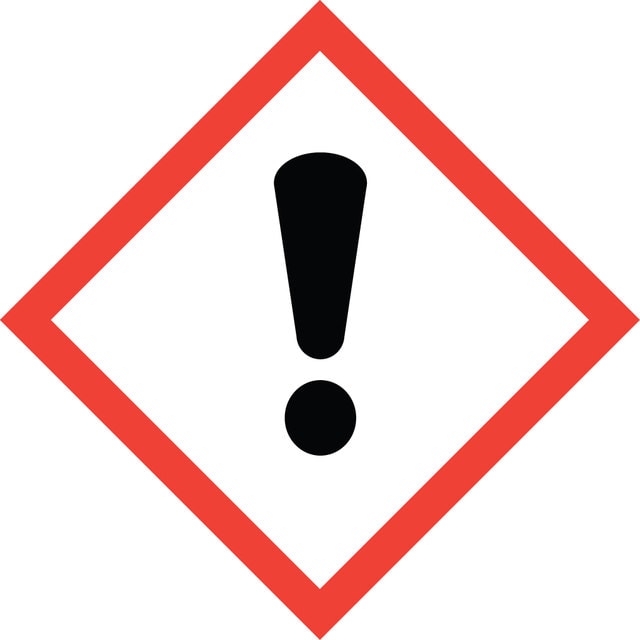
Codici di pericolo
Avvertenze di sicurezza
Hazard Classifications
Acute Tox. 4 Oral - Eye Irrit. 2 - Skin Irrit. 2
Classe di stoccaggio
10 - Combustible liquids
WGK
WGK 3
Scegli una delle versioni più recenti:
Possiedi già questo prodotto?
I documenti relativi ai prodotti acquistati recentemente sono disponibili nell’Archivio dei documenti.