Skip to Content
Merck

A6582

Antifoam A concentrate

active silicone polymer 100%

Synonym(s):

Antifoam agent, Antifoam solution, Foam control agent

Sign In to View Organizational & Contract Pricing.

Select a Size

100 G

CZK 2,340.00

CZK 2,340.00


Please contact Customer Service for Availability

Request a Bulk Order

About This Item

NACRES:
NA.85
UNSPSC Code:
12161901

Skip To

Technical Service
Need help? Our team of experienced scientists is here for you.
Let Us Assist

Product Name

Antifoam A concentrate, active silicone polymer 100%

form

emulsion (aqueous)

technique(s)

cell culture | hybridoma: suitable
microbiological culture: suitable

density

0.97 g/mL at 25 °C

application(s)

microbiology

storage temp.

room temp

suitability

(Mammalian (suspension))
bacteria (fermentation)

Quality Level

Compare Similar Items

View Full Comparison

Show Differences

1 of 4

This Item
A5633A8582A8311
form

emulsion (aqueous)

form

suspension

form

emulsion (aqueous)

form

emulsion (aqueous)

application(s)

microbiology

application(s)

-

application(s)

microbiology

application(s)

microbiology

technique(s)

cell culture | hybridoma: suitable, microbiological culture: suitable

technique(s)

cell culture | mammalian: suitable, microbiological culture: suitable

technique(s)

cell culture | hybridoma: suitable

technique(s)

-

suitability

(Mammalian (suspension)), bacteria (fermentation)

suitability

-

suitability

(Mammalian (suspension)), bacteria (fermentation)

suitability

(Mammalian (suspension)), bacteria (fermentation)

storage temp.

room temp

storage temp.

-

storage temp.

room temp

storage temp.

room temp

Quality Level

200

Quality Level

200

Quality Level

200

Quality Level

200

Application

Antifoam A concentrate has been used:
  • in bioreactor culture for Staphylococcal enterotoxin C (SEC) production.[1]
  • to prevent foam formation during the aerobic treatment of sludge. [2]
  • to study the impact of surface tension on bioaerosol generation during bubbling. [3]

Features and Benefits

  • Molecular biology grade and tested for use in bacterial fermentation.
  • Extremely effective foam suppressor for aqueous and non-aqueous systems.
  • Made of 100% active silicone polymer, free of emulsifiers.
  • Typically, effective at 1-100 ppm.
  • Product will be stable in the pH range of 5 to 9.
  • Can be directly added to a fermentation medium but it is not recommended that it be pumped to a fermenter on an as-needed basis.

General description

Antifoam A is a silicone-based product used to prevent or minimize foaming in both microbial fermentation systems and mammalian suspension cultures. Control of foaming minimizes damage to the cells, resulting in increased protein/antibody production. Extremely effective for aqueous and non-aqueous systems. Effective at concentrations in the 1-50ppm range.

Other Notes

Antifoam A is a 100% active silicon polymer containing no non-ionic emulsifiers .

Preparation Note

Antifoam A can be pre-diluted with 3-10 parts of aqueous propylene glycol or non-aqueous vegetable oil with slow mixing.

pictograms

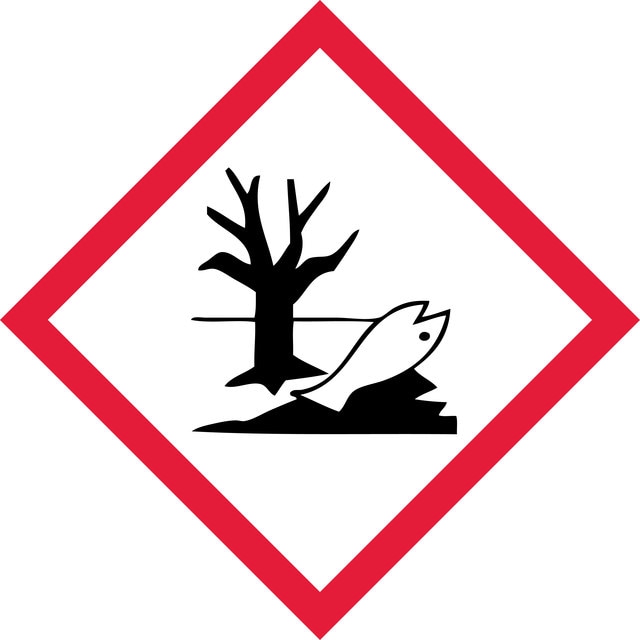
Environment

signalword

Warning

hcodes

Hazard Classifications

Aquatic Acute 1 - Aquatic Chronic 1

Storage Class

10 - Combustible liquids

wgk

WGK 3

flash_point_f

>213.8 °F - closed cup

flash_point_c

> 101 °C - closed cup

ppe

Eyeshields, Gloves, type ABEK (EN14387) respirator filter


Choose from one of the most recent versions:

Certificates of Analysis (COA)

Lot/Batch Number

Don't see the Right Version?

If you require a particular version, you can look up a specific certificate by the Lot or Batch number.

Already Own This Product?

Find documentation for the products that you have recently purchased in the Document Library.

Visit the Document Library

Factors affecting staphylococcal enterotoxin C bovine production in milk
Hunt K, et al.
International dairy journal, 39(1), 41-46 (2014)
F P Ernani et al.
Infection and immunity, 61(6), 2596-2601 (1993-06-01)
Substantial evidence indicates that molecules released by infectious organisms affect virulence and influence immunity to infection. The characterization of extracellular molecules and their mechanism of release is therefore critical to understanding host-parasite relationships. The cestode parasite Mesocestoides corti is known
Experience with a perfo-suction system for the recovery of schistosomes from laboratory rodents
T. F. H. G. Jackson, C. D. Dettman, et al.
Laboratory Animal Science, 16, 65-67 (1982)
M Schlömann et al.
Journal of bacteriology, 172(9), 5119-5129 (1990-09-01)
Enzymatic conversion of 4-fluorocatechol in the simultaneous presence of partially purified preparations of catechol 1,2-dioxygenase from Pseudomonas cepacia and muconate cycloisomerase from Alcaligenes eutrophus 335 yielded a product that was unambiguously identified as (+)-4-fluoromuconolactone [(+)-4-carboxymethyl-4-fluoro-but-2-en-4-olide]. This compound was shown to
The biodegradability of aquatic worm predated waste activated sludge: A sequential aerobic and anaerobic treatment approach
de Valk S, et al.
bioresource technology reports, 12.0, 100606-100606 (2020)

Our team of scientists has experience in all areas of research including Life Science, Material Science, Chemical Synthesis, Chromatography, Analytical and many others.

Contact Technical Service