Skip to Content
Merck

1012772

USP

Dehydrated Alcohol

United States Pharmacopeia (USP) Reference Standard

Synonym(s):

Ethanol, Ethyl alcohol

Sign In to View Organizational & Contract Pricing.

Select a Size

Pricing and availability is not currently available.

About This Item

Linear Formula:
CH3CH2OH
CAS Number:
Molecular Weight:
46.07
UNSPSC Code:
41116107
NACRES:
NA.24
PubChem Substance ID:
MDL number:
Beilstein/REAXYS Number:
1718733

Skip To

Technical Service
Need help? Our team of experienced scientists is here for you.
Let Us Assist

Product Name

Dehydrated Alcohol, United States Pharmacopeia (USP) Reference Standard

SMILES string

CCO

InChI key

LFQSCWFLJHTTHZ-UHFFFAOYSA-N

InChI

1S/C2H6O/c1-2-3/h3H,2H2,1H3

grade

pharmaceutical primary standard

vapor density

1.59 (vs air)

vapor pressure

44.6 mmHg ( 20 °C)

autoignition temp.

683 °F

expl. lim.

19 %, 60 °F

packaging

ampule of 5x1.2 mL

manufacturer/tradename

USP

refractive index

n20/D 1.3600 (lit.)

bp

78 °C (lit.)

mp

−114 °C (lit.)

application(s)

pharmaceutical (small molecule)

format

neat

Looking for similar products? Visit Product Comparison Guide

Compare Similar Items

View Full Comparison

Show Differences

1 of 4

This Item
PHR10701012688PHR1373
grade

pharmaceutical primary standard

grade

certified reference material, pharmaceutical secondary standard

grade

pharmaceutical primary standard

grade

certified reference material, pharmaceutical secondary standard

manufacturer/tradename

USP

manufacturer/tradename

-

manufacturer/tradename

USP

manufacturer/tradename

-

format

neat

format

neat

format

single component solution

format

neat

application(s)

pharmaceutical (small molecule)

application(s)

pharmaceutical (small molecule)

application(s)

pharmaceutical (small molecule)

application(s)

pharmaceutical (small molecule)

vapor density

1.59 (vs air)

vapor density

1.59 (vs air)

vapor density

-

vapor density

1.59 (vs air)

vapor pressure

44.6 mmHg ( 20 °C)

vapor pressure

44.6 mmHg ( 20 °C)

vapor pressure

-

vapor pressure

44.6 mmHg ( 20 °C)

Analysis Note

These products are for test and assay use only. They are not meant for administration to humans or animals and cannot be used to diagnose, treat, or cure diseases of any kind.  ​

Application

Dehydrated Alcohol USP reference standard, intended for use in specified quality tests and assays as specified in the USP compendia.

General description

This product is provided as delivered and specified by the issuing Pharmacopoeia. All information provided in support of this product, including SDS and any product information leaflets have been developed and issued under the Authority of the issuing Pharmacopoeia.For further information and support please go to the website of the issuing Pharmacopoeia.

Other Notes

1Distribution and use of ethyl alcohol in Switzerland require a license from the Swiss Federal Alcohol Administration
Sales restrictions may apply.

related product

pictograms

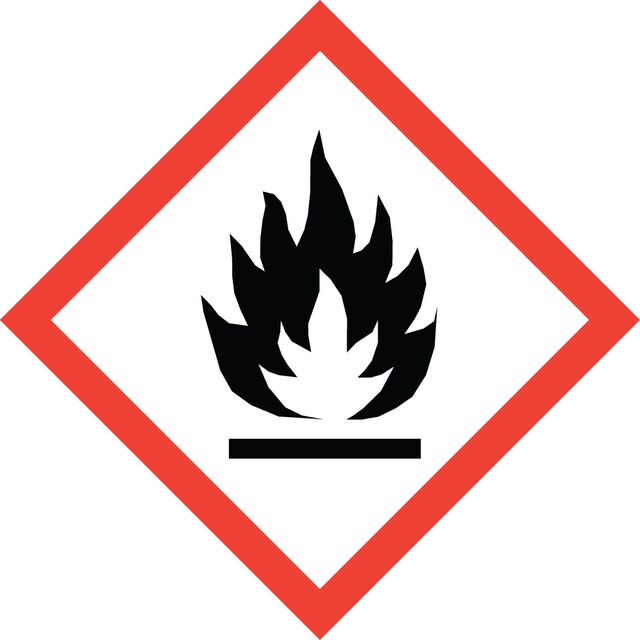
FlameExclamation mark

signalword

Danger

hcodes

Hazard Classifications

Eye Irrit. 2 - Flam. Liq. 2

Storage Class

3 - Flammable liquids

wgk

WGK 1

flash_point_f

55.4 °F - closed cup

flash_point_c

13 °C - closed cup


Choose from one of the most recent versions:

Certificates of Analysis (COA)

Lot/Batch Number

It looks like we've run into a problem, but you can still download Certificates of Analysis from our Documents section.

If you need assistance, please contact Customer Support

Already Own This Product?

Find documentation for the products that you have recently purchased in the Document Library.

Visit the Document Library

Cecilia E Hanzel et al.
Neurobiology of aging, 35(10), 2249-2262 (2014-05-17)
Chronic brain inflammation is associated with Alzheimer's disease (AD) and is classically attributed to amyloid plaque deposition. However, whether the amyloid pathology can trigger early inflammatory processes before plaque deposition remains a matter of debate. To address the possibility that
N Di Girolamo et al.
Stem cells (Dayton, Ohio), 33(1), 157-169 (2014-06-27)
Stem cell (SC) division, deployment, and differentiation are processes that contribute to corneal epithelial renewal. Until now studying the destiny of these cells in a living mammal has not been possible. However, the advent of inducible multicolor genetic tagging and
Cem Kuscu et al.
Nature biotechnology, 32(7), 677-683 (2014-05-20)
RNA-guided genome editing with the CRISPR-Cas9 system has great potential for basic and clinical research, but the determinants of targeting specificity and the extent of off-target cleavage remain insufficiently understood. Using chromatin immunoprecipitation and high-throughput sequencing (ChIP-seq), we mapped genome-wide
Zahra Jamsazzadeh Kermani et al.
Food chemistry, 161, 199-207 (2014-05-20)
The objective of this research was to evaluate whether mango peel is a potential source of functional cell wall polymers. To reach this objective, the native pectin polymers (NPP) extracted as alcohol insoluble residue from mango peel, were characterised in
Stefan Wieland et al.
Hepatology (Baltimore, Md.), 59(6), 2121-2130 (2013-10-15)
Approximately 50% of patients with chronic hepatitis C (CHC) have ongoing expression of interferon stimulated genes (ISGs) in the liver. It is unclear why this endogenous antiviral response is inefficient in eradicating the infection. Several viral escape strategies have been

Our team of scientists has experience in all areas of research including Life Science, Material Science, Chemical Synthesis, Chromatography, Analytical and many others.

Contact Technical Service