
T5662

Toxic shock syndrome toxin-1 from Staphylococcus aureus
Synonym(s):
Staphylococcal Enterotoxin F, TSST-1
composition
Contains ~50% protein (Lowry); balance primarily sodium chloride and sodium phosphate buffer.
availability
not available in USA
solubility
H2O: soluble 0.50-0.60 mg/mL, clear to slightly hazy, colorless to faintly yellow
storage temp.
−20°C
Quality Level
Application
TSST-1 has been used for superantigen stimulation in T cells. Furthermore, studies have reported that TSST-1 can induce TNF-α secretion in peripheral blood mononuclear cells (PBMCs)4,5.
Biochem/physiol Actions
Superantigen for T-lymphocytes.
Preparation Note
Toxic shock syndrome toxin-1 (TSST-1) is soluble in water at 0.50 - 0.60 mg/ml and yields a clear to slightly hazy, colorless to faint yellow solution.
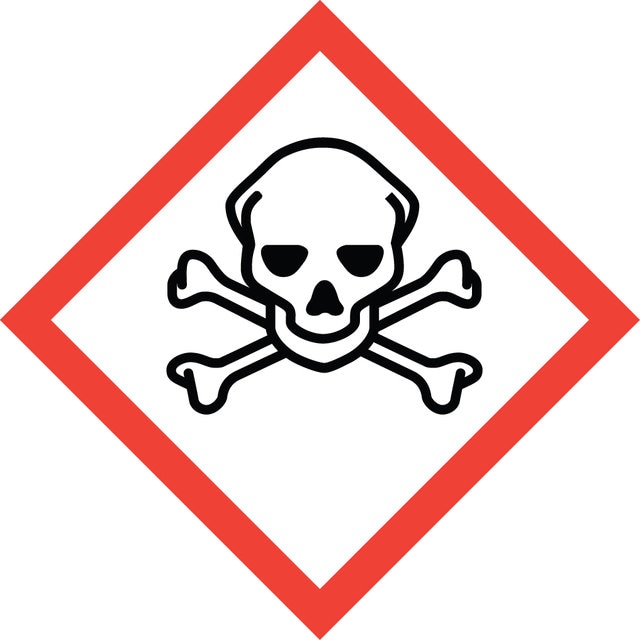
signalword
Danger
hcodes
Hazard Classifications
Acute Tox. 2 Dermal - Acute Tox. 2 Inhalation - Acute Tox. 2 Oral
Storage Class
6.1A - Combustible acute toxic Cat. 1 and 2 / very toxic hazardous materials
wgk
WGK 3
flash_point_f
Not applicable
flash_point_c
Not applicable
Choose from one of the most recent versions:
Already Own This Product?
Find documentation for the products that you have recently purchased in the Document Library.
M Buxadé et al.
Immunology, 102(4), 416-425 (2001-05-01)
Tumour necrosis factor-alpha (TNF-alpha) is a proinflammatory cytokine produced by several cell types, including T cells upon antigen stimulation. Its production is crucial for the development of an early defence against many pathogens, but its beneficial effects are dependent on
L Blanco et al.
Infection and immunity, 58(9), 3020-3028 (1990-09-01)
Toxic shock syndrome toxin 1 (TSST-1), a 22-kilodalton protein made by strains of Staphylococcus aureus harboring the chromosomal toxin gene, may elicit toxic shock syndrome in humans. In vitro, TSST-1 induces T cells to proliferate and macrophages to secrete interleukin-1.
M Ramírez et al.
International immunology, 11(9), 1479-1489 (1999-08-28)
The superantigen toxic shock syndrome toxin (TSST)-1 can induce tumor necrosis factor (TNF)-alpha expression in T cells and monocytes, through different signaling pathways. We have stimulated peripheral blood mononuclear cells with TSST-1 and found that the major cell producers of
Khojasteh V Javid et al.
Iranian journal of microbiology, 3(4), 170-176 (2012-04-25)
The aim of study was to develop a rapid assay, dye labelled monoclonal antibody assay (DLMAA), using non-radioactive organic synthetic dyes for identification of Toxic Shock Syndrome Toxin-1 (TSST-1) producing strains of Staphylococcus aureus. The assay protocol required only two
Microbial "superantigens".
M L Misfeldt
Infection and immunity, 58(8), 2409-2413 (1990-08-01)
Related Content
Our team of scientists has experience in all areas of research including Life Science, Material Science, Chemical Synthesis, Chromatography, Analytical and many others.
Contact Technical Service