


If this product has an expiration or retest date, it will be shown on the Certificate of Analysis (COA, CofA). If there is no retest or expiration date listed on the product's COA, we do not have suitable stability data to determine a shelf life. For these products, the only date on the COA will be the release date; a retest, expiration, or use-by-date will not be displayed.
For all products, we recommend handling per defined conditions as printed in our product literature and website product descriptions. We recommend that products should be routinely inspected by customers to ensure they perform as expected.
For products without retest or expiration dates, our standard warranty of 1 year from the date of shipment is applicable.
For more information, please refer to the Product Dating Information document: https://www.sigmaaldrich.com/deepweb/assets/sigmaaldrich/marketing/global/documents/418/501/product-dating-information-06-25-mk.pdf
47083-U

Formaldehyde solution
stabilized with methanol, ~37 wt. % in H2O, certified reference material
Synonym(s):
Formalin
About This Item
Skip To
Product Name
Formaldehyde solution, stabilized with methanol, ~37 wt. % in H2O, certified reference material
InChI key
WSFSSNUMVMOOMR-UHFFFAOYSA-N
SMILES string
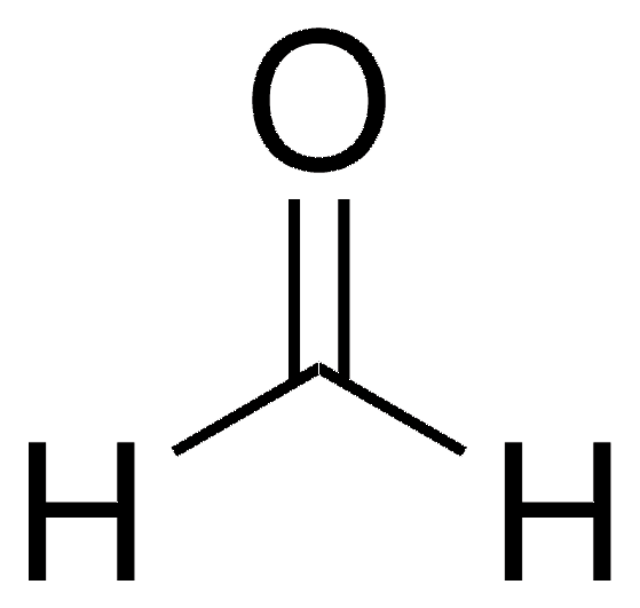
[H]C([H])=O
InChI
1S/CH2O/c1-2/h1H2
grade
certified reference material
vapor density
1.03 (vs air)
vapor pressure
52 mmHg ( 37 °C)
CofA
current certificate can be downloaded
autoignition temp.
572 °F
contains
~37% water in methanol as stabilizer
packaging
pkg of 1 mL
concentration
~37 wt. % in H2O
technique(s)
HPLC: suitable
gas chromatography (GC): suitable
density
1.09 g/mL at 25 °C (lit.)
suitability
suitable for manufacturing use (Laboratory chemicals)
application(s)
cleaning products
cosmetics
environmental
food and beverages
personal care
format
single component solution
storage temp.
2-30°C
Quality Level
Looking for similar products? Visit Product Comparison Guide
1 of 4
This Item | F1635 | 1.04003 | 47673 |
|---|---|---|---|
| grade certified reference material | grade - | grade ACS reagent | grade - |
| technique(s) HPLC: suitable, gas chromatography (GC): suitable | technique(s) tissue processing: suitable | technique(s) - | technique(s) - |
| application(s) cleaning products | application(s) - | application(s) diagnostic assay manufacturing | application(s) - |
| format single component solution | format - | format - | format - |
| vapor density 1.03 (vs air) | vapor density 1.03 (vs air) | vapor density 1.03 (vs air) | vapor density 1.03 (vs air) |
| vapor pressure 52 mmHg ( 37 °C) | vapor pressure 52 mmHg ( 37 °C) | vapor pressure 52 mmHg ( 37 °C) | vapor pressure 52 mmHg ( 37 °C) |
Application
signalword
Danger
Hazard Classifications
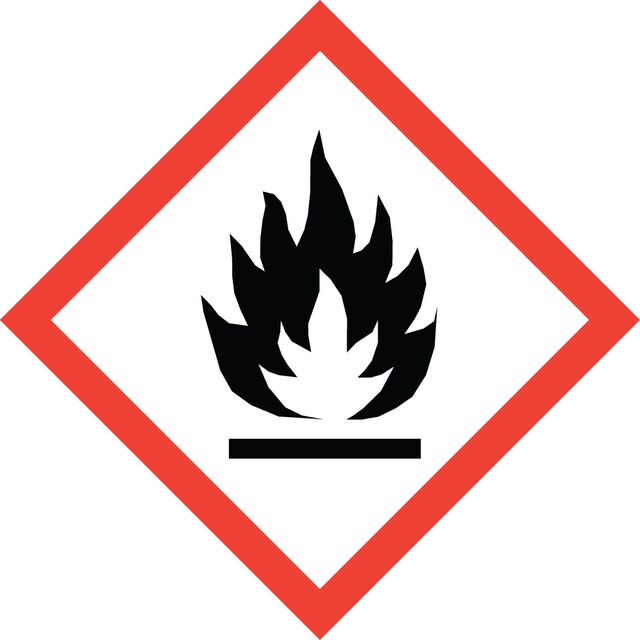
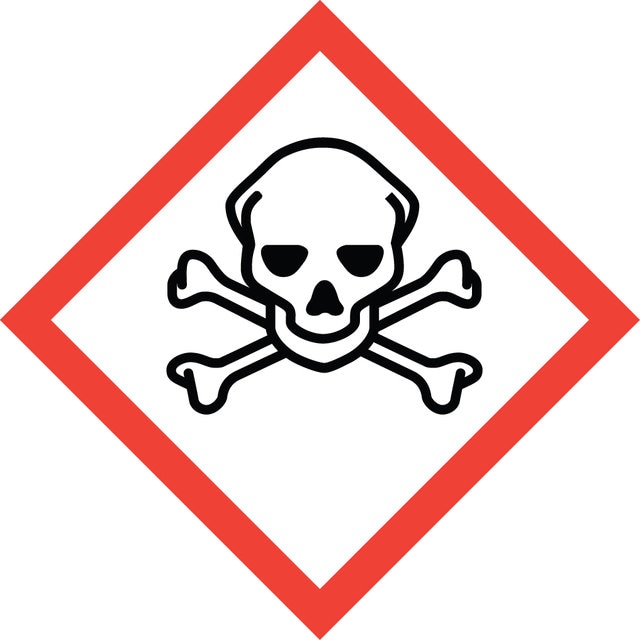
Acute Tox. 2 Inhalation - Acute Tox. 3 Dermal - Acute Tox. 3 Oral - Carc. 1B - Eye Dam. 1 - Flam. Liq. 3 - Muta. 2 - Skin Corr. 1B - Skin Sens. 1 - STOT SE 1 - STOT SE 3
target_organs
Eyes,Central nervous system, Respiratory system
Storage Class
3 - Flammable liquids
wgk
WGK 3
flash_point_f
133.0 °F
flash_point_c
56.11 °C
ppe
Faceshields, Gloves, Goggles, type ABEK (EN14387) respirator filter
Certificates of Analysis (COA)
Search for Certificates of Analysis (COA) by entering the products Lot/Batch Number. Lot and Batch Numbers can be found on a product’s label following the words ‘Lot’ or ‘Batch’.
Already Own This Product?
Find documentation for the products that you have recently purchased in the Document Library.
Protocols
Separation of Formaldehyde solution
-
How can I determine the shelf life / expiration / retest date of this product?
1 answer-
Helpful?
-
-
How is shipping temperature determined? And how is it related to the product storage temperature?
1 answer-
Products may be shipped at a different temperature than the recommended long-term storage temperature. If the product quality is sensitive to short-term exposure to conditions other than the recommended long-term storage, it will be shipped on wet or dry-ice. If the product quality is NOT affected by short-term exposure to conditions other than the recommended long-term storage, it will be shipped at ambient temperature. As shipping routes are configured for minimum transit times, shipping at ambient temperature helps control shipping costs for our customers. For more information, please refer to the Storage and Transport Conditions document: https://www.sigmaaldrich.com/deepweb/assets/sigmaaldrich/marketing/global/documents/316/622/storage-transport-conditions-mk.pdf
Helpful?
-
-
What is the Department of Transportation shipping information for this product?
1 answer-
Transportation information can be found in Section 14 of the product's (M)SDS.To access the shipping information for this material, use the link on the product detail page for the product.
Helpful?
-
-
Are there any other compounds in Product No. 47083-U, Formaldehyde 37% Wt in Water, except formaldehyde and water?
1 answer-
Cat# 47083-U is a saturated solution of formaldehyde, water, and typically another agent, most commonly methanol. In its typical form, formalin is 37% formaldehyde by weight, 6-13% methanol, and the remainder water.
Helpful?
-
-
What is the difference between formalin and formaldehyde?
1 answer-
Formaldehyde is a gas that is readily soluble in water. Formalin is the common name for a solution made of 37% formaldehyde, 6-13% methanol, and water. The terms are not interchangeable.
Helpful?
-
-
Why does Product No. 47083-U, Formaldehyde 37% Wt in Water, contain methanol?
1 answer-
A small percentage of methanol is added to limit the extent of polymerization of the formaldehyde.
Helpful?
-
Active Filters
Our team of scientists has experience in all areas of research including Life Science, Material Science, Chemical Synthesis, Chromatography, Analytical and many others.
Contact Technical Service