

If this product has an expiration or retest date, it will be shown on the Certificate of Analysis (COA, CofA). If there is no retest or expiration date listed on the product's COA, we do not have suitable stability data to determine a shelf life. For these products, the only date on the COA will be the release date; a retest, expiration, or use-by-date will not be displayed.
For all products, we recommend handling per defined conditions as printed in our product literature and website product descriptions. We recommend that products should be routinely inspected by customers to ensure they perform as expected.
For products without retest or expiration dates, our standard warranty of 1 year from the date of shipment is applicable.
For more information, please refer to the Product Dating Information document: https://www.sigmaaldrich.com/deepweb/assets/sigmaaldrich/marketing/global/documents/418/501/product-dating-information-06-25-mk.pdf
5.33001

Acetic acid

100%, for LC-MS LiChropur™
Synonym(s):
Acetic acid, Ethanoic acid, Glacial acetic acid
Select a Size
About This Item
Skip To
Product Name
Acetic acid 100%, for LC-MS LiChropur™
vapor density
2.07 (vs air)
Quality Level
vapor pressure
15.4 hPa ( 20 °C)
Assay
≥99.8% (acidimetric)
form
liquid
autoignition temp.
485 °C
800 °F
expl. lim.
16 %, 92 °F
4 %, 59 °F
greener alternative product characteristics
Waste Prevention
Use of Renewable Feedstocks
Learn more about the Principles of Green Chemistry.
sustainability
Greener Alternative Product
technique(s)
LC/MS: suitable
refractive index
n20/D 1.371 (lit.)
pH
2.5 (20 °C, 50 g/L in H2O)
kinematic viscosity
1.17 cSt(20 °C)
bp
117-118 °C (lit.)
mp
16.2 °C (lit.)
transition temp
flash point 39 °C
density
1.04 g/mL at 25 °C (lit.)
cation traces
Al: ≤2.0 ppm
Ca: ≤20.0 ppm
Cu: ≤1.0 ppm
Fe: ≤20.0 ppm
K: ≤2.0 ppm
Mg: ≤2.0 ppm
NH4+: ≤10.0 ppm
Na: ≤5.0 ppm
greener alternative category
storage temp.
15-25°C
SMILES string
[F2C(F2C)13F3C]C(O)=O
InChI
1S/C2H4O2/c1-2(3)4/h1H3,(H,3,4)
InChI key
QTBSBXVTEAMEQO-UHFFFAOYSA-N
Looking for similar products? Visit Product Comparison Guide
General description
Application
Legal Information
related product
Signal Word
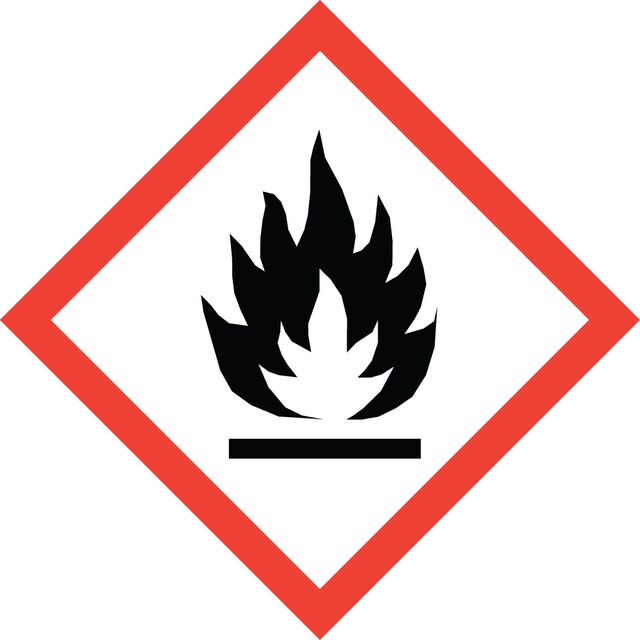
Danger
Hazard Statements
Precautionary Statements
Hazard Classifications
Eye Dam. 1 - Flam. Liq. 3 - Skin Corr. 1A
Storage Class Code
3 - Flammable liquids
WGK
WGK 1
Flash Point(F)
102.2 °F
Flash Point(C)
39 °C
Certificates of Analysis (COA)
Search for Certificates of Analysis (COA) by entering the products Lot/Batch Number. Lot and Batch Numbers can be found on a product’s label following the words ‘Lot’ or ‘Batch’.
Already Own This Product?
Find documentation for the products that you have recently purchased in the Document Library.
Articles
For use as a marker in SDS-PAGE; Albumin from chicken egg white, For use as a marker in SDS-PAGE; L-Lactic Dehydrogenase from rabbit muscle, Type XI, lyophilized powder, 600-1,200 units/mg protein
Learn the tips and tricks of selecting and preparing a suitable mobile phase buffer for your HPLC separations and method developments for samples that contain ionizable compounds.
An RP-LC×RP-LC-PDA-MS method for the metabolic profiling of G. glabra extract using the MSG approach for enhanced metabolic coverage.
Separation of L-Methionine, Pharmaceutical Secondary Standard; Certified Reference Material
Protocols
Separation of various acids and compounds by molecular weight: PAA, PEI, PIDADMACl, PAS, cationic dextran, chitosan
Separation of Pyridoxine Hydrochloride (B6), analytical standard; Thiamine Hydrochloride (B1), analytical standard
-
How can I determine the shelf life / expiration / retest date of this product?
1 answer-
Helpful?
-
-
How is shipping temperature determined? And how is it related to the product storage temperature?
1 answer-
Products may be shipped at a different temperature than the recommended long-term storage temperature. If the product quality is sensitive to short-term exposure to conditions other than the recommended long-term storage, it will be shipped on wet or dry-ice. If the product quality is NOT affected by short-term exposure to conditions other than the recommended long-term storage, it will be shipped at ambient temperature. As shipping routes are configured for minimum transit times, shipping at ambient temperature helps control shipping costs for our customers. For more information, please refer to the Storage and Transport Conditions document: https://www.sigmaaldrich.com/deepweb/assets/sigmaaldrich/marketing/global/documents/316/622/storage-transport-conditions-mk.pdf
Helpful?
-
Active Filters
Our team of scientists has experience in all areas of research including Life Science, Material Science, Chemical Synthesis, Chromatography, Analytical and many others.
Contact Technical Service