


If this product has an expiration or retest date, it will be shown on the Certificate of Analysis (COA, CofA). If there is no retest or expiration date listed on the product's COA, we do not have suitable stability data to determine a shelf life. For these products, the only date on the COA will be the release date; a retest, expiration, or use-by-date will not be displayed.
For all products, we recommend handling per defined conditions as printed in our product literature and website product descriptions. We recommend that products should be routinely inspected by customers to ensure they perform as expected.
For products without retest or expiration dates, our standard warranty of 1 year from the date of shipment is applicable.
For more information, please refer to the Product Dating Information document: https://www.sigmaaldrich.com/deepweb/assets/sigmaaldrich/marketing/global/documents/418/501/product-dating-information-06-25-mk.pdf
179337

Methanol
≥99.8%, ACS reagent, suitable for EPA 1613
Synonym(s):
Methyl alcohol
Select a Size
About This Item
97.68 mmHg ( 20 °C)
Skip To
Product Name
Methanol, ACS reagent, ≥99.8%
grade
ACS reagent
Agency
suitable for EPA 1613
vapor density
1.11 (vs air)
vapor pressure
410 mmHg ( 50 °C)
97.68 mmHg ( 20 °C)
Assay
≥99.8%
form
liquid
autoignition temp.
725 °F
expl. lim.
36 %
dilution
(for analytical testing)
impurities
H2SO4, passes test (darkened)
MnO4- reducers, passes test
≤0.0002 meq/g Titr. base
≤0.0003 meq/g Titr. acid
≤0.001% acetaldehyde
≤0.001% acetone
≤0.001% formaldehyde
≤0.1% water
evapn. residue
≤0.001%
color
APHA: ≤10
clear
refractive index
n20/D 1.329 (lit.)
bp
64.7 °C (lit.)
mp
−98 °C (lit.)
density
0.791 g/mL at 25 °C (lit.)
format
neat
SMILES string
CO
InChI
1S/CH4O/c1-2/h2H,1H3
InChI key
OKKJLVBELUTLKV-UHFFFAOYSA-N
Looking for similar products? Visit Product Comparison Guide
1 of 4
This Item | 320390 | 439193 | 494437 |
|---|---|---|---|
| grade ACS reagent | grade ACS reagent | grade gradient grade | grade - |
| assay ≥99.8% | assay ≥99.8% | assay ≥99.9% | assay ≥99.93% |
| Quality Level 100, 200 | Quality Level 200 | Quality Level 100 | Quality Level 100 |
| form liquid | form liquid | form liquid | form liquid |
| impurities H2SO4, passes test (darkened), ≤0.0002 meq/g Titr. base, ≤0.001% acetaldehyde, ≤0.001% formaldehyde, MnO4- reducers, passes test, ≤0.001% acetone, ≤0.0003 meq/g Titr. acid, ≤0.1% water | impurities H2SO4, passes test (darkened), MnO4- reducers, passes test, ≤0.0002 meq/g Titr. base, ≤0.0003 meq/g Titr. acid, ≤0.001% acetaldehyde, ≤0.001% acetone, ≤0.001% formaldehyde, ≤0.1% water | impurities H2SO4, passes test (darkened), ≤0.0002 meq/g Titr. base, ≤0.0003 meq/g Titr. acid, ≤0.001% acetaldehyde, ≤0.001% acetone, ≤0.001% formaldehyde, ≤0.03% water | impurities ≤0.0002 meq/g Titr. base, ≤0.0003 meq/g Titr. acid, ≤0.02% (water) |
| density 0.791 g/mL at 25 °C (lit.) | density 0.791 g/mL at 25 °C (lit.) | density 0.791 g/mL at 25 °C (lit.) | density 0.791 g/mL at 25 °C (lit.) |
General description
Premium ACS Solvents: Our solvents meet or exceed the stringent standards set by the American Chemical Society, ensuring high quality and reliability for your laboratory applications.
Replicable and Publishable Results: Designed for consistency, our solvents deliver results that can be reliably reproduced, making them ideal for research that requires publication.
Versatile Applications: Suitable for routine chemical synthesis, drying, purification, and critical labware cleaning, our solvents cater to a wide range of research needs in the laboratory.
Application
Signal Word
Danger
Hazard Statements
Precautionary Statements
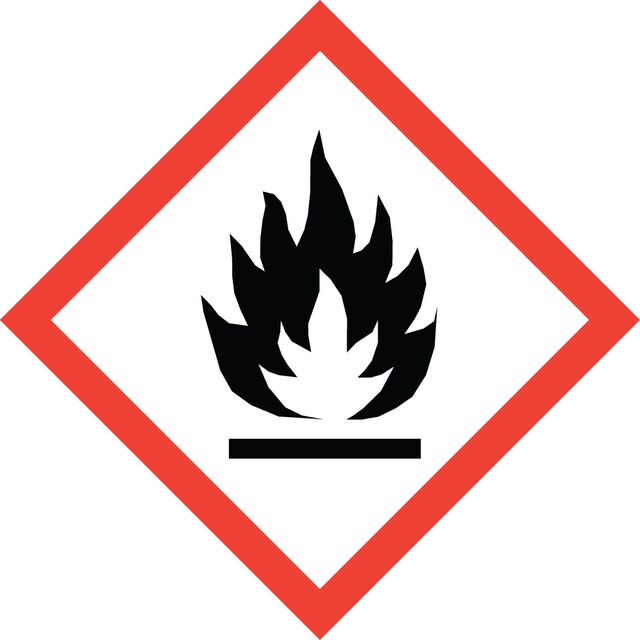
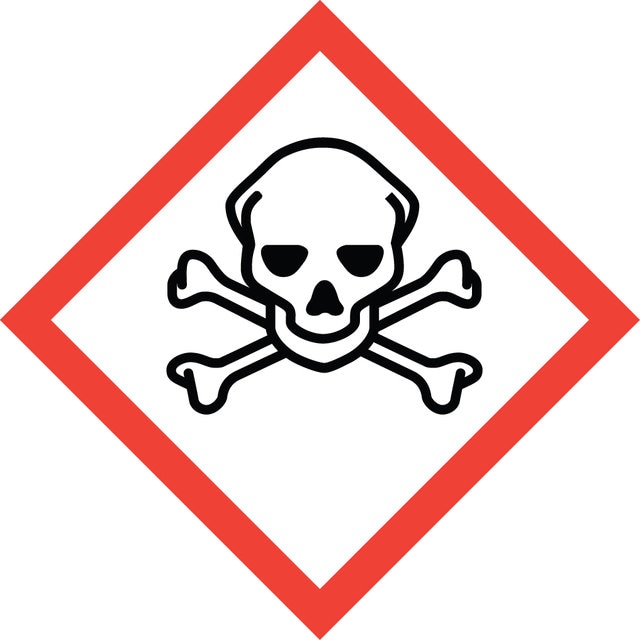
Hazard Classifications
Acute Tox. 3 Dermal - Acute Tox. 3 Inhalation - Acute Tox. 3 Oral - Flam. Liq. 2 - STOT SE 1
Target Organs
Eyes,Central nervous system
Storage Class Code
3 - Flammable liquids
WGK
WGK 2
Flash Point(F)
49.5 °F - closed cup
Flash Point(C)
9.7 °C - closed cup
Choose from one of the most recent versions:
Already Own This Product?
Find documentation for the products that you have recently purchased in the Document Library.
Related Content
This page is intended to make it easier to find the consumables you need based on the analytical method you’re using. Methods included on this page come from the EPA, Standard Methods and ASTM.
-
How can I determine the shelf life / expiration / retest date of this product?
1 answer-
Helpful?
-
-
Is this methanol HPLC grade?
1 answer-
This product has not been tested specifically for use in HPLC. The purity of this material is determined by GC. There are a number of HPLC qualified products available. Please see the link below to review these options:
https://www.sigmaaldrich.com/search/methanol-suitable-for-hplc?focus=products&page=1&perpage=30&sort=relevance&term=methanol%20suitable%20for%20HPLC&type=productHelpful?
-
-
How is shipping temperature determined? And how is it related to the product storage temperature?
1 answer-
Products may be shipped at a different temperature than the recommended long-term storage temperature. If the product quality is sensitive to short-term exposure to conditions other than the recommended long-term storage, it will be shipped on wet or dry-ice. If the product quality is NOT affected by short-term exposure to conditions other than the recommended long-term storage, it will be shipped at ambient temperature. As shipping routes are configured for minimum transit times, shipping at ambient temperature helps control shipping costs for our customers. For more information, please refer to the Storage and Transport Conditions document: https://www.sigmaaldrich.com/deepweb/assets/sigmaaldrich/marketing/global/documents/316/622/storage-transport-conditions-mk.pdf
Helpful?
-
Active Filters
Our team of scientists has experience in all areas of research including Life Science, Material Science, Chemical Synthesis, Chromatography, Analytical and many others.
Contact Technical Service