
70751

BugBuster® Ni-NTA His•Bind® Purification Kit
Sign In to View Organizational & Contract Pricing.
Select a Size
Change View
| Size/SKU | Availability | Price |
|---|---|---|
1 kit | Please contact Customer Service for Availability | 2.770,00 PLN |
About This Item
NACRES:
NA.56
UNSPSC Code:
41106500
Shipped in:
wet ice
2.770,00 PLN
Please contact Customer Service for Availability
manufacturer/tradename
Novagen®
storage condition
OK to freeze
shipped in
wet ice
General description
BugBuster®Ni-NTA HIS-BIND® Purification Kit is used for protein purification. Ni-NTA HIS-BIND® Resin is high-performance Ni2+-charged agarose used for rapid, one-step purification of proteins containing a polyhistidine tag sequence.
Application
Other Notes
•2 × 100 mlBugBuster Protein Extraction Reagent
•10,000 UBenzonase Nuclease, purity >90%
•10 mlNi-NTA His•Bind Resin
•pkg/4Chromatography Columns
•10,000 UBenzonase Nuclease, purity >90%
•10 mlNi-NTA His•Bind Resin
•pkg/4Chromatography Columns
Due to the nature of the Hazardous Materials in this shipment, additional shipping charges may be applied to your order. Certain sizes may be exempt from the additional hazardous materials shipping charges. Please contact your local sales office for more information regarding these charges.
Legal Information
BUGBUSTER is a registered trademark of Merck KGaA, Darmstadt, Germany
HIS-BIND is a registered trademark of Merck KGaA, Darmstadt, Germany
NOVAGEN is a registered trademark of Merck KGaA, Darmstadt, Germany
Disclaimer
Toxicity: Multiple Toxicity Values, refer to MSDS (O)
1 of 1
This Item | |||
|---|---|---|---|
| description - | description - | description Affinity purification of GST fusion proteins | description - |
| manufacturer/tradename Novagen® | manufacturer/tradename Novagen® | manufacturer/tradename Novagen® | manufacturer/tradename Novagen® |
| storage condition OK to freeze | storage condition OK to freeze | storage condition OK to freeze | storage condition do not freeze |
| shipped in wet ice | shipped in wet ice | shipped in - | shipped in ambient |


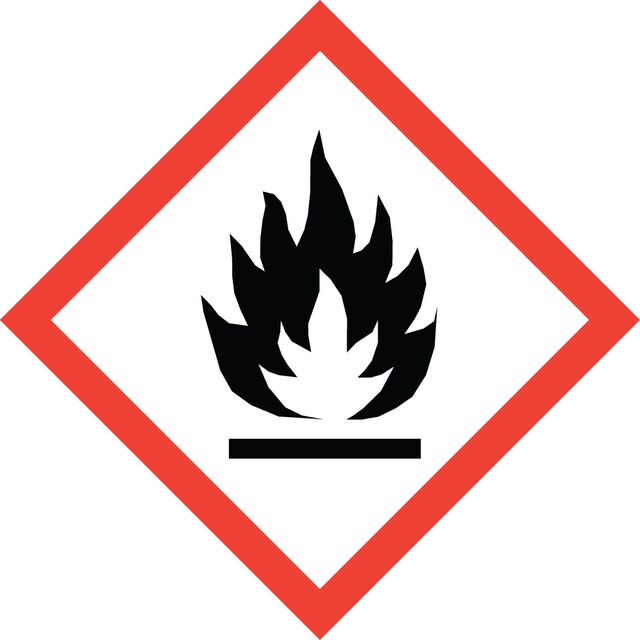
Signal Word
Warning
Hazard Codes
Precautionary Statements
Storage Class
3 - Flammable liquids
WGK
WGK 3
Hazard Classifications
Flam. Liq. 3
Choose from one of the most recent versions:
Already Own This Product?
Find documentation for the products that you have recently purchased in the Document Library.