Skip to Content
Merck

73487

Triethylamine

analytical standard

Synonym(s):

N,N-Diethylethanamine

Sign In to View Organizational & Contract Pricing.

Select a Size

1 ML

PLN 249.05

5 ML

PLN 1,150.00

PLN 249.05

List PricePLN 293.00Save 15%

Please contact Customer Service for Availability

Request a Bulk Order

About This Item

Linear Formula:
(C2H5)3N
CAS Number:
Molecular Weight:
101.19
Beilstein:
605283
EC Number:
MDL number:
UNSPSC Code:
85151701
PubChem Substance ID:
NACRES:
NA.24

Skip To

Technical Service
Need help? Our team of experienced scientists is here for you.
Let Us Assist

grade

analytical standard

Quality Level

vapor density

3.5 (vs air)

vapor pressure

51.75 mmHg ( 20 °C)

Assay

≥99.5% (GC)

autoignition temp.

593 °F

shelf life

limited shelf life, expiry date on the label

expl. lim.

8 %

technique(s)

HPLC: suitable
gas chromatography (GC): suitable

impurities

≤0.5% water

refractive index

n20/D 1.400-1.402
n20/D 1.401 (lit.)

bp

88.8 °C (lit.)

mp

−115 °C (lit.)

density

0.726 g/mL at 25 °C (lit.)

application(s)

cleaning products
cosmetics
flavors and fragrances
food and beverages
personal care

format

neat

SMILES string

CCN(CC)CC

InChI

1S/C6H15N/c1-4-7(5-2)6-3/h4-6H2,1-3H3

InChI key

ZMANZCXQSJIPKH-UHFFFAOYSA-N

Looking for similar products? Visit Product Comparison Guide

Compare Similar Items

View Full Comparison

Show Differences

1 of 4

This Item
9033516835598.08352
technique(s)

HPLC: suitable, gas chromatography (GC): suitable

technique(s)

ion chromatography: suitable

technique(s)

-

technique(s)

-

grade

analytical standard

grade

-

grade

pharmaceutical primary standard

grade

-

format

neat

format

-

format

neat

format

-

application(s)

cleaning products
cosmetics
flavors and fragrances
food and beverages
personal care

application(s)

-

application(s)

pharmaceutical (small molecule)

application(s)

-

vapor density

3.5 (vs air)

vapor density

3.5 (vs air)

vapor density

3.5 (vs air)

vapor density

-

vapor pressure

51.75 mmHg ( 20 °C)

vapor pressure

51.75 mmHg ( 20 °C)

vapor pressure

51.75 mmHg ( 20 °C)

vapor pressure

72 hPa ( 20 °C)

General description

Triethylamine belongs to a broad range of flavor and fragrance standards used for the quality control of food and cosmetic products. Triethylamine, an intense environmental pollutant, belonging to the class of biogenic amines,[1] is produced in the process of metabolism by animal organs or proteins.[2] It is commonly identified in the food processing industry,[3] polymerization reactions including urethane and epoxy resin systems, in the desalination of seawater, as corrosion inhibitors and solvents, hair-curing products, etc.[2]

Application

Refer to the product′s Certificate of Analysis for more information on a suitable instrument technique. Contact Technical Service for further support.
Triethylamine may be used as an analytical reference standard for the quantification of the analyte in:
  • Food and beverages using ion-exchange chromatography with conductivity detection.[1]
  • Smoke flavoring from rice husk using gas chromatography coupled to mass spectrometric detection, flame ionization detection and olfactometry analysis (GC-O).[4]
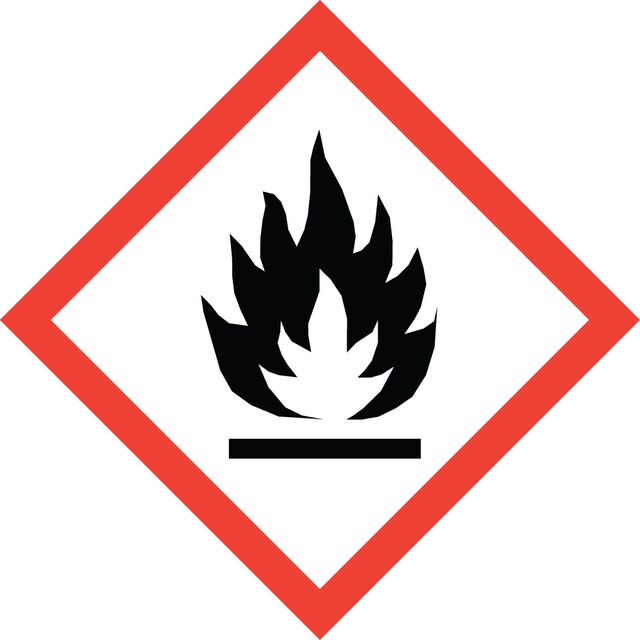
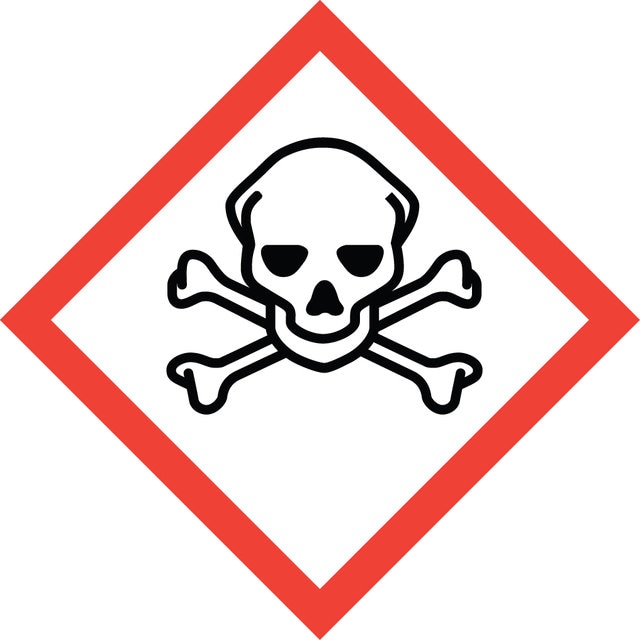
Signal Word

Danger

Hazard Classifications

Acute Tox. 3 Dermal - Acute Tox. 3 Inhalation - Acute Tox. 4 Oral - Eye Dam. 1 - Flam. Liq. 2 - Skin Corr. 1A - STOT SE 3

Target Organs

Respiratory system

Storage Class Code

3 - Flammable liquids

WGK

WGK 1

Flash Point(F)

12.2 °F - closed cup

Flash Point(C)

-11 °C - closed cup


Choose from one of the most recent versions:

Certificates of Analysis (COA)

Lot/Batch Number

Don't see the Right Version?

If you require a particular version, you can look up a specific certificate by the Lot or Batch number.

Already Own This Product?

Find documentation for the products that you have recently purchased in the Document Library.

Visit the Document Library

Characterisation of volatile compounds in a smoke flavouring from rice husk
Pino AJ
Food Chemistry, 153, 81-86 (2014)
A multiresidual method based on ion-exchange chromatography with conductivity detection for the determination of biogenic amines in food and beverages
Palermo C, et al.
Analytical and Bioanalytical Chemistry, 405(2-3), 1015-1023 (2013)
A composite of polyelectrolyte-grafted multi-walled carbon nanotubes and in situ polymerized polyaniline for the detection of low concentration triethylamine vapor
Li Y, et al.
Nanotechnology, 19(1), 015503-015503 (2007)
Green synthesis of sucralose-capped silver nanoparticles for fast colorimetric triethylamine detection
Filippo E
Sensors and Actuators B, Chemical, 178(2), 1-9 (2013)
Hannah Coyle et al.
The American journal of geriatric psychiatry : official journal of the American Association for Geriatric Psychiatry, 23(4), 335-359 (2014-07-08)
The aim of this study was to assess the efficacy of cognitive training, specifically computerized cognitive training (CCT) and virtual reality cognitive training (VRCT), programs for individuals living with mild cognitive impairment (MCI) or dementia and therefore at high risk

Questions

Reviews

No rating value

Active Filters

Our team of scientists has experience in all areas of research including Life Science, Material Science, Chemical Synthesis, Chromatography, Analytical and many others.

Contact Technical Service