Skip to Content
Merck

I9392

3-Methylbutanol

BioReagent, ≥98.5%, Molecular Biology

Synonym(s):

3-Methyl-1-butanol, Isoamyl alcohol, Isopentyl alcohol

Sign In to View Organizational & Contract Pricing.

Select a Size

25 ML

PLN 284.00

4 X 25 ML

PLN 444.00

500 ML

PLN 706.00

1 L

PLN 960.50

PLN 284.00


Please contact Customer Service for Availability


About This Item

Linear Formula:
(CH3)2CHCH2CH2OH
CAS Number:
Molecular Weight:
88.15
UNSPSC Code:
12352200
NACRES:
NA.52
PubChem Substance ID:
EC Number:
204-633-5
Beilstein/REAXYS Number:
1718835
MDL number:
Grade:
Molecular Biology
Assay:
≥98.5%
Technique(s):
RNA extraction: suitable

Skip To

Technical Service
Need help? Our team of experienced scientists is here for you.
Let Us Assist

Product Name

3-Methylbutanol, BioReagent, ≥98.5%, Molecular Biology

InChI key

PHTQWCKDNZKARW-UHFFFAOYSA-N

InChI

1S/C5H12O/c1-5(2)3-4-6/h5-6H,3-4H2,1-2H3

SMILES string

CC(C)CCO

grade

Molecular Biology

product line

BioReagent

assay

≥98.5%

form

liquid

technique(s)

RNA extraction: suitable

pH

5.6 (20 °C, 25 g/L)

density

0.809 g/mL at 20 °C (lit.)

suitability

suitable for nucleic acid purification

storage temp.

room temp

Quality Level

Looking for similar products? Visit Product Comparison Guide

Compare Similar Items

View Full Comparison

Show Differences

1 of 4

This Item
5909232002177664
grade

for molecular biology

grade

analytical standard

grade

ACS reagent

grade

analytical standard

Quality Level

200

Quality Level

100

Quality Level

200

Quality Level

100

technique(s)

RNA extraction: suitable

technique(s)

HPLC: suitable, gas chromatography (GC): suitable

technique(s)

-

technique(s)

HPLC: suitable, gas chromatography (GC): suitable

assay

≥98.5%

assay

≥99.8% (GC)

assay

≥98.5%

assay

≥98.5% (GC)

form

liquid

form

-

form

liquid

form

-

pH

5.6 (20 °C, 25 g/L)

pH

-

pH

5.6 (20 °C, 25 g/L)

pH

-

Application

3-Methylbutanol (isoamyl alcohol) in combination with phenol and chloroform is used in extraction of RNA. It was used in the synthesis of oligo-RNAs using photocaged adenosine molecules.[1]
3-Methylbutanol has been used as a component of phenol/chloroform/ isoamyl alcohol solution for DNA extraction from blood and from absorbing substrata based forensic samples[2] and biofilms.[3]

General description

3-methylbutanol (isoamyl alcohol) is a clear, colorless alcohol commonly used as an organic solvent . It can also be used in phenol-chloroform nucleic acid extraction and purification protocols, where it inhibits RNase activity and reduces foaming. Isoamyl alcohol can also be used for the removal of ethidium bromide from DNA purified by CsCl gradient ultracentrifugation.

related product

Product No.
Description
Pricing

signalword

Danger

Hazard Classifications

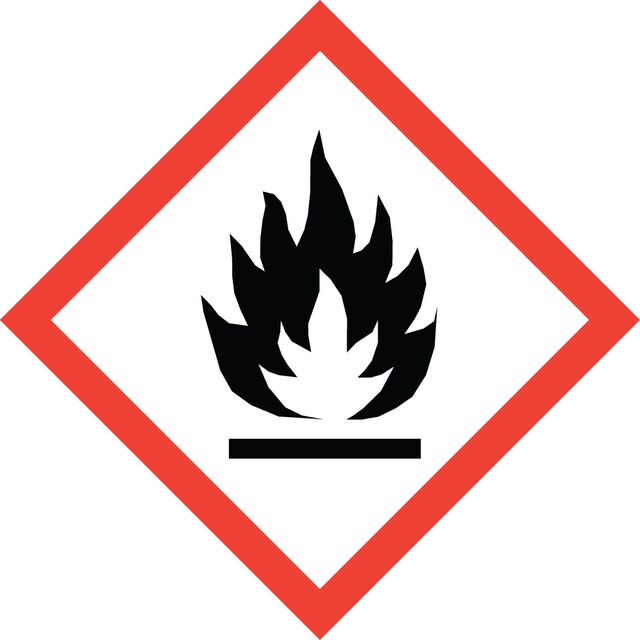
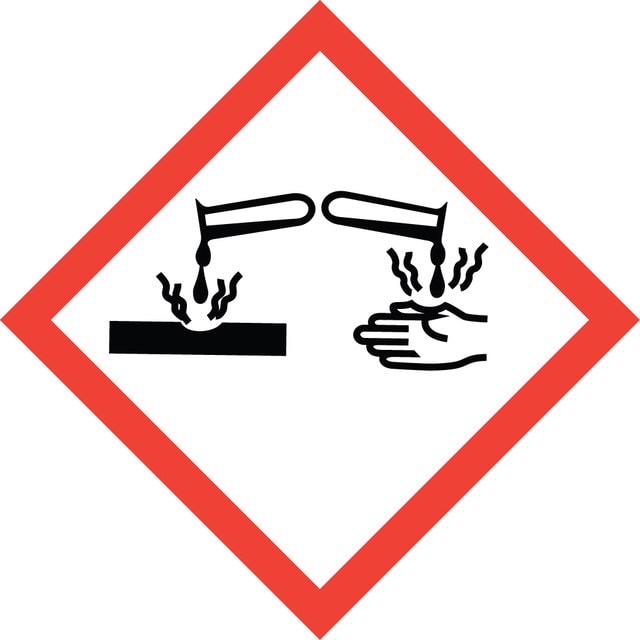
Acute Tox. 4 Inhalation - Eye Dam. 1 - Flam. Liq. 3 - Skin Irrit. 2 - STOT SE 3

target_organs

Respiratory system

Storage Class

3 - Flammable liquids

wgk

WGK 1

flash_point_f

110.3 °F - closed cup

flash_point_c

43.5 °C - closed cup

ppe

Eyeshields, Faceshields, Gloves, type ABEK (EN14387) respirator filter


Choose from one of the most recent versions:

Certificates of Analysis (COA)

Lot/Batch Number

Don't see the Right Version?

If you require a particular version, you can look up a specific certificate by the Lot or Batch number.

Already Own This Product?

Find documentation for the products that you have recently purchased in the Document Library.

Visit the Document Library

Section 1 Isolation of nucleic acids
Biofouling Methods, 88-88 (2014)
DNA extraction from blood and forensic samples
Guidelines for Molecular Analysis in Archive Tissues, 45-54 (2011)
Steven G Chaulk et al.
Nature protocols, 2(5), 1052-1058 (2007-06-05)
This protocol describes a general method for the preparation of RNAs in which the reactivity or hydrogen-bonding properties of the molecule are modified in a photoreversible fashion by use of a caging strategy. A single caged adenosine, modified at the
Niels O Verhulst et al.
Malaria journal, 10, 28-28 (2011-02-10)
Anopheles gambiae sensu stricto is considered to be highly anthropophilic and volatiles of human origin provide essential cues during its host-seeking behaviour. A synthetic blend of three human-derived volatiles, ammonia, lactic acid and tetradecanoic acid, attracts A. gambiae. In addition
Luca Bianco et al.
PloS one, 9(10), e110377-e110377 (2014-10-11)
High-density SNP arrays for genome-wide assessment of allelic variation have made high resolution genetic characterization of crop germplasm feasible. A medium density array for apple, the IRSC 8K SNP array, has been successfully developed and used for screens of bi-parental

Related Content

Product Information Sheet

Questions

Reviews

No rating value

Active Filters

Our team of scientists has experience in all areas of research including Life Science, Material Science, Chemical Synthesis, Chromatography, Analytical and many others.

Contact Technical Service