Skip to Content
Merck

319929

1,2-Dichloroethane

ACS reagent, ≥99.0%

Synonym(s):

Ethylene chloride, Ethylene dichloride

Sign In to View Organizational & Contract Pricing.

Select a Size


About This Item

Linear Formula:
ClCH2CH2Cl
CAS Number:
Molecular Weight:
98.96
NACRES:
NA.21
PubChem Substance ID:
eCl@ss:
39050106
UNSPSC Code:
12352101
EC Number:
203-458-1
MDL number:
Beilstein/REAXYS Number:
605264
Grade:
ACS reagent
Assay:
≥99.0%
Bp:
83 °C (lit.)
Vapor pressure:
87 mmHg ( 25 °C)
Technical Service
Need help? Our team of experienced scientists is here for you.
Let Us Assist
Technical Service
Need help? Our team of experienced scientists is here for you.
Let Us Assist

Product Name

1,2-Dichloroethane, ACS reagent, ≥99.0%

InChI key

WSLDOOZREJYCGB-UHFFFAOYSA-N

InChI

1S/C2H4Cl2/c3-1-2-4/h1-2H2

SMILES string

ClCCCl

grade

ACS reagent

vapor density

3.4 (20 °C, vs air)

vapor pressure

87 mmHg ( 25 °C)

assay

≥99.0%

form

liquid

autoignition temp.

775 °F

expl. lim.

15.6 %

dilution

(for analytical testing)

impurities

≤0.0003 meq/g Titr. acid
≤0.03% water

evapn. residue

≤0.002%

color

APHA: ≤10
clear

refractive index

n20/D 1.444 (lit.)

bp

83 °C (lit.)

mp

−35 °C (lit.)

density

1.256 g/mL at 25 °C (lit.)

Quality Level

Looking for similar products? Visit Product Comparison Guide

Application

1,2-Dichloroethane (ethylene dichloride, DCE) may be used in the following studies:
  • As electron acceptor in the culture medium of Dehalococcoides ethenogenes 195.
  • As model compound for chlorinated organics in various studies.
  • Chemical doping during the fabrication of Cl-doped few-layer WS2 or MoS2 back gate field-effect transistors (FETs).

General description

1,2-Dichloroethane (ethylene dichloride, DCE) is a solvent. It is one of the degradation by-product released from vinyl chloride manufacturing industries (EDC-tar). Its mutagenic activity has been tested on Salmonella typhimurium TA 1535. Its catalytic degradation over titania/silica (acid catalysts) has been investigated.
Our premium ACS solvents are ideal for routine chemical synthesis, drying, purification, and critical labware cleaning. They meet or exceed the rigorous standards of the American Chemical Society (ACS), ensuring high-quality results for your research needs.

Premium ACS Solvents: Our solvents meet or exceed the stringent standards set by the American Chemical Society, ensuring high quality and reliability for your laboratory applications.

Replicable and Publishable Results: Designed for consistency, our solvents deliver results that can be reliably reproduced, making them ideal for research that requires publication.

Versatile Applications: Suitable for routine chemical synthesis, drying, purification, and critical labware cleaning, our solvents cater to a wide range of research needs in the laboratory.
signalword

Danger

Hazard Classifications

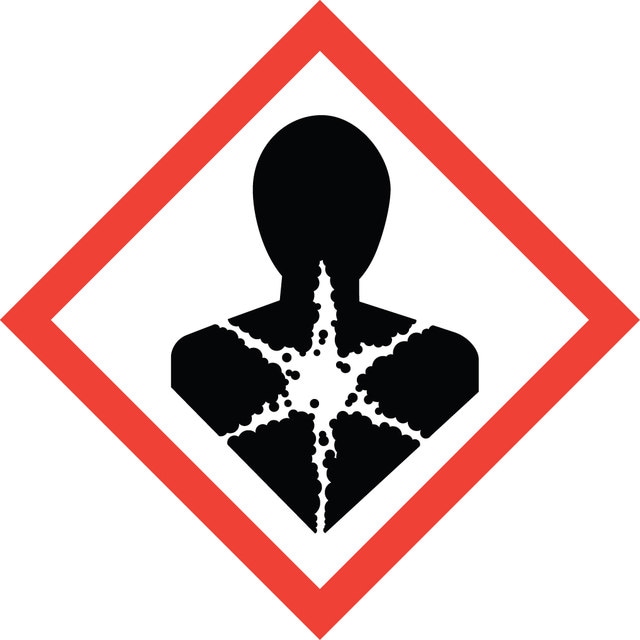
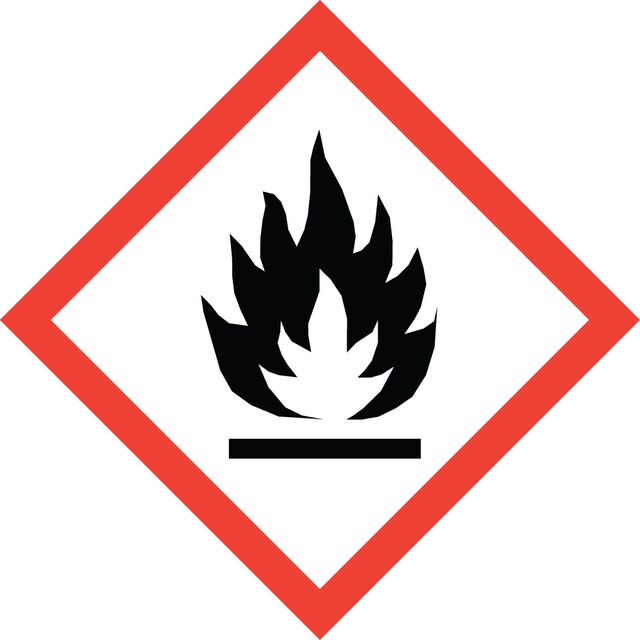
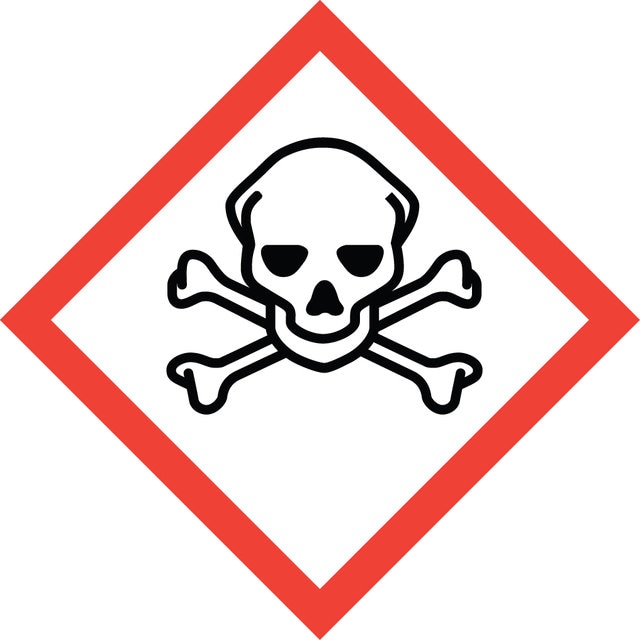
Acute Tox. 3 Inhalation - Acute Tox. 4 Oral - Asp. Tox. 1 - Carc. 1B - Eye Irrit. 2 - Flam. Liq. 2 - Skin Irrit. 2 - STOT SE 3

target_organs

Respiratory system

Storage Class

3 - Flammable liquids

wgk

WGK 3

flash_point_f

55.4 °F - closed cup

flash_point_c

13 °C - closed cup


Choose from one of the most recent versions:

Certificates of Analysis (COA)

Lot/Batch Number

Don't see the Right Version?

If you require a particular version, you can look up a specific certificate by the Lot or Batch number.

Already Own This Product?

Find documentation for the products that you have recently purchased in the Document Library.

Visit the Document Library

Lingming Yang et al.
Nano letters, 14(11), 6275-6280 (2014-10-14)
Low-resistivity metal-semiconductor (M-S) contact is one of the urgent challenges in the research of 2D transition metal dichalcogenides (TMDs). Here, we report a chloride molecular doping technique which greatly reduces the contact resistance (Rc) in the few-layer WS2 and MoS2.
Decomposition of 1, 2-dichloroethane on titanium dioxide/silica.
Imamura S, et al.
Industrial & Engineering Chemistry Research, 28(10), 1449-1452 (1989)
U Rannug et al.
Chemico-biological interactions, 20(1), 1-16 (1978-01-01)
One of the main components in the waste products from vinyl chloride industries (EDC-tar), is ethylene dichloride (1,2-dichloroethane). This compound has been tested for mutagenicity on Salmonella typhimurium TA 1535. It is concluded that 1,2-dichloroethane gives a weak direct mutagenic
X Maymó-Gatell et al.
Applied and environmental microbiology, 65(7), 3108-3113 (1999-07-02)
"Dehalococcoides ethenogenes" 195 can reductively dechlorinate tetrachloroethene (PCE) completely to ethene (ETH). When PCE-grown strain 195 was transferred (2% [vol/vol] inoculum) into growth medium amended with trichloroethene (TCE), cis-dichloroethene (DCE), 1,1-DCE, or 1,2-dichloroethane (DCA) as an electron acceptor, these chlorinated
Tatiana Wolfe et al.
Nanomedicine : nanotechnology, biology, and medicine, 11(5), 1277-1283 (2015-02-06)
We report potent radiosensitization of prostate cancers in vitro and in vivo using goserelin-conjugated gold nanorods. Progressive receptor-mediated internalization of conjugated nanorods over time increases the radiation interaction cross-section of cells and contributes to the effects observed in vitro. The

Our team of scientists has experience in all areas of research including Life Science, Material Science, Chemical Synthesis, Chromatography, Analytical and many others.

Contact Technical Service