Skip to Content
Merck

388831

SP Brij® C2 MBAL-SO-(SG)

average Mn ~330

Synonym(s):

Brij® 52, Polyethylene glycol hexadecyl ether, Polyoxyethylene (2) cetyl ether

Sign In to View Organizational & Contract Pricing.

Select a Size


About This Item

Linear Formula:
C16H33(OCH2CH2)nOH, n~2
CAS Number:
MDL number:
UNSPSC Code:
12162002
PubChem Substance ID:
NACRES:
NA.23
Beilstein/REAXYS Number:
1867431
Technical Service
Need help? Our team of experienced scientists is here for you.
Let Us Assist
Technical Service
Need help? Our team of experienced scientists is here for you.
Let Us Assist

Product Name

SP Brij® C2 MBAL-SO-(SG), average Mn ~330

SMILES string

CCCCCCCCCCCCCCCCOCCOCCOCCOCCOCCOCCOCCOCCOCCOCCOCCOCCOCCOCCOCCOCCOCCOCCOCCOCCO

InChI

1S/C56H114O21/c1-2-3-4-5-6-7-8-9-10-11-12-13-14-15-17-58-19-21-60-23-25-62-27-29-64-31-33-66-35-37-68-39-41-70-43-45-72-47-49-74-51-53-76-55-56-77-54-52-75-50-48-73-46-44-71-42-40-69-38-36-67-34-32-65-30-28-63-26-24-61-22-20-59-18-16-57/h57H,2-56H2,1H3

InChI key

NLMKTBGFQGKQEV-UHFFFAOYSA-N

vapor pressure

0.26 psi ( 20 °C)

form

solid

mol wt

average Mn ~330

refractive index

n20/D 1.466 (lit.)

density

0.978 g/mL at 25 °C (lit.)

HLB

5

Quality Level

Looking for similar products? Visit Product Comparison Guide

Legal Information

Brij is a registered trademark of Croda International PLC

pictograms

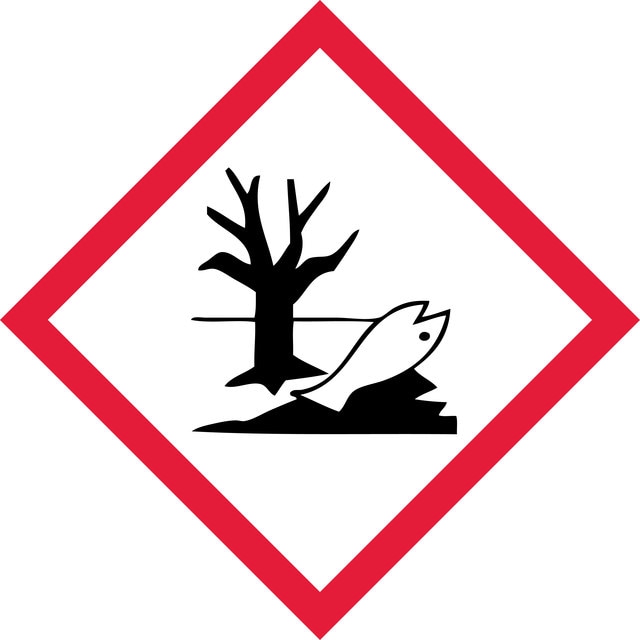
Environment

hcodes

Hazard Classifications

Aquatic Chronic 2

Storage Class

11 - Combustible Solids

wgk

WGK 2

flash_point_f

302.0 °F - closed cup

flash_point_c

150 °C - closed cup

ppe

Eyeshields, Gloves, type N95 (US)


Choose from one of the most recent versions:

Certificates of Analysis (COA)

Lot/Batch Number

Don't see the Right Version?

If you require a particular version, you can look up a specific certificate by the Lot or Batch number.

Already Own This Product?

Find documentation for the products that you have recently purchased in the Document Library.

Visit the Document Library

Anja Heins et al.
Lipids, 42(6), 561-572 (2007-04-21)
The location and the resulting chemical microenvironment of the antioxidant propyl gallate (PG) was studied in micellar solutions using the cationic emulsifier cetyl trimethyl ammonium bromide (CTAB), the anionic emulsifier sodium dodecyl sulphate (SDS) and the non-ionic emulsifier Brij 58
G Tataru et al.
International journal of pharmaceutics, 404(1-2), 83-93 (2010-11-16)
Magnetic micro- and nanoparticles based on ferrofluid (maghemite) were elaborated by inverse emulsion crosslinking of sodium salt of carboxymethylcellulose (CMCNa) and gelatin. Crosslinking was carried out with glutaric aldehyde within aqueous droplets dispersed into toluene in presence of surfactants. The
Sreekhar Cheboyina et al.
International journal of pharmaceutics, 359(1-2), 167-173 (2008-05-23)
A novel freeze pelletization technique was evaluated for the preparation of wax-based sustained release matrix pellets. Pellets containing water-soluble drugs were successfully prepared using a variety of waxes. The drug release significantly depended on the wax type used and the
Xue Li et al.
Chemosphere, 78(6), 752-759 (2009-12-17)
Currently, soil contamination by polybrominated diphenyl ethers (PBDEs) at e-waste recycling sites in China is of significant environmental concern and requires the identification of appropriate remediation technologies. In this paper, photodestruction of a model PBDE congener (BDE-99) in selected UV/surfactant
Yuji Ishii et al.
Drug metabolism and disposition: the biological fate of chemicals, 40(11), 2081-2089 (2012-08-02)
We have suggested that adenine-related compounds are allosteric inhibitors of UGT in rat liver microsomes (RLM) treated with detergent. To clarify whether the same occurs with a pore-forming peptide, alamethicin, the effects of adenine-related compounds on 4-metylumbelliferone (4-MU) glucuronidation were

Our team of scientists has experience in all areas of research including Life Science, Material Science, Chemical Synthesis, Chromatography, Analytical and many others.

Contact Technical Service