Skip to Content
Merck

33576

Microcystin-YR solution

10 μg/mL in methanol, analytical standard

Synonym(s):

Algae bloom toxin, Biotoxin, Cyanobacterial toxin

Sign In to View Organizational & Contract Pricing.

Select a Size

Pricing and availability is not currently available.

About This Item

Empirical Formula (Hill Notation):
C52H72N10O13
CAS Number:
Molecular Weight:
1045.19
NACRES:
NA.24
UNSPSC Code:
41116107
EC Number:
200-659-6

Skip To

Technical Service
Need help? Our team of experienced scientists is here for you.
Let Us Assist

Product Name

Microcystin-YR solution, 10 μg/mL in methanol, analytical standard

InChI key

OWHASZQTEFAUJC-GJRPNUFSSA-N

InChI

1S/C52H72N10O13/c1-28(25-29(2)41(75-8)27-34-13-10-9-11-14-34)16-21-37-30(3)44(65)59-39(50(71)72)22-23-42(64)62(7)33(6)47(68)56-32(5)46(67)60-40(26-35-17-19-36(63)20-18-35)49(70)61-43(51(73)74)31(4)45(66)58-38(48(69)57-37)15-12-24-55-52(53)54/h9-11,13-14,16-21,25,29-32,37-41,43,63H,6,12,15,22-24,26-27H2,1-5,7-8H3,(H,56,68)(H,57,69)(H,58,66)(H,59,65)(H,60,67)(H,61,70)(H,71,72)(H,73,74)(H4,53,54,55)/b21-16+,28-25+/t29-,30-,31-,32+,37-,38-,39+,40-,41-,43+/m0/s1

SMILES string

CO[C@@H](Cc1ccccc1)[C@@H](C)\C=C(C)\C=C\[C@@H]2NC(=O)[C@H](CCCNC(N)=N)NC(=O)[C@@H](C)[C@@H](NC(=O)[C@H](Cc3ccc(O)cc3)NC(=O)[C@@H](C)NC(=O)C(=C)N(C)C(=O)CC[C@@H](NC(=O)[C@H]2C)C(O)=O)C(O)=O

grade

analytical standard

shelf life

limited shelf life, expiry date on the label

concentration

10 μg/mL in methanol

technique(s)

HPLC: suitable
gas chromatography (GC): suitable

application(s)

environmental

format

single component solution

storage temp.

−20°C

Quality Level

Application

Microcystin-YR may be used as an analytical reference standard for the quantification of the analyte in water samples using high-performance liquid chromatography with diode array detection (HPLC-DAD).[1]
Refer to the product′s Certificate of Analysis for more information on a suitable instrument technique. Contact Technical Service for further support.

General description

Microcystin-YR is a microcystin that is generally produced by cyanobacteria.[1]

signalword

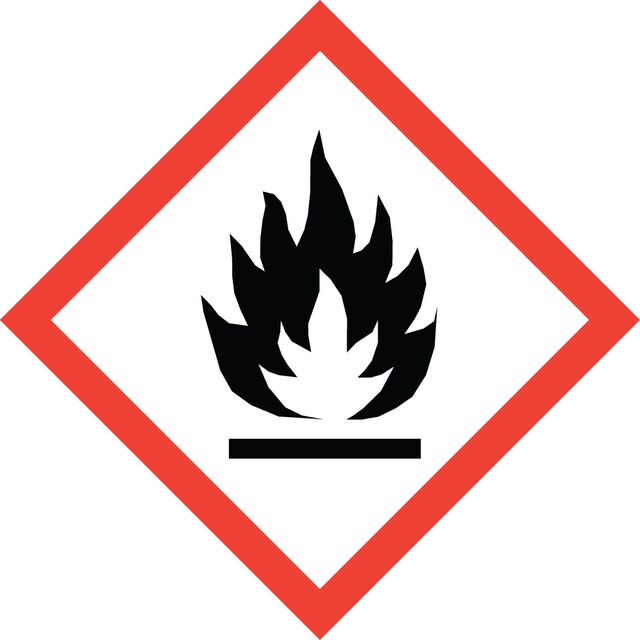
Danger

Hazard Classifications

Acute Tox. 3 Dermal - Acute Tox. 3 Inhalation - Acute Tox. 3 Oral - Flam. Liq. 2 - STOT SE 1

target_organs

Eyes,Central nervous system

Storage Class

3 - Flammable liquids

wgk

WGK 2

flash_point_f

51.8 °F

flash_point_c

11 °C

ppe

Eyeshields, Faceshields, Gloves


Choose from one of the most recent versions:

Certificates of Analysis (COA)

Lot/Batch Number

Don't see the Right Version?

If you require a particular version, you can look up a specific certificate by the Lot or Batch number.

Already Own This Product?

Find documentation for the products that you have recently purchased in the Document Library.

Visit the Document Library

Li-hong Yin et al.
Wei sheng yan jiu = Journal of hygiene research, 35(2), 162-164 (2006-06-09)
To optimize the solid-phase extraction method of isolation, purification and determination of intracellular microcystin-RR, -YR and -LR (MC-RR,-YR,-LR), algal samples were collected from Dianshan Lake, which is a major water source of Shanghai. During extraction, Algal samples were treated with
Paula Kujbida et al.
Toxicon : official journal of the International Society on Toxinology, 51(7), 1274-1280 (2008-04-15)
Microcystins (MC), a family of heptapeptide toxins produced by some genera of Cyanobacteria, have potent hepatotoxicity and tumor-promoting activity. Leukocyte infiltration in the liver was observed in MC-induced acute intoxication. Although the mechanisms of hepatotoxicity are still unclear, neutrophil infiltration
Dawen Zhang et al.
The Science of the total environment, 407(7), 2191-2199 (2009-02-03)
In this paper, accumulation and distribution of microcystins (MCs) was examined monthly in six species of fish with different trophic levels in Meiliang Bay, Lake Taihu, China, from June to November 2005. Microcystins were analyzed by liquid chromatography electrospray ionization
M Douma et al.
Environmental monitoring and assessment, 160(1-4), 439-450 (2009-01-09)
Mansour Eddahbi (MED) (30 degrees 55'N, 6 degrees 53'W) and Almassira (ALM) (31 degrees 95'N, 6 degrees 72'W) are two Moroccan lake reservoirs located at an arid and semi-arid hydrographic basin, respectively. Both are used for irrigation, recreational activities and
Nidhi Gupta et al.
Toxicology, 188(2-3), 285-296 (2003-05-28)
The cyclic peptide toxins microcystins and nodularins are the most common and abundant cyanotoxins present in diverse water systems. They have been the cause of human and animal health hazards and even death. Over 60 microcystin variants have been reported

Questions

Reviews

No rating value

Active Filters

Our team of scientists has experience in all areas of research including Life Science, Material Science, Chemical Synthesis, Chromatography, Analytical and many others.

Contact Technical Service