
Z-2084

ZytoLight® SPEC VHL/CEN 3 Dual Color Probe
green to orange, pkg of 0.2 mL
Sign In to View Organizational & Contract Pricing.
Select a Size
Change View
packaging
pkg of 0.2 mL, pkg of 20 tests
storage condition
protect from light
color
green to orange
application(s)
research use
storage temp.
2-8°C
General description
The ZytoLight® SPEC VHL/CEN 3 Dual Color Probe (PL43) is a direct-labeled FISH probe designed for the qualitative detection of deletions involving the human VHL gene and for detecting specific sequences of chromosome 3 alpha satellites in formalin-fixed, paraffin-embedded (FFPE) specimens. It is intended for use in conjunction with the ZytoLight FISH-Tissue Implementation Kit.
Principle:
The fluorescence in situ hybridization (FISH) technique detects and visualizes specific nucleic acid sequences using fluorescently-labeled DNA fragments (FISH probes) that co-denature and hybridize with complementary target DNA strands. After stringent washing to remove unbound fragments, hybridized probes are visualized with a fluorescence microscope using specific excitation and emission filters.FISH probes co-denature and hybridize with formalin-fixed, paraffin-embedded (FFPE) targets overnight at 37°C following an initial denaturation at 75°C. Unbound probes are washed away, and DAPI counterstaining is applied. Green signals for VHL and orange signals for CEN 3 are observed through matching filters.The ZytoLight® direct labeling technology eliminates the need for antibody amplification, detecting deletions via reduced VHL signals compared to the centromere.
Components:
ZytoLight® SPEC VHL/CEN 3 Dual Color Probe comprises:
Principle:
The fluorescence in situ hybridization (FISH) technique detects and visualizes specific nucleic acid sequences using fluorescently-labeled DNA fragments (FISH probes) that co-denature and hybridize with complementary target DNA strands. After stringent washing to remove unbound fragments, hybridized probes are visualized with a fluorescence microscope using specific excitation and emission filters.FISH probes co-denature and hybridize with formalin-fixed, paraffin-embedded (FFPE) targets overnight at 37°C following an initial denaturation at 75°C. Unbound probes are washed away, and DAPI counterstaining is applied. Green signals for VHL and orange signals for CEN 3 are observed through matching filters.The ZytoLight® direct labeling technology eliminates the need for antibody amplification, detecting deletions via reduced VHL signals compared to the centromere.
Components:
ZytoLight® SPEC VHL/CEN 3 Dual Color Probe comprises:
- ZyGreen labeled polynucleotides (excitation 503 nm/emission 528 nm), targeting sequences in the VHL gene region on chromosome 3 (3p25.3).
- ZyOrange labeled polynucleotides (excitation 547 nm/emission 572 nm), targeting sequences in the alpha satellite centromeric region D3Z1 of chromosome 3.
- Formamide-based hybridization buffer.
Application
For the qualitative detection of deletions affecting the human VHL gene and alpha satellites of chromosome 3 by fluorescence in situ hybridization (FISH)
The probe is designed for qualitative detection of sequences in the VHL gene region and chromosome 3 centromere in formalin-fixed, paraffin-embedded (FFPE) tissue specimens by FISH. It is used in combination with the ZytoLight® FISH-Tissue Implementation Kit for specimen pretreatment, hybridization, and post-hybridization processing.
Analysis Note
In a normal interphase nucleus, two green signals (for VHL) and two orange signals (for CEN 3) are expected. If deletions occur in the VHL gene region, a reduced number of green signals will be observed. Variations in signal patterns may indicate aberrations and should be investigated further.
Legal Information
ZytoLight is a registered trademark of ZytoVision GmbH in Germany
Signal Word
Danger
Hazard Codes
Precautionary Statements
Hazard Classifications
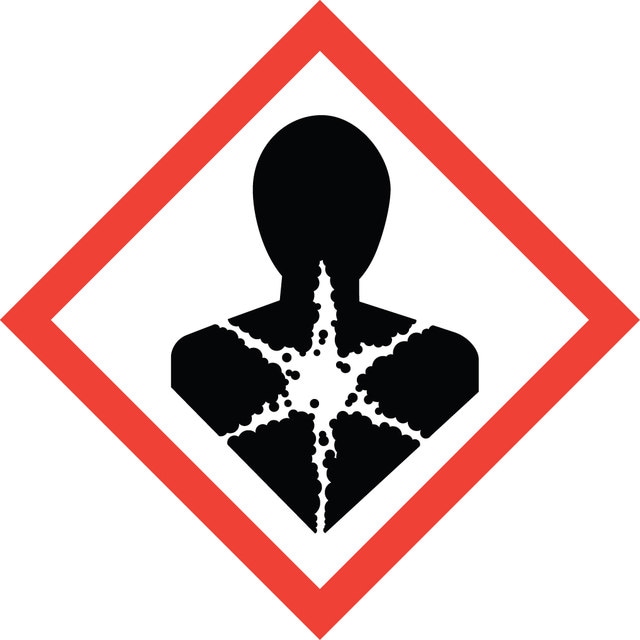
Carc. 2 - Repr. 1B - STOT RE 2 Oral
Target Organs
Blood
Storage Class
6.1C - Combustible acute toxic Cat.3 / toxic compounds or compounds which causing chronic effects
Choose from one of the most recent versions:
Already Own This Product?
Find documentation for the products that you have recently purchased in the Document Library.