
437581

Chloroform
ACS reagent, ≥99.8%, contains 0.5-1.0% ethanol as stabilizer
Synonym(s):
Methylidyne trichloride, Trichloromethane
Select a Size
$1,100.00
About This Item
60.5-61.5 °C
Skip To
Product Name
Chloroform, ACS reagent, ≥99.8%, contains 0.5-1.0% ethanol as stabilizer
SMILES string
ClC(Cl)Cl
InChI
1S/CHCl3/c2-1(3)4/h1H
InChI key
HEDRZPFGACZZDS-UHFFFAOYSA-N
grade
ACS reagent
vapor density
4.1 (vs air)
vapor pressure
160 mmHg ( 20 °C)
assay
≥99.8%
form
liquid
contains
0.5-1.0% ethanol as stabilizer
packaging
PVC-coated bottle of 4x4 L
dilution
(for analytical testing)
evapn. residue
≤0.001%
color
APHA: ≤10
refractive index
n20/D 1.445 (lit.)
bp
60.5-61.5 °C (lit.)
60.5-61.5 °C
mp
−63 °C (lit.)
density
1.492 g/mL at 25 °C (lit.)
cation traces
Pb: ≤0.05 ppm
Quality Level
Looking for similar products? Visit Product Comparison Guide
Related Categories
1 of 4
This Item | 480150 | 366919 | 439142 |
|---|---|---|---|
| grade ACS reagent | grade ACS reagent | grade ACS spectrophotometric grade | grade - |
| Quality Level 200 | Quality Level 200 | Quality Level 100 | Quality Level 100 |
| assay ≥99.8% | assay ≥99.8% | assay ≥99.8% | assay ≥99.8% |
| form liquid | form liquid | form liquid | form liquid |
| cation traces Pb: ≤0.05 ppm | cation traces Pb: ≤0.05 ppm | cation traces Pb: ≤0.05 ppm | cation traces Pb: ≤0.05 ppm |
| density 1.492 g/mL at 25 °C (lit.) | density 1.492 g/mL at 25 °C (lit.) | density 1.48 g/mL at 25 °C (with ethanol stabilizer), 1.492 g/mL at 25 °C (lit.) | density 1.48 g/mL at 25 °C, 1.492 g/mL at 25 °C (lit.) |

Application
- Synthesis of colloidal hydrophobic CdSe core nanocrystals (quantum dots).[1]
- Preparing phospholipid solutions.[2]
- As a solvent in the photolysis reaction of ruthenium complexes.[3]
- Solvent for recrystallization.[4]
- As a reference compound to detect the presence of chloroform in tobacco smokes.[5]
- As an extractant in solvent extraction process.[6]
General description
Premium ACS Solvents: Our solvents meet or exceed the stringent standards set by the American Chemical Society, ensuring high quality and reliability for your laboratory applications.
Replicable and Publishable Results: Designed for consistency, our solvents deliver results that can be reliably reproduced, making them ideal for research that requires publication.
Versatile Applications: Suitable for routine chemical synthesis, drying, purification, and critical labware cleaning, our solvents cater to a wide range of research needs in the laboratory.
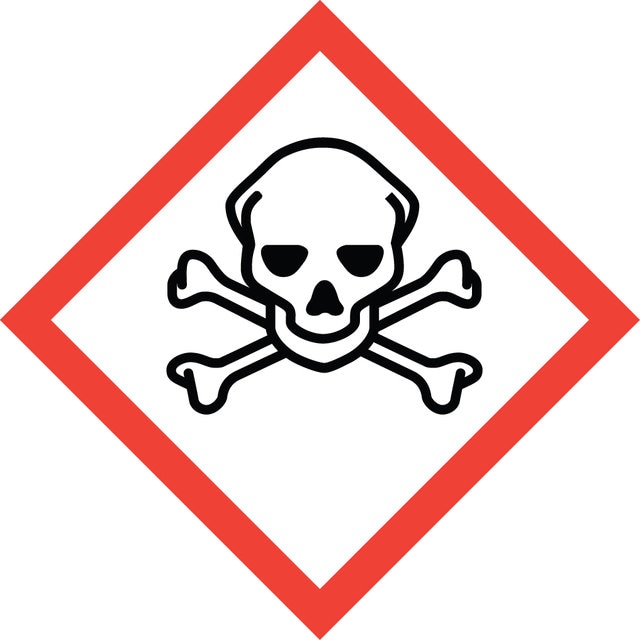
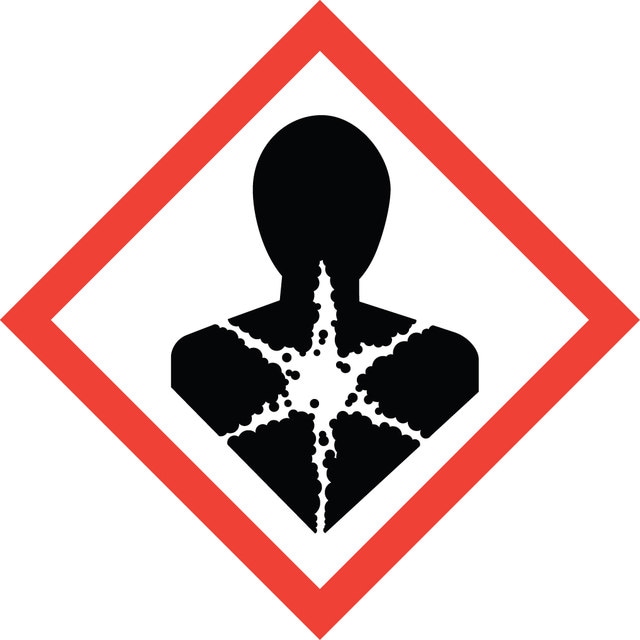
signalword
Danger
Hazard Classifications
Acute Tox. 3 Inhalation - Acute Tox. 4 Oral - Carc. 2 - Eye Irrit. 2 - Repr. 2 - Skin Irrit. 2 - STOT RE 1 Oral - STOT SE 3
target_organs
Central nervous system, Liver,Kidney
Storage Class
6.1D - Non-combustible acute toxic Cat.3 / toxic hazardous materials or hazardous materials causing chronic effects
wgk
WGK 3
flash_point_f
does not flash
flash_point_c
does not flash
Choose from one of the most recent versions:
Already Own This Product?
Find documentation for the products that you have recently purchased in the Document Library.
Articles
Fluorescence quenching microscopy visualizes 2D materials like graphene and MoS2 rapidly, inexpensively, and with high fidelity.
Related Content
The 4L M-Bottle provides safe handling of solvents due to an innovative solvent bottle design with sealing technology to eliminate leaks and reduce risks in solvent dispensing.
Active Filters
Our team of scientists has experience in all areas of research including Life Science, Material Science, Chemical Synthesis, Chromatography, Analytical and many others.
Contact Technical Service