Accéder au contenu
Merck

T8657

Trichloroacetic acid

suitable for electrophoresis, suitable for fixing solution (for IEF and PAGE gels), ≥99%

Synonyme(s) :

TCA

Se connecter pour consulter les tarifs organisationnels et contractuels.

Sélectionner une taille de conditionnement


A propos de cet article

Formule linéaire :
Cl3CCOOH
Numéro CAS:
Poids moléculaire :
163.39
UNSPSC Code:
41105319
NACRES:
NB.22
PubChem Substance ID:
EC Number:
200-927-2
Beilstein/REAXYS Number:
970119
MDL number:
Service technique
Besoin d'aide ? Notre équipe de scientifiques expérimentés est là pour vous.
Laissez-nous vous aider
Service technique
Besoin d'aide ? Notre équipe de scientifiques expérimentés est là pour vous.
Laissez-nous vous aider

Nom du produit

Trichloroacetic acid, suitable for electrophoresis, suitable for fixing solution (for IEF and PAGE gels), ≥99%

InChI

1S/C2HCl3O2/c3-2(4,5)1(6)7/h(H,6,7)

SMILES string

OC(=O)C(Cl)(Cl)Cl

InChI key

YNJBWRMUSHSURL-UHFFFAOYSA-N

grade

electrophoresis grade

vapor density

<1 (vs air)

vapor pressure

1 mmHg ( 51 °C)

assay

≥99%

form

powder or flakes (or crystals)

technique(s)

electrophoresis: suitable

turbidity

≤3 NTU (1 g/ml)

refractive index

n20/D 1.62 (lit.)

bp

196 °C (lit.)

mp

54-58 °C (lit.)

solubility

water: 1 g/mL, clear, colorless

density

1.62 g/mL at 25 °C (lit.)

anion traces

chloride (Cl-): ≤0.001%
nitrate (NO3-): ≤0.002%
phosphate (PO43-): ≤5 ppm
sulfate (SO42-): ≤0.02%

cation traces

Fe: ≤0.0005%
heavy metals (as Pb): ≤0.002%

suitability

suitable for fixing solution (for IEF and PAGE gels)

application(s)

cell analysis

storage temp.

2-8°C

Quality Level

Vous recherchez des produits similaires ? Visite Guide de comparaison des produits

Catégories apparentées

Application

Traditionally used to precipitate protein. Has been used to determine protein concentration by quantitative precipitation. Used as decalcifier and fixative in microscopy.
Trichloroacetic acid has been used:
  • for hydrolysis of DNA isolated from the cell
  • for precipitation of glutathione isolated from seminal plasma
  • as a fixative in microscopy

General description
Trichloroacetic acid (TCA) is produced during the chlorination of water comprising natural organic material. It is a novel reagent used in clinical laboratories for deproteinization of body fluids. In addition, TCA is also used in the treatment of genital warts and acne scars.

pictograms

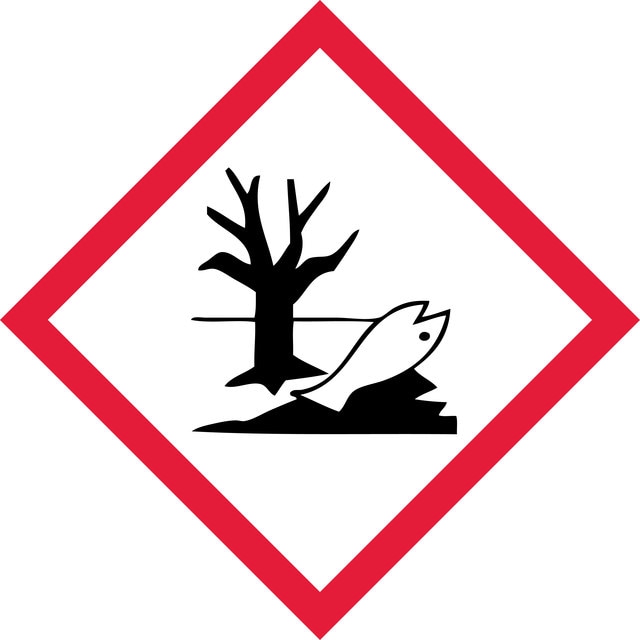
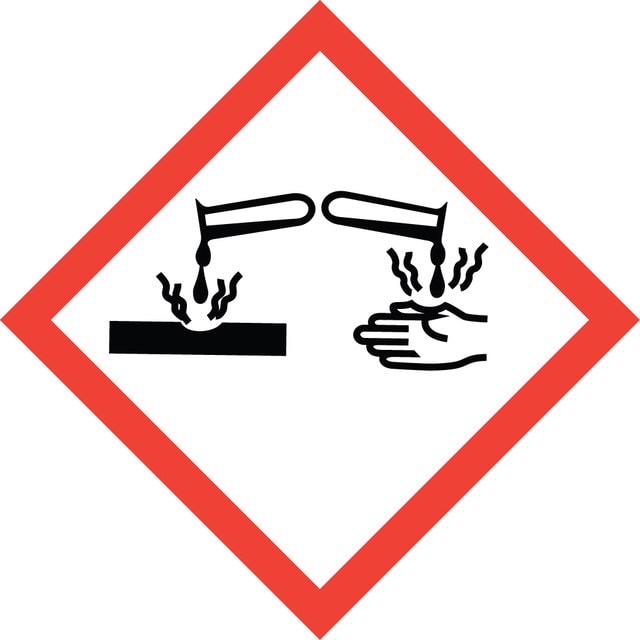
CorrosionEnvironment

signalword

Danger

hcodes

Hazard Classifications

Aquatic Acute 1 - Aquatic Chronic 1 - Eye Dam. 1 - Skin Corr. 1A

Classe de stockage

8B - Non-combustible corrosive hazardous materials

wgk

WGK 2

flash_point_f

>235.4 °F - closed cup

flash_point_c

> 113 °C - closed cup

ppe

Eyeshields, Faceshields, Gloves, type P3 (EN 143) respirator cartridges


Faites votre choix parmi les versions les plus récentes :

Certificats d'analyse (COA)

Lot/Batch Number

Vous ne trouvez pas la bonne version ?

Si vous avez besoin d'une version particulière, vous pouvez rechercher un certificat spécifique par le numéro de lot.

Déjà en possession de ce produit ?

Retrouvez la documentation relative aux produits que vous avez récemment achetés dans la Bibliothèque de documents.

Consulter la Bibliothèque de documents

Quantitation of DNA fragmentation with diphenylamine
Boraschi D and Maurizi G
Apoptosis-a laboratory manual of experimental methods, 153-161 (1998)
Teratogenic activity of trichloroacetic acid in the rat
Smith MK, et al.
Teratology, 40(5), 445-451 (1989)
Determination of total protein in spinal fluid with sulphosalicylic acid and trichloroacetic acid
Meulemans O
Clinica Chimica Acta; International Journal of Clinical Chemistry, 5(5), 757-761 (1960)
Atmospheric pressure pulsed plasma induces cell death in photosynthetic organs via intracellularly generated ROS
Seol Y, et al.
Scientific reports, 7(1), 589-589 (2017)
Focal treatment of acne scars with trichloroacetic acid: chemical reconstruction of skin scars method
Lee J, et al.
Dermatologic Surgery : Official Publication For American Society For Dermatologic Surgery [Et Al.], 28(11), 1017-1021 (2002)

Notre équipe de scientifiques dispose d'une expérience dans tous les secteurs de la recherche, notamment en sciences de la vie, science des matériaux, synthèse chimique, chromatographie, analyse et dans de nombreux autres domaines..

Contacter notre Service technique