Skip to Content
Merck

L-018

Lidocaine solution

1.0 mg/mL in methanol, ampule of 1 mL, certified reference material, Cerilliant®

Sign In to View Organizational & Contract Pricing.

Select a Size


About This Item

Empirical Formula (Hill Notation):
C14H22N2O
CAS Number:
Molecular Weight:
234.34
NACRES:
NA.24
UNSPSC Code:
41116107
EC Number:
200-659-6
Technical Service
Need help? Our team of experienced scientists is here for you.
Let Us Assist
Technical Service
Need help? Our team of experienced scientists is here for you.
Let Us Assist

Product Name

Lidocaine solution, 1.0 mg/mL in methanol, ampule of 1 mL, certified reference material, Cerilliant®

InChI key

NNJVILVZKWQKPM-UHFFFAOYSA-N

InChI

1S/C14H22N2O/c1-5-16(6-2)10-13(17)15-14-11(3)8-7-9-12(14)4/h7-9H,5-6,10H2,1-4H3,(H,15,17)

SMILES string

CCN(CC)CC(=O)Nc1c(C)cccc1C

grade

certified reference material

form

liquid

feature

Snap-N-Spike®/Snap-N-Shoot®

packaging

ampule of 1 mL

manufacturer/tradename

Cerilliant®

concentration

1.0 mg/mL in methanol

technique(s)

gas chromatography (GC): suitable
liquid chromatography (LC): suitable

application(s)

forensics and toxicology

format

single component solution

storage temp.

−20°C

Quality Level

General description

Lidocaine is a local anesthetic and antiarrhythmic drug. This analytical reference standard is suitable for use in LC/MS or GC/MS applications for urine drug testing, clinical toxicology, and forensic analysis. Lidocaine is often added to cocaine as a diluent.

Legal Information

CERILLIANT is a registered trademark of Merck KGaA, Darmstadt, Germany
Snap-N-Shoot is a registered trademark of Cerilliant Corporation
Snap-N-Spike is a registered trademark of Merck KGaA, Darmstadt, Germany

signalword

Danger

Hazard Classifications

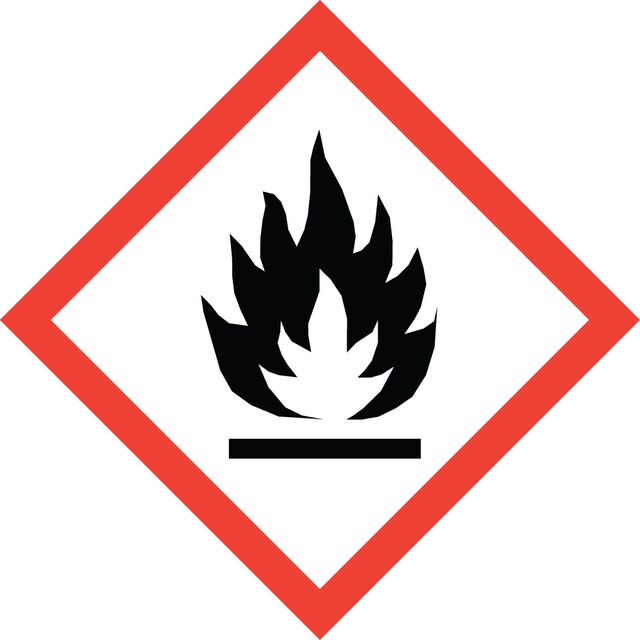
Acute Tox. 3 Dermal - Acute Tox. 3 Inhalation - Acute Tox. 3 Oral - Flam. Liq. 2 - STOT SE 1

target_organs

Eyes

Storage Class

3 - Flammable liquids

wgk

WGK 1

flash_point_f

49.5 °F - closed cup

flash_point_c

9.7 °C - closed cup


Certificates of Analysis (COA)

Search for Certificates of Analysis (COA) by entering the products Lot/Batch Number. Lot and Batch Numbers can be found on a product’s label following the words ‘Lot’ or ‘Batch’.

Already Own This Product?

Find documentation for the products that you have recently purchased in the Document Library.

Visit the Document Library

M Soledad Cepeda et al.
The Cochrane database of systematic reviews, (12)(12), CD006581-CD006581 (2010-12-15)
Lidocaine administration produces pain due to its acidic pH. The objective of this review was to determine if adjusting the pH of lidocaine had any effect on pain resulting from non-intravascular injections in adults and children. We tested the hypothesis
S Picardi et al.
British journal of anaesthesia, 112(2), 370-379 (2013-09-26)
Signalling of several G-protein-coupled receptors of the Gq/11 family is time-dependently inhibited by local anaesthetics (LAs). Since LA-induced modulation of muscarinic m1 and m3 receptor function may explain their beneficial effects in clinical practice, such as decreased postoperative cognitive dysfunction
VyVy N Young et al.
Otolaryngology--head and neck surgery : official journal of American Academy of Otolaryngology-Head and Neck Surgery, 150(4), 582-586 (2014-02-06)
(1) Compare tolerance of aerosolized spray versus syringe administration of topical anesthesia for transnasal flexible laryngoscopy (TFL), (2) analyze cost-effectiveness of both techniques. Prospective, blinded, randomized trial. Tertiary academic laryngology practice. One hundred and eight patients underwent TFL over 3
Martin Greif et al.
Heart (British Cardiac Society), 100(9), 691-695 (2014-01-25)
To assess the feasibility of transcatheter aortic valve implantation (TAVI; Medtronic CoreValve and Edwards SAPIEN XT) under local anaesthesia with only mild analgesic medication and fluoroscopic guidance. 461 patients underwent TAVI under local anaesthesia with lidocaine. The procedure was performed
Peter J Kudenchuk et al.
American heart journal, 167(5), 653-659 (2014-04-29)
Despite their wide use, whether antiarrhythmic drugs improve survival after out-of-hospital cardiac arrest (OHCA) is not known. The ROC-ALPS is evaluating the effectiveness of these drugs for OHCA due to shock-refractory ventricular fibrillation or pulseless ventricular tachycardia (VF/VT). ALPS will

Our team of scientists has experience in all areas of research including Life Science, Material Science, Chemical Synthesis, Chromatography, Analytical and many others.

Contact Technical Service