


If this product has an expiration or retest date, it will be shown on the Certificate of Analysis (COA, CofA). If there is no retest or expiration date listed on the product's COA, we do not have suitable stability data to determine a shelf life. For these products, the only date on the COA will be the release date; a retest, expiration, or use-by-date will not be displayed.
For all products, we recommend handling per defined conditions as printed in our product literature and website product descriptions. We recommend that products should be routinely inspected by customers to ensure they perform as expected.
For products without retest or expiration dates, our standard warranty of 1 year from the date of shipment is applicable.
For more information, please refer to the Product Dating Information document: https://www.sigmaaldrich.com/deepweb/assets/sigmaaldrich/marketing/global/documents/418/501/product-dating-information-06-25-mk.pdf
R3501

Rifampicin
≥95% (HPLC), powder or crystals
Synonym(s):
3-(4-Methylpiperazinyliminomethyl)rifamycin SV, Rifampin, Rifamycin AMP
Select a Size
€52.90
€151.00
€439.45
€1,776.50
About This Item
Skip To
Product Name
Rifampicin, ≥95% (HPLC), powder or crystals
InChI
1S/C43H58N4O12/c1-21-12-11-13-22(2)42(55)45-33-28(20-44-47-17-15-46(9)16-18-47)37(52)30-31(38(33)53)36(51)26(6)40-32(30)41(54)43(8,59-40)57-19-14-29(56-10)23(3)39(58-27(7)48)25(5)35(50)24(4)34(21)49/h11-14,19-21,23-25,29,34-35,39,49-53H,15-18H2,1-10H3,(H,45,55)/b12-11+,19-14+,22-13-,44-20+/t21-,23+,24+,25+,29-,34-,35+,39+,43-/m0/s1
InChI key
JQXXHWHPUNPDRT-WLSIYKJHSA-N
SMILES string
CO[C@H]1\C=C\O[C@@]2(C)Oc3c(C)c(O)c4c(O)c(NC(=O)C(C)=C\C=C\[C@H](C)[C@H](O)[C@@H](C)[C@@H](O)[C@@H](C)[C@H](OC(C)=O)[C@@H]1C)c(\C=N\N5CCN(C)CC5)c(O)c4c3C2=O
assay
≥95% (HPLC)
form
powder or crystals
color
Reddish-brown
pKa
1.7 (4-hydroxyl group)
7.9 (4-piperazine nitrogen)
pI
4.84
antibiotic activity spectrum
Gram-negative bacteria
Gram-positive bacteria
mycobacteria
viruses
mode of action
protein synthesis | interferes
storage temp.
−20°C
Quality Level
Looking for similar products? Visit Product Comparison Guide
1 of 4
This Item | R0700000 | 557303 | 1604009 |
|---|---|---|---|
| mode of action protein synthesis | interferes | mode of action - | mode of action - | mode of action - |
| antibiotic activity spectrum Gram-negative bacteria, mycobacteria, Gram-positive bacteria, viruses | antibiotic activity spectrum - | antibiotic activity spectrum - | antibiotic activity spectrum - |
| Quality Level 200 | Quality Level - | Quality Level 100 | Quality Level - |
| assay ≥95% (HPLC) | assay - | assay ~97-102% (by Assay) | assay - |
| form powder or crystals | form - | form powder (or crystals) | form - |
| storage temp. −20°C | storage temp. 2-8°C | storage temp. −20°C | storage temp. 2-8°C |
Application
Biochem/physiol Actions
General description
Other Notes
signalword
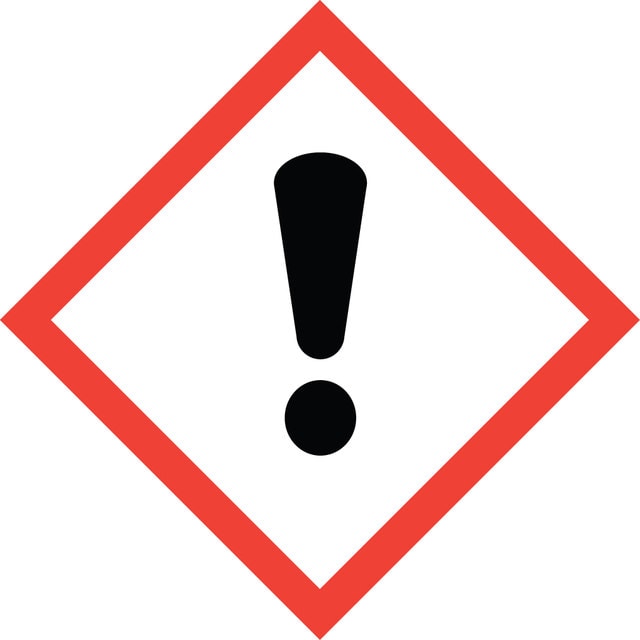
Warning
hcodes
Hazard Classifications
Acute Tox. 4 Oral
Storage Class
11 - Combustible Solids
wgk
WGK 1
flash_point_f
Not applicable
flash_point_c
Not applicable
ppe
dust mask type N95 (US), Eyeshields, Gloves
Choose from one of the most recent versions:
Already Own This Product?
Find documentation for the products that you have recently purchased in the Document Library.
Articles
Discover critical characteristics to consider when working with enzyme inhibitors, such as cell permeability, the prozone effect, and Lipinski’s rule of 5.
Related Content
Product Information Sheet
-
How can I determine the shelf life / expiration / retest date of this product?
1 answer-
Helpful?
-
-
What is the stability of Rifampicin (0.1%) in water at room temperature?
1 answer-
The stability of Rifampicin solutions prepared in only water has not been investigated. However, stock solutions prepared in water-ethanol (8:2), at 1 mg/mL, are stable for up to 8 weeks when stored refrigerated or at room temperature. Please see the link below to review additional information available in the product datasheet:
https://www.sigmaaldrich.com/deepweb/assets/sigmaaldrich/product/documents/522/389/r3501pis.pdfHelpful?
-
-
How is shipping temperature determined? And how is it related to the product storage temperature?
1 answer-
Products may be shipped at a different temperature than the recommended long-term storage temperature. If the product quality is sensitive to short-term exposure to conditions other than the recommended long-term storage, it will be shipped on wet or dry-ice. If the product quality is NOT affected by short-term exposure to conditions other than the recommended long-term storage, it will be shipped at ambient temperature. As shipping routes are configured for minimum transit times, shipping at ambient temperature helps control shipping costs for our customers. For more information, please refer to the Storage and Transport Conditions document: https://www.sigmaaldrich.com/deepweb/assets/sigmaaldrich/marketing/global/documents/316/622/storage-transport-conditions-mk.pdf
Helpful?
-
-
What solvent should be used to reconstitute item R3501, Rifampicin?
1 answer-
Rifampicin is soluble in CHCl3. Additionally, it is soluble in water at pH 4.3 (1.3 mg/ml), methanol (25 mg/ml), DMSO (25 mg/ml), dimethyl sulfoxide, tetrahydrofuran, and water at pH 7.3 (2.5 mg/ml at 25°C).
Helpful?
-
-
How is the potency determined for Product R3501, Rifampicin?
1 answer-
The potency is determined from a microbiological assay (USP XXII) for antibiotics, a 2-level assay. The test organism is Bacillus subtilis ATCC 6633. The minimum dose is 4.0 μg/ml and the maximum dose is 8.0 μg/ml.
Helpful?
-
-
The label advises that I should store Product R3501, Rifampicin, frozen. But when it arrived there was no ice in the package. Why is that?
1 answer-
This product in its powder form is stable for short periods of time (i.e., the shipping process), at ambient temperature. For long term storage it is best to store it at -20°C.
Helpful?
-
-
What is the difference between the various Rifampicin products available from Sigma-Aldrich?
1 answer-
Sigma-Aldrich offers several Rifampicin products, each tested and best suited for specific applications. The products range from a general use research grade to sterile powder, to plant culture tested. See individual products for specific details.
Helpful?
-
-
What is the Department of Transportation shipping information for this product?
1 answer-
Transportation information can be found in Section 14 of the product's (M)SDS.To access the shipping information for this material, use the link on the product detail page for the product.
Helpful?
-
Active Filters
Our team of scientists has experience in all areas of research including Life Science, Material Science, Chemical Synthesis, Chromatography, Analytical and many others.
Contact Technical Service