

If this product has an expiration or retest date, it will be shown on the Certificate of Analysis (COA, CofA). If there is no retest or expiration date listed on the product's COA, we do not have suitable stability data to determine a shelf life. For these products, the only date on the COA will be the release date; a retest, expiration, or use-by-date will not be displayed.
For all products, we recommend handling per defined conditions as printed in our product literature and website product descriptions. We recommend that products should be routinely inspected by customers to ensure they perform as expected.
For products without retest or expiration dates, our standard warranty of 1 year from the date of shipment is applicable.
For more information, please refer to the Product Dating Information document: https://www.sigmaaldrich.com/deepweb/assets/sigmaaldrich/marketing/global/documents/418/501/product-dating-information-06-25-mk.pdf
L3771

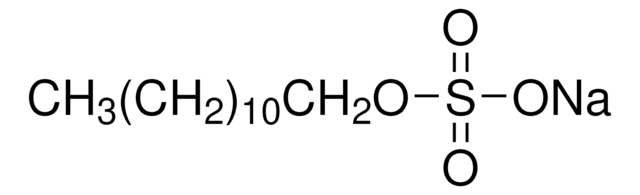
Sodium dodecyl sulfate

BioReagent, suitable for electrophoresis, Molecular Biology, ≥98.5% (GC)
Synonym(s):
Dodecyl sodium sulfate, Dodecyl sulfate sodium salt, Lauryl sulfate sodium salt, SDS, Sodium lauryl sulfate
Select a Size
About This Item
Skip To
biological source
synthetic
Quality Level
grade
Molecular Biology
description
anionic
product line
BioReagent
Assay
≥98.5% (GC)
form
powder
mol wt
micellar 18,000
greener alternative product characteristics
Catalysis
Learn more about the Principles of Green Chemistry.
sustainability
Greener Alternative Product
aggregation number
62
technique(s)
electrophoresis: suitable
impurities
≤2.0% water (Karl Fischer)
CMC
7-10 mM (20-25°C)
mp
204-207 °C (lit.)
transition temp
cloud point >100 °C
solubility
water: soluble
density
1.03 g/cm3 at 20 °C (68 °F)
anion traces
chloride (Cl-): ≤500 ppm
phosphate (PO43-): ≤10 ppm
cation traces
heavy metals (as Pb): ≤10 ppm
absorption
≤0.1 at 260 at 3%
≤0.1 at 280 at 3%
HLB
40
suitability
suitable for electrophoresis
foreign activity
DNase, RNase, none detected
greener alternative category
storage temp.
room temp
SMILES string
[Na+].CCCCCCCCCCCCOS([O-])(=O)=O
InChI
1S/C12H26O4S.Na/c1-2-3-4-5-6-7-8-9-10-11-12-16-17(13,14)15;/h2-12H2,1H3,(H,13,14,15);/q;+1/p-1
InChI key
DBMJMQXJHONAFJ-UHFFFAOYSA-M
Looking for similar products? Visit Product Comparison Guide
1 of 4
This Item | 436143 | L4509 | L6026 |
|---|---|---|---|
| suitability suitable for electrophoresis | suitability - | suitability - | suitability - |
| form powder | form solid | form powder | form powder |
| technique(s) electrophoresis: suitable | technique(s) - | technique(s) - | technique(s) - |
| assay ≥98.5% (GC) | assay ≥99.0% | assay ≥98.5% (GC) | assay ≥99.0% (GC) |
| grade for molecular biology | grade ACS reagent | grade - | grade - |
| aggregation number 62 | aggregation number - | aggregation number 62 | aggregation number 62 |
General description
Beyond protein analysis, SDS also finds applications in the electrophoretic separation of lipids, enabling the study and characterization of these important cellular components. Additionally, SDS is employed in various hybridization and molecular biology techniques, demonstrating its versatility across a range of research areas. SDS′s effectiveness in both ionic and anionic conditions further expands its utility, allowing it to adapt to diverse experimental setups and requirements. Its ability to unravel proteins by binding to peptide chains and imparting a negative charge effectively eliminates protein shape as a factor for gel separation, ensuring accurate protein size determination.
Application
- in chromatin immunoprecipitation
- in SDS-polyacrylamide gel electrophoresis (SDS-PAGE)
- as a component of radioimmunoprecipitation assay buffer for immunoblotting
Features and Benefits
- Highly versatile surfactant for your molecular biology and biochemical research
- Suitable for electrophoresis applications
- Tested to confirm low levels of heavy metal contamination,ensuring suitability for various applications.
Analysis Note
Other Notes
comparable product
Signal Word
Danger
Hazard Statements
Precautionary Statements
Hazard Classifications
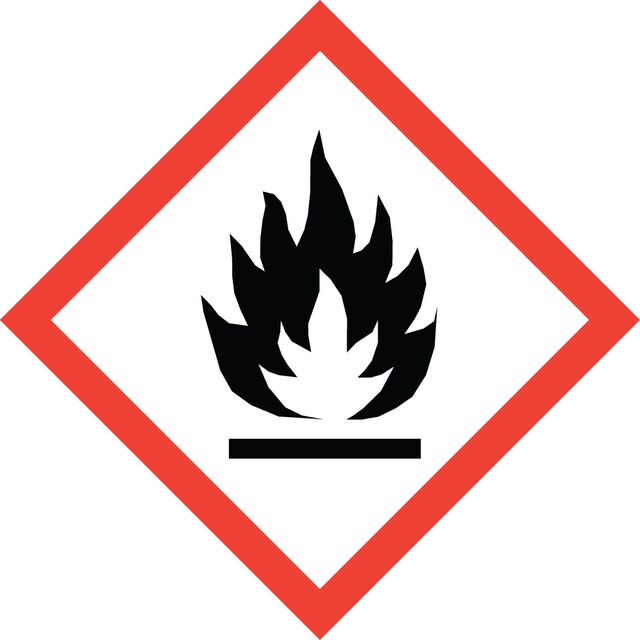
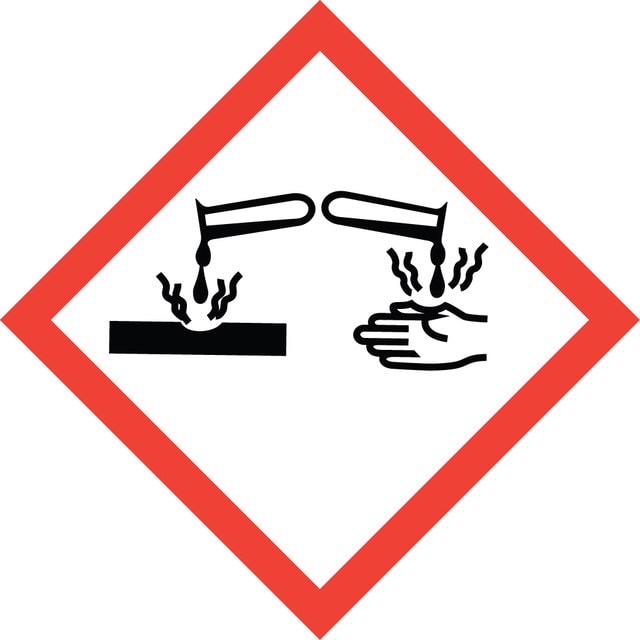
Acute Tox. 4 Inhalation - Acute Tox. 4 Oral - Aquatic Chronic 3 - Eye Dam. 1 - Flam. Sol. 2 - Skin Irrit. 2 - STOT SE 3
Target Organs
Respiratory system
Storage Class Code
4.1B - Flammable solid hazardous materials
WGK
WGK 2
Flash Point(F)
338.0 °F
Flash Point(C)
170 °C
Personal Protective Equipment
Choose from one of the most recent versions:
Already Own This Product?
Find documentation for the products that you have recently purchased in the Document Library.
Protocols
Preparation of Plasmid DNA by Alkaline Lysis with SDS: Maxipreparation between Cold Spring Harbor Laboratory Press and our research team.
Simplify your SDS-PAGE gel preparation with our pre-mixed solutions and protocols to achieve precise protein separation.
This page shows and discusses three protocols for stripping and reprobing a western blot membrane.
Related Content
Cell lysis and protein extraction methods overview various techniques, from detergent solubilization to mechanical disruption, supporting research needs.
Product Information Sheet
-
How can I determine the shelf life / expiration / retest date of this product?
1 answer-
Helpful?
-
-
How is shipping temperature determined? And how is it related to the product storage temperature?
1 answer-
Products may be shipped at a different temperature than the recommended long-term storage temperature. If the product quality is sensitive to short-term exposure to conditions other than the recommended long-term storage, it will be shipped on wet or dry-ice. If the product quality is NOT affected by short-term exposure to conditions other than the recommended long-term storage, it will be shipped at ambient temperature. As shipping routes are configured for minimum transit times, shipping at ambient temperature helps control shipping costs for our customers. For more information, please refer to the Storage and Transport Conditions document: https://www.sigmaaldrich.com/deepweb/assets/sigmaaldrich/marketing/global/documents/316/622/storage-transport-conditions-mk.pdf
Helpful?
-
-
Is it okay to use 10% SDS dissolved in water that has been autoclaved?
1 answer-
Sodium dodecyl sulfate may decompose with prolonged heating at 40°C or greater. Autoclaving this material is not recommended. Please see the link below to review additional information available in the product datasheet:
https://www.sigmaaldrich.com/deepweb/assets/sigmaaldrich/product/documents/296/475/l3771pis.pdfHelpful?
-
-
What is the storage temperature for the product?
1 answer-
This product is stored at ambient temperature.
Helpful?
-
Active Filters
Our team of scientists has experience in all areas of research including Life Science, Material Science, Chemical Synthesis, Chromatography, Analytical and many others.
Contact Technical Service