Skip to Content
Merck

W421501

Tyramine

98%, FG

Synonym(s):

2-(4-Hydroxyphenyl)ethylamine, 4-(2-Aminoethyl)phenol, 4-Hydroxyphenethylamine

Sign In to View Organizational & Contract Pricing.

Select a Size

1 EACH

€78.50

25 G

€173.00

100 G

€394.00

€78.50


Please contact Customer Service for Availability

Request a Bulk OrderRequest more information

About This Item

Linear Formula:
HOC6H4CH2CH2NH2
CAS Number:
Molecular Weight:
137.18
Flavis number:
11.007
PubChem Substance ID:
UNSPSC Code:
12164502
FEMA Number:
4215
NACRES:
NA.21
EC Number:
200-115-8
MDL number:
Beilstein/REAXYS Number:
1099914
Organoleptic:
meaty; phenolic
Grade:
FG
Biological source:
synthetic
Food allergen:
no known allergens

Skip To

Technical Service
Need help? Our team of experienced scientists is here for you.
Let Us Assist

Product Name

Tyramine, 98%, FG

InChI

1S/C8H11NO/c9-6-5-7-1-3-8(10)4-2-7/h1-4,10H,5-6,9H2

SMILES string

NCCc1ccc(O)cc1

InChI key

DZGWFCGJZKJUFP-UHFFFAOYSA-N

biological source

synthetic

grade

FG

reg. compliance

EU Regulation 1334/2008 & 872/2012
FDA 21 CFR 110

assay

98%

bp

175-181 °C/8 mmHg (lit.)

mp

160-162 °C (lit.)

application(s)

flavors and fragrances

documentation

see Safety & Documentation for available documents

food allergen

no known allergens

organoleptic

meaty; phenolic

Quality Level

Looking for similar products? Visit Product Comparison Guide

Related Categories

Compare Similar Items

View Full Comparison

Show Differences

1 of 4

This Item
T90344T287980345
organoleptic

meaty; phenolic

organoleptic

-

organoleptic

-

organoleptic

-

grade

FG

grade

-

grade

-

grade

analytical standard

biological source

synthetic

biological source

-

biological source

-

biological source

-

food allergen

no known allergens

food allergen

-

food allergen

-

food allergen

-

assay

98%

assay

≥98.0%

assay

≥98%

assay

≥98.5% (GC), 98.0-102.0% (wt., NT)

documentation

see Safety & Documentation for available documents

documentation

-

documentation

-

documentation

-

Biochem/physiol Actions

Can enter catecholaminergic terminals and be released as a false transmitter.

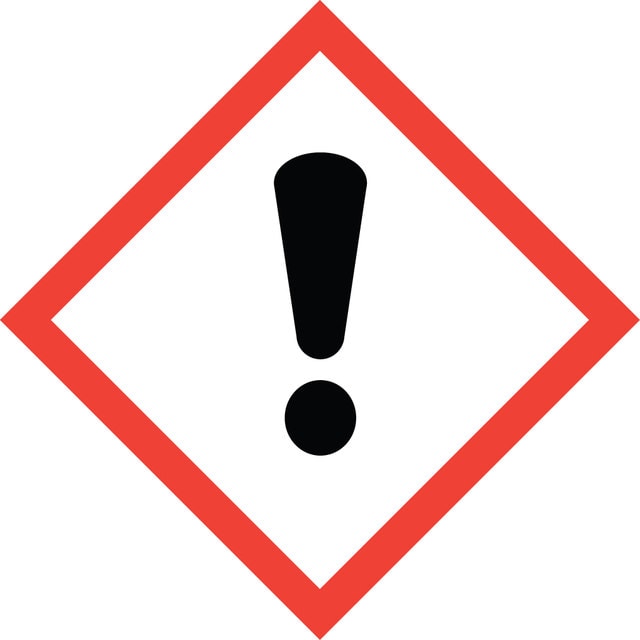
pictograms

Exclamation mark

signalword

Warning

Hazard Classifications

Eye Irrit. 2 - Skin Irrit. 2 - STOT SE 3

target_organs

Respiratory system

Storage Class

11 - Combustible Solids

wgk

WGK 3

flash_point_f

Not applicable

flash_point_c

Not applicable

ppe

dust mask type N95 (US), Eyeshields, Gloves


Choose from one of the most recent versions:

Certificates of Analysis (COA)

Lot/Batch Number

Don't see the Right Version?

If you require a particular version, you can look up a specific certificate by the Lot or Batch number.

Already Own This Product?

Find documentation for the products that you have recently purchased in the Document Library.

Visit the Document Library

Moussa B H Youdim et al.
Neurotoxicology, 25(1-2), 243-250 (2003-12-31)
The major side effect with the use of first generation of non selective monoamine oxidase (MAO) inhibitors as neuropsychiatric drugs was what became known as the "cheese reaction". Namely, potentiation of sympathomimetic activity of ingested tyramine present in cheese and
M G Bianchetti et al.
Klinische Wochenschrift, 60(9), 465-470 (1982-05-03)
Responses of blood pressure and plasma catecholamines to intravenous injection of tyramine at increasing dosage (30, 45, and 60 microgram/kg, respectively) were evaluated in 25 normal subjects and 20 patients with mild essential hypertension. Basal plasma norepinephrine and epinephrine concentrations
Tony Huynh et al.
The Journal of pathology, 231(2), 223-235 (2013-06-25)
The over-expression of NF-κB signalling in both muscle and immune cells contribute to the pathology in dystrophic muscle. The anti-inflammatory properties of glucocorticoids, mediated predominantly through monomeric glucocorticoid receptor inhibition of transcription factors such as NF-κB (transrepression), are postulated to
Giris Jacob et al.
Circulation, 107(19), 2475-2479 (2003-04-23)
Despite the widespread use of tyramine as a pharmacological tool to assess the effects of norepinephrine release from sympathetic nerve terminals, its vascular effects are not adequately characterized. In particular, previous results indicate that intravenous tyramine produces little if any
Stephan A Chalon et al.
Neuropsychopharmacology : official publication of the American College of Neuropsychopharmacology, 28(9), 1685-1693 (2003-06-05)
Evidence suggests that compounds that increase the synaptic availability of more than one neurotransmitter have greater efficacy in the treatment of depression than single-acting drugs. Preclinical studies indicate that duloxetine acts to inhibit serotonin (5-HT) and norepinephrine (NE) transporters. The

Questions

Reviews

No rating value

Active Filters

Our team of scientists has experience in all areas of research including Life Science, Material Science, Chemical Synthesis, Chromatography, Analytical and many others.

Contact Technical Service