Skip to Content
Merck

67309

Kovac′s reagent for indoles

suitable for microbiology

Synonym(s):

4-(Dimethylamino)benzaldehyde solution

Sign In to View Organizational & Contract Pricing.

Select a Size

100 ML

₪361.00

₪361.00


Please contact Customer Service for Availability

Request a Bulk OrderRequest more information

About This Item

Empirical Formula (Hill Notation):
C9H11NO
CAS Number:
Molecular Weight:
149.19
UNSPSC Code:
41171621
NACRES:
NA.85
PubChem Substance ID:
MDL number:
Beilstein/REAXYS Number:
4132845

Skip To

Technical Service
Need help? Our team of experienced scientists is here for you.
Let Us Assist

Product Name

Kovac′s reagent for indoles, suitable for microbiology

InChI

1S/C9H11NO/c1-10(2)9-5-3-8(7-11)4-6-9/h3-7H,1-2H3

SMILES string

[H]C(=O)c1ccc(cc1)N(C)C

InChI key

BGNGWHSBYQYVRX-UHFFFAOYSA-N

agency

according to ISO 16654:2001

product line

BioChemika

shelf life

limited shelf life, expiry date on the label

composition

4-(dimethlyamino)benzaldehyde, 50 g/L
hydrochloric acid, 240 g/L
isoamylic alcohol, 710 g/L

technique(s)

microbe id | specific enzyme detection: suitable

application(s)

agriculture
clinical testing
environmental
food and beverages

microbiology

storage temp.

2-8°C

suitability

Escherichia coli
coliforms

Quality Level

Looking for similar products? Visit Product Comparison Guide

Compare Similar Items

View Full Comparison

Show Differences

1 of 4

This Item
1.09293609831.11350
Quality Level

200

Quality Level

200

Quality Level

100

Quality Level

100

storage temp.

2-8°C

storage temp.

2-8°C

storage temp.

2-8°C

storage temp.

2-8°C

agency

according to ISO 16654:2001

agency

-

agency

-

agency

-

product line

BioChemika

product line

-

product line

-

product line

-

shelf life

limited shelf life, expiry date on the label

shelf life

-

shelf life

limited shelf life, expiry date on the label

shelf life

-

composition

4-(dimethlyamino)benzaldehyde, 50 g/L

composition

-

composition

n-butanol , 4-dimethylaminobenzaldehyde , hydrochloric acid

composition

(n-Butanol; Hydrochloric acid; 4 dimethylaminobenzaldehyde)

Application

In the presence of oxygen, some bacteria, like E.coli, are able to split tryptophan into indole and alpha-aminopropionic acid. This reagent is for detecting the indole and identify the indole-positive and indole-negative microorganisms.
Kovac′s reagent may be used for spot test for determination of indole by saturating filter paper with the reagent.[1] It may also be used for initial spot test for determination of indole followed by quantification by spectrophotometric assay and HPLC-UV/Vis-MS/MS methods.[2]

General description

Kovac′s reagent is prepared by mixing p-dimethylaminobenzaldehyde, isoamyl alcohol and concentrated hydrochloric acid.[3] For identification of an organism, the formation of Indole from a tryptophan substrate is a useful diagnostic tool. Indole production is a crucial test in identification of Escherichia coli. After incubation, adding the reagent will help in determination if Indole that has been produced. The reagent turns red when reacts with Indole.[4]

comparable product

Product No.
Description
Pricing

signalword

Danger

Hazard Classifications

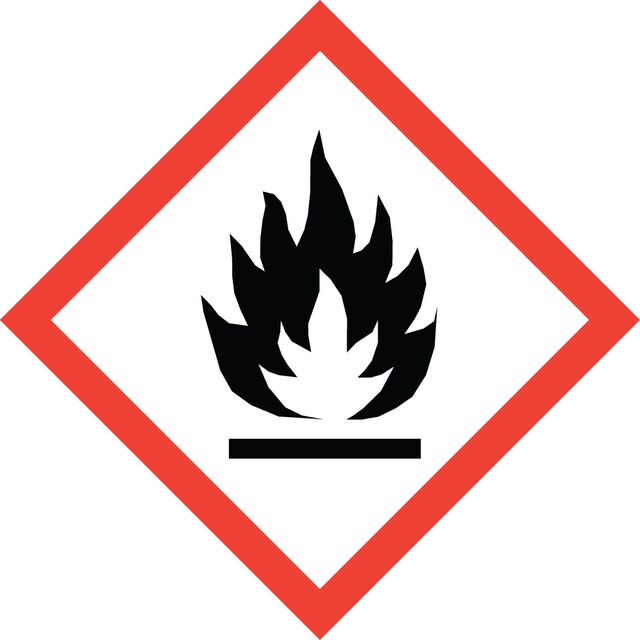
Acute Tox. 4 Inhalation - Eye Dam. 1 - Flam. Liq. 3 - Met. Corr. 1 - Skin Corr. 1B - Skin Sens. 1 - STOT SE 3

target_organs

Respiratory system

Storage Class

3 - Flammable liquids

wgk

WGK 3

flash_point_f

109.4 °F

flash_point_c

43 °C

ppe

Faceshields, Gloves, Goggles, type ABEK (EN14387) respirator filter


Choose from one of the most recent versions:

Certificates of Analysis (COA)

Lot/Batch Number

Don't see the Right Version?

If you require a particular version, you can look up a specific certificate by the Lot or Batch number.

Already Own This Product?

Find documentation for the products that you have recently purchased in the Document Library.

Visit the Document Library

S. Harisha
An Introduction to Practical Biotechnology, 193-193 (2005)
Rita R. Colwell, R. Grigorova
Methods in Microbiology, 19, 27-27 (1987)
Patrick R Porubsky et al.
Archives of biochemistry and biophysics, 475(1), 14-17 (2008-04-22)
Cytochrome P450 2A13 (CYP2A13) is a lung specific enzyme known to activate the potent tobacco procarcinogen 4-(methylnitrosamino)-1-(3-pyridyl)-1-butanone (NNK) into two carcinogenic metabolites. CYP2A13 has been crystallized and X-ray diffraction experiments illuminated the structure of this enzyme, but with an unknown
R W Trepeta et al.
Journal of clinical microbiology, 19(2), 172-174 (1984-02-01)
Escherichia coli is the most common gram-negative microbe isolated and identified in clinical microbiology laboratories. It can be identified within 1 h by oxidase, indole, lactose, and beta-glucuronidase tests. The oxidase and indole tests are performed as spot tests, and
Andrew P Breksa et al.
Journal of agricultural and food chemistry, 55(13), 5013-5017 (2007-06-05)
A method for estimating the total limonoid aglycone and glucoside concentrations in Citrus samples in terms of limonin and limonin glucoside equivalents is presented. The method consists of extraction followed by colorimetric quantification. The colorimetric quantification was based on the

Articles

Clostridium perfringens can cause contamination in undercooked or improperly sterilized canned foods and water. Learn to detect, identify, and differentiate this pathogen.

For microbiologists the most fundamental stain was developed in 1884 by the Danish bacteriologist Hans Christian Gram.

There are many other methods of detection to indicate the presence of E. coli. Review common tests and biochemical reactions for this contaminant.

An article concerning the detection, identification, differentiation, and cultivation of Pseudomonas species.

Related Content

Questions

Reviews

No rating value

Active Filters

Our team of scientists has experience in all areas of research including Life Science, Material Science, Chemical Synthesis, Chromatography, Analytical and many others.

Contact Technical Service