
96527

Tin(II) chloride dihydrate
suitable for AAS
Synonym(s):
Stannous chloride dihydrate
Select a Size
₪411.00
₪1,227.00
About This Item
Skip To
Product Name
Tin(II) chloride dihydrate, suitable for AAS
InChI key
FWPIDFUJEMBDLS-UHFFFAOYSA-L
InChI
1S/2ClH.2H2O.Sn/h2*1H;2*1H2;/q;;;;+2/p-2
SMILES string
O.O.Cl[SnH2]Cl
assay
≥96.0% (RT)
form
crystals
technique(s)
AAS: suitable
bp
652 °C (lit.)
mp
37-38 °C (dec.) (lit.)
solubility
hydrochloric acid: passes test
anion traces
sulfate (SO42-): ≤20 mg/kg
cation traces
As: ≤1 mg/kg
Ca: ≤50 mg/kg
Cu: ≤10 mg/kg
Fe: ≤20 mg/kg
Hg: ≤5 μg/kg
K: ≤50 mg/kg
NH4+: ≤10 mg/kg
Na: ≤100 mg/kg
Pb: ≤50 mg/kg
Quality Level
Looking for similar products? Visit Product Comparison Guide
1 of 4
This Item | 243523 | 208035 | 1.07815 |
|---|---|---|---|
| technique(s) AAS: suitable | technique(s) - | technique(s) - | technique(s) - |
| form crystals | form powder or crystals | form powder, crystals or chunks | form solid |
| Quality Level 100 | Quality Level 200 | Quality Level 200 | Quality Level 300 |
| assay ≥96.0% (RT) | assay 98%, 98.0-103.0% (ACS specification) | assay 98% | assay 98.0-103.0% (SnCl2.2H2O basis, iodometric) |
| bp 652 °C (lit.) | bp 652 °C (lit.) | bp 652 °C (lit.) | bp 623 °C/1013 hPa (anhydrous substance) |
| mp 37-38 °C (dec.) (lit.) | mp 37-38 °C (dec.) (lit.) | mp 37-38 °C (dec.) (lit.) | mp 38 °C (anhydrous substance) |

Application
- As a reducing agent for the determination of hydride forming species by AAS.
- In the conversion of organomercurials into inorganic mercury determined using a flow injection-cold vapor atomic absorption spectrometry[1]
- In the determination of total mercury content, using atomic fluorescence spectroscopy and mercury speciation was performed using gas chromatography inductively coupled plasma mass spectrometry (GC-ICPMS).[2]

signalword
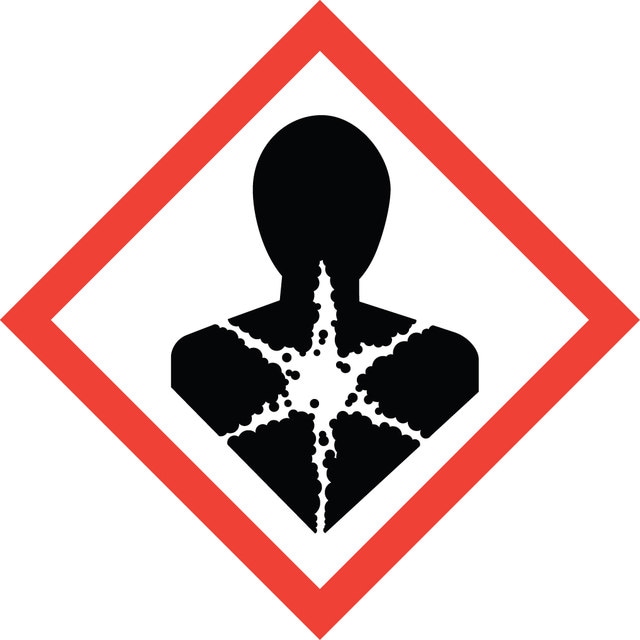
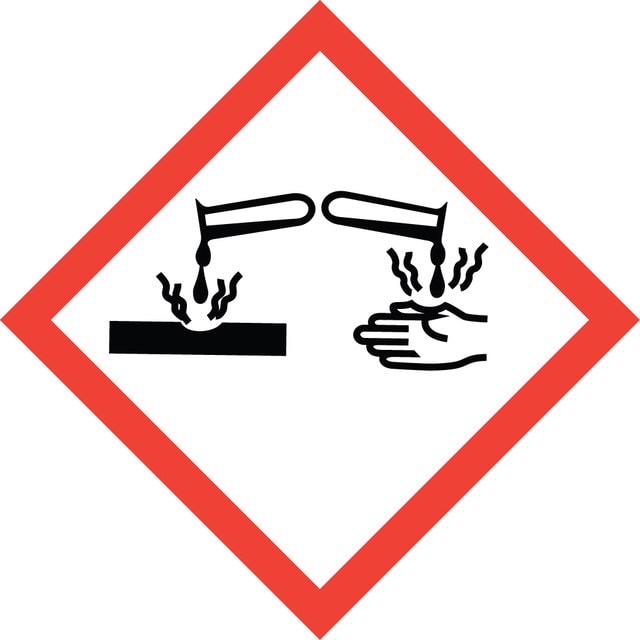
Danger
Hazard Classifications
Acute Tox. 4 Inhalation - Acute Tox. 4 Oral - Aquatic Chronic 3 - Eye Dam. 1 - Met. Corr. 1 - Skin Corr. 1B - Skin Sens. 1 - STOT RE 2 Oral - STOT SE 3
target_organs
Cardio-vascular system, Respiratory system
Storage Class
8B - Non-combustible corrosive hazardous materials
wgk
WGK 3
flash_point_f
Not applicable
flash_point_c
Not applicable
ppe
Eyeshields, Faceshields, Gloves, type P3 (EN 143) respirator cartridges
Choose from one of the most recent versions:
Already Own This Product?
Find documentation for the products that you have recently purchased in the Document Library.
Active Filters
Our team of scientists has experience in all areas of research including Life Science, Material Science, Chemical Synthesis, Chromatography, Analytical and many others.
Contact Technical Service