
APT408

CaspaTag Caspase 8 In Situ Assay Kit, Fluorescein
The CaspaTag Caspase-8 In Situ Assay Kit, Fluorescein for flow cytometry is a fluorescent-based assay for detection of active caspase-8 in cells undergoing apoptosis.
Select a Size
| Size/SKU | Availability | Price |
|---|
About This Item
Quality Segment
manufacturer/tradename
CaspaTag, Chemicon®
technique(s)
activity assay: suitable, flow cytometry: suitable
NCBI accession no.
UniProt accession no.
detection method
fluorometric
shipped in
wet ice
General description
Caspases have been identified in organisms ranging from C. elegans to humans. The mammalian caspases play distinct roles in apoptosis and inflammation. In apoptosis, caspases are responsible for proteolytic cleavages that lead to cell disassembly (effector caspases), and are involved in upstream regulatory events (initiator caspases). An active caspase consists of two large and two small subunits that form two heterodimers, which associate in a tetramer2-4. In common with other proteases, caspases are synthesized as precursors that undergo proteolytic maturation, either autocatalytically or in a cascade by enzymes with similar specificity5.
Caspase enzymes specifically recognize a 4 or 5 amino acid sequence on the target substrate, which necessarily includes an aspartic acid residue. This residue is the target for cleavage, which occurs at the carbonyl end of the aspartic acid residue6. Caspases can be detected via immunoprecipitation, immunoblotting techniques using caspase specific antibodies, or by employing fluorochrome substrates, which become fluorescent upon cleavage by the caspase.
Application
Apoptosis & Cancer
Test Principle
CHEMICON′s CaspaTag Caspase-8 In Situ Assay Kits use a novel approach to detect active caspases. The methodology is based on Fluorochrome Inhibitors of Caspases (FLICA). The inhibitors are cell permeable and non-cytotoxic. Once inside the cell, the inhibitor binds covalently to the active caspase7. This kit uses a carboxyfluorescein-labeled fluoromethyl ketone peptide inhibitor of caspase-8 (FAM-LETD-FMK), which produces a green fluorescence. When added to a population of cells, the FAM-LETD-FMK probe enters each cell and covalently binds to a reactive cysteine residue that resides on the large subunit of the active caspase heterodimer, thereby inhibiting further enzymatic activity. The bound labeled reagent is retained within the cell, while any unbound reagent will diffuse out of the cell and is washed away. The green fluorescent signal is a direct measure of the amount of active caspase-8 present in the cell at the time the reagent was added. Cells that contain the bound labeled reagent can be analyzed by 96-well plate-based fluorometry, fluorescence microscopy, or flow cytometry.
Preparation Note
· Reconstituted FLICA Reagent (150X) should be frozen at -20°C for up to 6 months, and may be thawed twice during this time. Aliquot into separate amber tubes if desired. Protect from light at all times.
· Store diluted (1X) wash buffer up to -20°C for 2 weeks.
Other Notes
10X Wash Buffer: 60 mL
Fixative: 6 mL
Propidium Iodide: 1 mL at 250 μg/mL, ready-to-use
Hoechst Stain: 1 mL at 200 μg/mL, ready-to-use
Legal Information
Disclaimer
1 of 1
This Item | |||
|---|---|---|---|
| description The CaspaTag Caspase-8 In Situ Assay Kit, Fluorescein for flow cytometry is a fluorescent-based assay for detection of active caspase-8 in cells undergoing apoptosis. | description The CaspaTag Caspase-8 In Situ Assay Kit, Fluorescein for flow cytometry is a fluorescent-based assay for detection of active caspase-8 in cells undergoing apoptosis. | description The CaspaTag Caspase-9 In Situ Assay Kit, Fluorescein for flow cytometry is a fluorescent-based assay for detection of active caspase-9 in cells undergoing apoptosis. | description The In Situ Caspase Detection Kit for Flow Cytometry use a novel approach to detect active caspases. The methodology is based on Fluorochrome Inhibitors of Caspases (FLICA). |
| Quality Level 100 | Quality Level 100 | Quality Level 100 | Quality Level 100 |
| manufacturer/tradename CaspaTag, Chemicon® | manufacturer/tradename CaspaTag, Chemicon® | manufacturer/tradename CaspaTag, Chemicon® | manufacturer/tradename Chemicon®, CaspaTag |
| detection method fluorometric | detection method fluorometric | detection method fluorometric | detection method fluorometric |
| technique(s) activity assay: suitable, flow cytometry: suitable | technique(s) flow cytometry: suitable, activity assay: suitable | technique(s) activity assay: suitable, flow cytometry: suitable | technique(s) flow cytometry: suitable, activity assay: suitable |
| UniProt accession no. | UniProt accession no. | UniProt accession no. | UniProt accession no. |
| NCBI accession no. NM_001080124.1, NM_033356.3, NM_001080125.1, NM_001228.4, NM_033355.3, NM_033358.3 | NCBI accession no. NM_033356.3, NM_033355.3, NM_033358.3, NM_001080125.1, NM_001080124.1, NM_001228.4 | NCBI accession no. NM_033358.3, NM_033356.3, NM_001228.4, NM_033355.3, NM_001080125.1, NM_001080124.1 | NCBI accession no. |



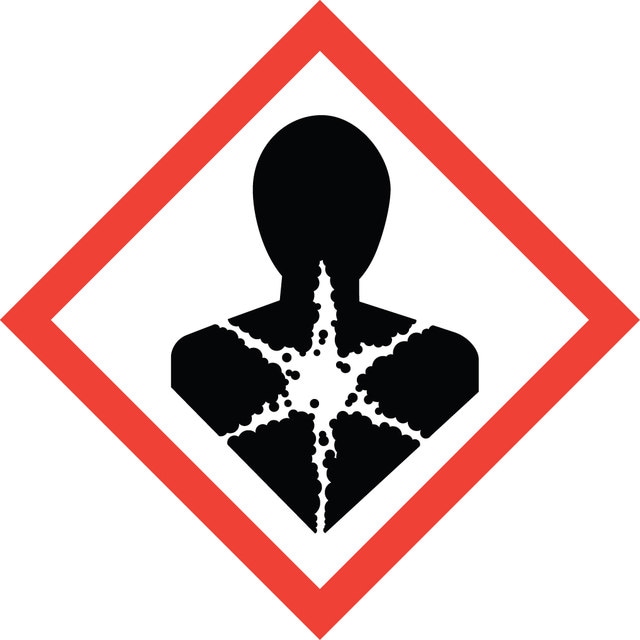

Signal Word
Danger
Hazard Codes
Target Organs
Eyes,Central nervous system, Respiratory system
Storage Class
6.1C - Combustible acute toxic Cat.3 / toxic compounds or compounds which causing chronic effects
supp_hazards
Precautionary Statements
Hazard Classifications
Acute Tox. 3 Inhalation - Acute Tox. 4 Oral - Carc. 1B - Eye Irrit. 2 - Muta. 2 - Skin Irrit. 2 - Skin Sens. 1 - STOT SE 2 - STOT SE 3
Regulatory Listings
Regulatory Listings are mainly provided for chemical products. Only limited information can be provided here for non-chemical products. No entry means none of the components are listed. It is the user’s obligation to ensure the safe and legal use of the product.
Please refer to KIT Component information
pdsc
Please refer to KIT Component information
prtr
Please refer to KIT Component information
fsl
Please refer to KIT Component information
ishl_indicated
Please refer to KIT Component information
ishl_notified
Please refer to KIT Component information
cart
キットコンポーネントの情報を参照してください
jan
Choose from one of the most recent versions:
Already Own This Product?
Find documentation for the products that you have recently purchased in the Document Library.