


This product is packaged for use in deposition systems. The Yield Engineering Systems (YES) CVD (Chemical Vapor Deposition) equipment can precisely control deposition parameters such as the reactant volume, reaction temperature, and deposition time, which are ideal for APTES deposition. Although bulky and expensive, the system makes the deposition process is relatively simple. The oxide surface can be hydroxylated with plasma using the YES system or a piranha solution, beforehand. The APTES is stored in temperature-controlled flasks where it is evaporated and introduced to the deposition chamber, which is kept at 150 °C and a low pressure (0.5-500 Torr). Nitrogen purges have been used before the deposition to dehydrate the surface or after deposition to remove physisorbed molecules. Rather than dehydrate the surface, water vapor can also be introduced to hydrate it, if so desired. The deposition time using a YES system is short compared to other methods. In the literature, YES CVD systems have been used to deposit monolayers of APTES using processes with different steps.
706493

(3-Aminopropyl)triethoxysilane
packaged for use in deposition systems, ≥98%
Synonym(s):
3-Triethoxysilylpropylamine, APTES, APTS
Select a Size
PLN 5,410.00
About This Item
Skip To
Product Name
(3-Aminopropyl)triethoxysilane, packaged for use in deposition systems, ≥98%
InChI
1S/C9H23NO3Si/c1-4-11-14(12-5-2,13-6-3)9-7-8-10/h4-10H2,1-3H3
InChI key
WYTZZXDRDKSJID-UHFFFAOYSA-N
SMILES string
CCO[Si](CCCN)(OCC)OCC
assay
≥98%
form
liquid
bp
217 °C/760 mmHg (lit.)
density
0.946 g/mL at 25 °C (lit.)
Quality Level
Looking for similar products? Visit Product Comparison Guide
1 of 4
This Item | A3648 | 440140 | 741442 |
|---|---|---|---|
| form liquid | form liquid | form liquid | form liquid |
| assay ≥98% | assay ≥98% | assay 99% | assay ≥98.0% |
| density 0.946 g/mL at 25 °C (lit.) | density 0.946 g/mL at 25 °C (lit.) | density 0.946 g/mL at 25 °C (lit.) | density 0.929 g/mL at 25 °C, 0.946 g/mL at 25 °C (lit.) |
| bp 217 °C/760 mmHg (lit.) | bp 217 °C/760 mmHg (lit.) | bp 217 °C/760 mmHg (lit.) | bp 217 °C/760 mmHg (lit.) |
| Quality Level 100 | Quality Level 200 | Quality Level 200 | Quality Level 100 |
Application
General description
signalword
Danger
hcodes
Hazard Classifications
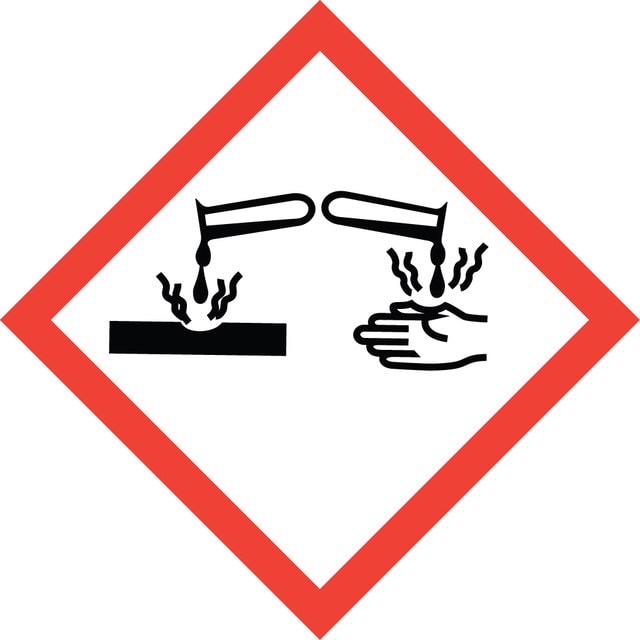
Acute Tox. 4 Oral - Eye Dam. 1 - Skin Corr. 1B - Skin Sens. 1
Storage Class
8A - Combustible corrosive hazardous materials
wgk
WGK 1
flash_point_f
199.4 °F - closed cup
flash_point_c
93 °C - closed cup
ppe
Faceshields, Gloves, Goggles, type ABEK (EN14387) respirator filter
Choose from one of the most recent versions:
Already Own This Product?
Find documentation for the products that you have recently purchased in the Document Library.
Articles
Thin film photovoltaic devices have become increasingly important in efficiently harnessing solar energy to meet consumer demand.
Nanocomposite Coatings with Tunable Properties Prepared by Atomic Layer Deposition
Atomic Layer Deposition (ALD) technology ensures uniform coating on complex 3D surfaces with precise chemisorption cycles.
Silica's versatility spans various industries, including biomedical applications.
-
Hello. I noticed this special packaging of APTES for deposition: 706493-20ML. Can you tell me more? We have a Yield Engineering Systems oven. Is this packaging for that oven?
1 answer-
Helpful?
-
-
What is the concentration of the (3-Aminopropyl)triethoxysilane, commonly known as APTES?
1 answer-
The (3-Aminopropyl)triethoxysilane, which is a neat liquid, is 4.3 M. This is based on a density of 0.946 g/mL and a molecular weight of 221.37.
Helpful?
-
-
What is the Department of Transportation shipping information for this product?
1 answer-
Transportation information can be found in Section 14 of the product's (M)SDS.To access the shipping information for this material, use the link on the product detail page for the product.
Helpful?
-
Active Filters
Our team of scientists has experience in all areas of research including Life Science, Material Science, Chemical Synthesis, Chromatography, Analytical and many others.
Contact Technical Service