

If this product has an expiration or retest date, it will be shown on the Certificate of Analysis (COA, CofA). If there is no retest or expiration date listed on the product's COA, we do not have suitable stability data to determine a shelf life. For these products, the only date on the COA will be the release date; a retest, expiration, or use-by-date will not be displayed.
For all products, we recommend handling per defined conditions as printed in our product literature and website product descriptions. We recommend that products should be routinely inspected by customers to ensure they perform as expected.
For products without retest or expiration dates, our standard warranty of 1 year from the date of shipment is applicable.
For more information, please refer to the Product Dating Information document: https://www.sigmaaldrich.com/deepweb/assets/sigmaaldrich/marketing/global/documents/418/501/product-dating-information-06-25-mk.pdf
741442

(3-Aminopropyl)triethoxysilane
≥98.0%
Synonym(s):
APTS, 3-Triethoxysilylpropylamine, APTES
Select a Size
PLN 339.00
PLN 1,160.00
About This Item
Skip To
Product Name
(3-Aminopropyl)triethoxysilane, ≥98.0%
InChI
1S/C9H23NO3Si/c1-4-11-14(12-5-2,13-6-3)9-7-8-10/h4-10H2,1-3H3
InChI key
WYTZZXDRDKSJID-UHFFFAOYSA-N
SMILES string
CCO[Si](CCCN)(OCC)OCC
assay
≥98.0%
form
liquid
color
APHA: ≤25
refractive index
n20/D 1.421
bp
217 °C/760 mmHg (lit.)
density
0.929 g/mL at 25 °C
0.946 g/mL at 25 °C (lit.)
Quality Level
Looking for similar products? Visit Product Comparison Guide
1 of 4
This Item | 440140 | A3648 | 706493 |
|---|---|---|---|
| form liquid | form liquid | form liquid | form liquid |
| assay ≥98.0% | assay 99% | assay ≥98% | assay ≥98% |
| density 0.929 g/mL at 25 °C, 0.946 g/mL at 25 °C (lit.) | density 0.946 g/mL at 25 °C (lit.) | density 0.946 g/mL at 25 °C (lit.) | density 0.946 g/mL at 25 °C (lit.) |
| bp 217 °C/760 mmHg (lit.) | bp 217 °C/760 mmHg (lit.) | bp 217 °C/760 mmHg (lit.) | bp 217 °C/760 mmHg (lit.) |
| refractive index n20/D 1.421 | refractive index - | refractive index - | refractive index - |
| color APHA: ≤25 | color - | color - | color - |
Application
- For the surface functionalization of silica nanoparticles to enhance their colloidal stability.
- As a self-assembled monolayer (SAM) in the fabrication of amorphous silicon thin-film solar cells, to enhance their performance and stability.
- To modify zinc oxide quantum dots for enhancing the performance of fluorescent orthodontic adhesives.
- Synthesis of Fe3O4@SiO2/APTS/Ru magnetic nanocomposite catalyst for hydrogenation reactions
Features and Benefits
- (≥98.0%) ensures effective bonding and modification without the interference of impurities, leading to improved adhesion and durability of coatings.
- The absence of contaminants allows for consistent performance in enhancing the compatibility between organic and inorganic materials, resulting in stronger and more reliable composites.
- It ensures that the functional groups are readily available for reactions, leading to efficient immobilization and improved sensitivity of biosensors.
General description
signalword
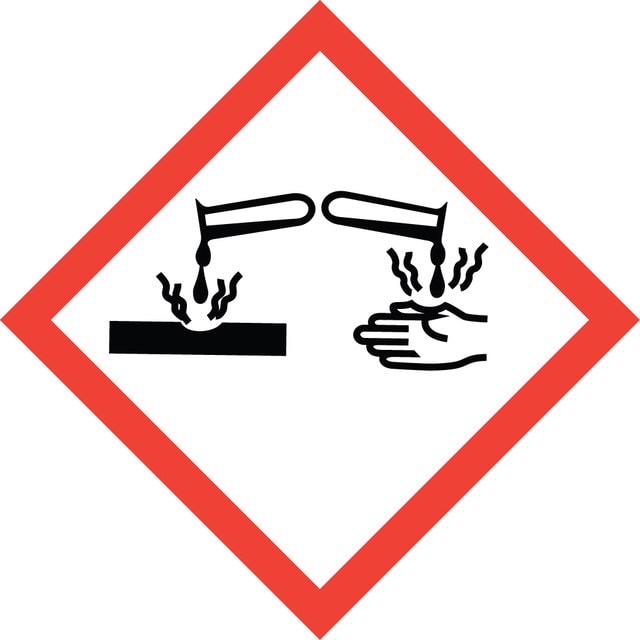
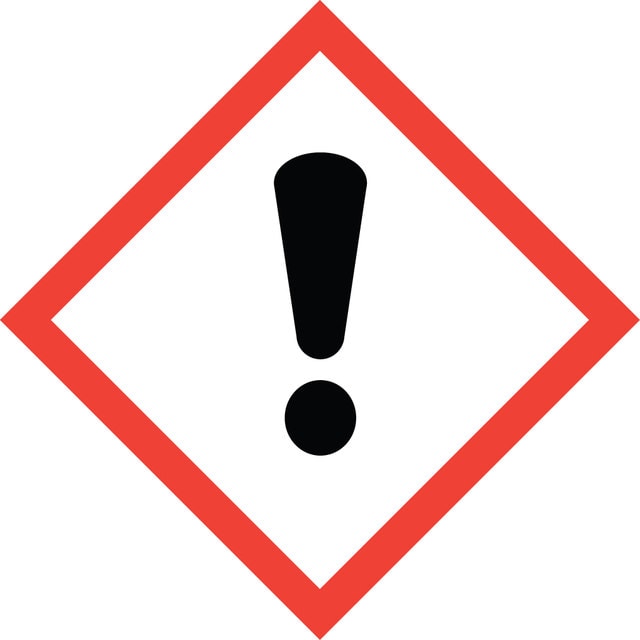
Danger
hcodes
Hazard Classifications
Acute Tox. 4 Oral - Eye Dam. 1 - Skin Corr. 1B - Skin Sens. 1
Storage Class
8A - Combustible corrosive hazardous materials
wgk
WGK 1
flash_point_f
195.1 °F - closed cup
flash_point_c
90.6 °C - closed cup
Choose from one of the most recent versions:
Already Own This Product?
Find documentation for the products that you have recently purchased in the Document Library.
Articles
Niedawny popyt na pojazdy elektryczne i hybrydowe, w połączeniu z obniżką cen, spowodował, że akumulatory litowo-jonowe (LIB) stały się coraz bardziej popularną formą technologii akumulatorów.
Hybrid organic-inorganic sol-gel materials containing silica were first called “ORMOSILs” in 1984.
Recent demand for electric and hybrid vehicles, coupled with a reduction in prices, has caused lithium-ion batteries (LIBs) to become an increasingly popular form of rechargeable battery technology.
atomic layer deposition (ALD), microelectronics, Mo:Al2O3 films, nanocomposite coating, photovoltaics, semiconductor devices, W:Al2O3 films, composite films, layer-by-layer
-
How can I determine the shelf life / expiration / retest date of this product?
1 answer-
Helpful?
-
-
How to coat the product APTES (741442) on high density polyethylene surface?
1 answer-
The high-density polyethylene surface requires thorough cleaning with a solvent like isopropyl alcohol or ethanol to eliminate contaminants. To enhance adhesion, the surface can be treated to increase roughness through plasma treatment or by using sandpaper to create a micro-rough texture. After cleaning, prepare a solution by dissolving this product in a suitable solvent, typically ethanol or toluene. A common concentration range is 1-5% (w/v), depending on the desired coating thickness. Apply the solution to the polyethylene surface using methods such as spraying, dipping, or brushing. Allow the surface to cure at room temperature or by applying gentle heat (60-80°C) in an oven.
Helpful?
-
-
How is shipping temperature determined? And how is it related to the product storage temperature?
1 answer-
Products may be shipped at a different temperature than the recommended long-term storage temperature. If the product quality is sensitive to short-term exposure to conditions other than the recommended long-term storage, it will be shipped on wet or dry-ice. If the product quality is NOT affected by short-term exposure to conditions other than the recommended long-term storage, it will be shipped at ambient temperature. As shipping routes are configured for minimum transit times, shipping at ambient temperature helps control shipping costs for our customers. For more information, please refer to the Storage and Transport Conditions document: https://www.sigmaaldrich.com/deepweb/assets/sigmaaldrich/marketing/global/documents/316/622/storage-transport-conditions-mk.pdf
Helpful?
-
-
How to coat the product APTES (741442) on a Si wafer surface?
1 answer-
To coat APTES (741442) on a Si wafer surface:
1. Prepare a 1.6% APTES solution in toluene.
2. Soak the Si wafer in the solution for 2.5 hours.
3. Rinse the wafer using ethanol and water three times.
It's important to note that no initiator is needed. Varying the concentration and soaking time can result in different thicknesses of the APTES layer, but a layer that is too thick may exfoliate quickly.Helpful?
-
-
What is the appropiate septum/cover reference to close this bottle? Cannot find it in your cathalogue.
1 answer-
This product is packaged in amber glass bottles. The closure is a polypropylene screw cap with PTFE liner. Replacing the cap with a septum is not recommended. See below for images of the bottle and cap.
Helpful?
-
-
What is the concentration of the (3-Aminopropyl)triethoxysilane, commonly known as APTES?
1 answer-
The (3-Aminopropyl)triethoxysilane, which is a neat liquid, is 4.3 M. This is based on a density of 0.946 g/mL and a molecular weight of 221.37.
Helpful?
-
-
What is the Department of Transportation shipping information for this product?
1 answer-
Transportation information can be found in Section 14 of the product's (M)SDS.To access the shipping information for this material, use the link on the product detail page for the product.
Helpful?
-

Active Filters
Our team of scientists has experience in all areas of research including Life Science, Material Science, Chemical Synthesis, Chromatography, Analytical and many others.
Contact Technical Service