Saltar al contenido
MilliporeSigma

270741

Reagent Alcohol

greener alternative

≥89.0% (GC), denatured, suitable for HPLC, contains 5% isopropyl alcohol as denaturant, 5% methyl alcohol as denaturant

Sinónimos:

denatured alcohol, Ethanol, RGA

Iniciar sesión para ver los precios por organización y contrato.

Seleccione un Tamaño


Acerca de este artículo

Número CAS:
UNSPSC Code:
12190000
PubChem Substance ID:
NACRES:
NA.21
MDL number:
Assay:
≥89.0% (GC)
Technique(s):
HPLC: suitable
Application(s):
food and beverages
Bp:
78 °C
Servicio técnico
¿Necesita ayuda? Nuestro equipo de científicos experimentados está aquí para ayudarle.
Permítanos ayudarle
Servicio técnico
¿Necesita ayuda? Nuestro equipo de científicos experimentados está aquí para ayudarle.
Permítanos ayudarle

Nombre del producto

Reagent Alcohol, denatured, suitable for HPLC

SMILES string

OCC

InChI

1S/C2H6O/c1-2-3/h3H,2H2,1H3

InChI key

LFQSCWFLJHTTHZ-UHFFFAOYSA-N

vapor density

1.59 (vs air)

assay

≥89.0% (GC)

form

liquid

contains

5% isopropyl alcohol as denaturant
5% methyl alcohol as denaturant

expl. lim.

3.1-27.7 %

Quality Level

greener alternative product characteristics

Safer Solvents and Auxiliaries
Learn more about the Principles of Green Chemistry.

sustainability

Greener Alternative Product

technique(s)

HPLC: suitable

impurities

≤0.10% water

evapn. residue

<0.0005%

bp

78 °C

mp

-114 °C

λ

H2O reference

UV absorption

λ: 205 nm Amax: 1.00
λ: 210 nm Amax: 0.65
λ: 220 nm Amax: 0.35
λ: 255 nm Amax: 0.04
λ: 300-400 nm Amax: 0.01

application(s)

food and beverages

greener alternative category

storage temp.

room temp

¿Está buscando productos similares? Visita Guía de comparación de productos

Application

Designed for use with HPLC instrumentation and organic synthesis applications.

General description

This solvent is glass distilled, submicron filtered and subjected to rigorous specification testing to provide lot-to-lot consistency.

Other Notes

95 parts of specially denatured ethyl alcohol 3A, 200 proof, with 5 parts of isopropyl alcohol. Final concentrations are ~ 90% ethanol, ~ 5% methanol and ~ 5% isopropanol.
Discover LiChropur reagents ideal for HPLC or LC-MS analysis

Packaging

M-Bottle for Solvents
As a global leader in lab reagents, we are constantly looking for new ways to optimize the safety of our products. The newly developed 4L solvent bottle design features advanced sealing technology that eliminates leaks to make the handling of solvents safer and more convenient than ever before.
See all the new features here!

Features and Benefits
We are committed to bringing you Greener Alternative Products, which adhere to one or more of The 12 Principles of Greener Chemistry. Ethanol is environmentally preferable green solvent and thus it aligns with "Safer Solvents and Auxiliaries". Click here for more information.

signalword

Danger

Hazard Classifications

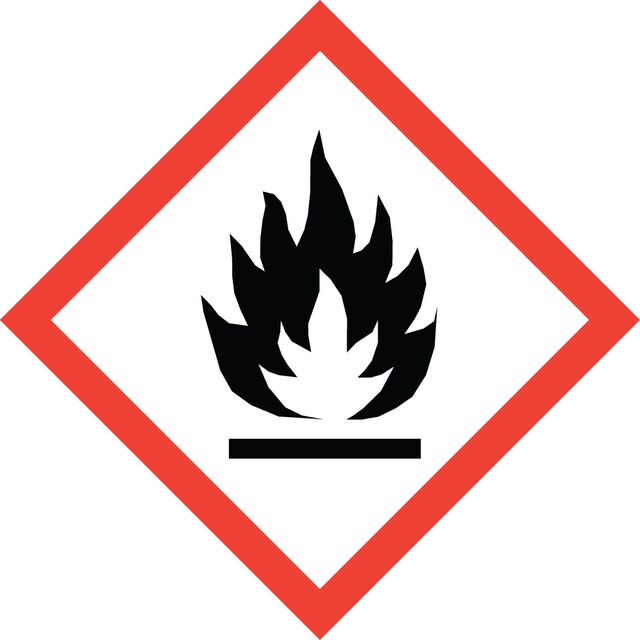
Eye Irrit. 2 - Flam. Liq. 2 - STOT SE 2

target_organs

Eyes,Central nervous system

Clase de almacenamiento

3 - Flammable liquids

wgk

WGK 2

flash_point_f

48.2 °F - closed cup

flash_point_c

9 °C - closed cup


Elija entre una de las versiones más recientes:

Certificados de análisis (COA)

Lot/Batch Number

¿No ve la versión correcta?

Si necesita una versión concreta, puede buscar un certificado específico por el número de lote.

¿Ya tiene este producto?

Encuentre la documentación para los productos que ha comprado recientemente en la Biblioteca de documentos.

Visite la Librería de documentos

Eagleson M.
Concise Encyclopedia Chemistry, 384-384 (1994)
Sreedhar Bodiga et al.
American journal of physiology. Lung cellular and molecular physiology, 298(4), L564-L574 (2010-01-12)
We have shown that 20-hydroxyeicosatetraenoic acid (20-HETE) increases both superoxide and nitric oxide (NO) production in bovine pulmonary artery endothelial cells (BPAECs). The current study was designed to determine mechanisms underlying 20-HETE-stimulated NO release, and particularly the role of NADPH
Francesca Filon Larese et al.
Toxicology, 255(1-2), 33-37 (2008-11-01)
There is a growing interest on nanoparticle safety for topical use. The benefits of nanoparticles have been shown in several scientific fields, but little is known about their potential to penetrate the skin. This study aims at evaluating in vitro
Synthesis of ZnO nanorod and the annealing effect on its photoluminescence property.
Wu L, et al.
Opt. Mater., 28(4), 418-422 (2006)
50-Hz extremely low frequency electromagnetic fields enhance cell proliferation and DNA damage: possible involvement of a redox mechanism.
Wolf FI, et al.
Biochimica et Biophysica Acta - Molecular Cell Research, 1743(1), 120-129 (2005)

Nuestro equipo de científicos tiene experiencia en todas las áreas de investigación: Ciencias de la vida, Ciencia de los materiales, Síntesis química, Cromatografía, Analítica y muchas otras.

Póngase en contacto con el Servicio técnico