

BioRenewable solvents are sourced from renewable and sustainable biobased materials, such as soy/palm oil, wood waste, hay or corn byproducts, etc. It is important to highlight that our BioRenewable products do not compete with food production.
Fortfahren mit
901351

1-Butanol
100% BioRenewable, reagent grade, ≥99.4%
Nachhaltigkeitsmerkmale
Synonym(e):
n-Butanol, Butylalkohol
Anmelden zur Ansicht der Organisations- und Vertragspreise.
Größe auswählen
Ansicht ändern
| Größe/SKU | Verfügbarkeit | Preis |
|---|
Über diesen Artikel
Lineare Formel:
CH3(CH2)3OH
CAS-Nummer:
Molekulargewicht:
74.12
NACRES:
NA.05
UNSPSC Code:
12352001
Beilstein/REAXYS Number:
969148
MDL number:
Assay:
≥99.4%
Grade:
reagent grade
Bp:
116-118 °C (lit.)
Preise und Verfügbarkeit sind derzeit nicht verfügbar.
Technischer Dienst
Benötigen Sie Hilfe? Unser Team von erfahrenen Wissenschaftlern ist für Sie da.
Unterstützung erhaltengrade
reagent grade
Quality Segment
vapor density
2.55 (vs air)
assay
≥99.4%
form
liquid
autoignition temp.
649 °F
expl. lim.
11.2 %
greener alternative product characteristics
Safer Solvents and Auxiliaries
Use of Renewable Feedstocks
Learn more about the Principles of Green Chemistry.
sustainability
Sustainability features
renewable carbon content
100%
dilution
(for analytical testing)
impurities
≤0.0008 meq/g Titr. acid, ≤0.01% butyraldehyde, ≤0.1% water, ≤0.2% butyl ether
evapn. residue
≤0.005%
color
APHA: ≤10
refractive index
n20/D 1.399 (lit.)
bp
116-118 °C (lit.)
mp
−90 °C (lit.)
density
0.81 g/mL at 25 °C (lit.)
SMILES string
CCCCO
InChI
1S/C4H10O/c1-2-3-4-5/h5H,2-4H2,1H3
InChI key
LRHPLDYGYMQRHN-UHFFFAOYSA-N
General description
We are committed to bringing you Greener Alternative Products, which adhere to one or more of The 12 Principles of Greener Chemistry. This product is 100% biorenewable and thus aligns with "Safer Solvents and Auxiliaries" and "Use of Renewable Feedstocks". Click here for more information.
This ACS grade 1-Butanol is a drop-in replacement for traditional 1-Butanol applications. Made from 100% renewable carbon (verified through C14 ASTM D6866-16 testing) and produced in an environmentally-friendly way which reduces the carbon footprint of production and reduces reliance on fossil-fuels.
It is also free from many contaminants that are present in petroleum derived 1-Butanol, such as isobutanol and aldehydes.
This ACS grade 1-Butanol is a drop-in replacement for traditional 1-Butanol applications. Made from 100% renewable carbon (verified through C14 ASTM D6866-16 testing) and produced in an environmentally-friendly way which reduces the carbon footprint of production and reduces reliance on fossil-fuels.
It is also free from many contaminants that are present in petroleum derived 1-Butanol, such as isobutanol and aldehydes.
Application
Drop-in replacement for all 1-Butanol applications. Does not affect change in procedure or equipment.
1-Butanol may be used in applications such as:
1-Butanol may be used in applications such as:
- Extraction and purification of compounds
- Solvent in chemical synthesis
- Intermediate in polymer synthesis
- Adhesives and sealants formulation
- Coatings
Features and Benefits
- ASTM D6866 - Standard Test Methods for Determining the Biobased Content
- Renewable Carbon Content – ≥99.9%
- Made from Renewable Resource
- Replacement for Petroleum-based 1-Butanol
1 of 1
Dieser Artikel | ||
|---|---|---|
| description 100% BioRenewable, reagent grade, ≥99.4% | description anhydrous, 99.8% | description puriss. p.a., ACS reagent, reag. ISO, reag. Ph. Eur., ≥99.5% (GC) |
| assay ≥99.4% | assay 99.8% | assay ≥99.5% (GC) |
| grade reagent grade | grade anhydrous | grade puriss. p.a., ACS reagent |
| Quality Level 200 | Quality Level 100 | Quality Level 200 |
| form liquid | form liquid | form liquid |
| refractive index n20/D 1.399 (lit.) | refractive index n20/D 1.399 (lit.) | refractive index n20/D 1.399 (lit.) |
| autoignition temp. 649 °F | autoignition temp. 649 °F | autoignition temp. 649 °F |
Still not finding the right product?
Explore all of our products under 1-Butanol
Signalwort
Danger
Gefahrencodes
Sicherheitshinweise
Hazard Classifications
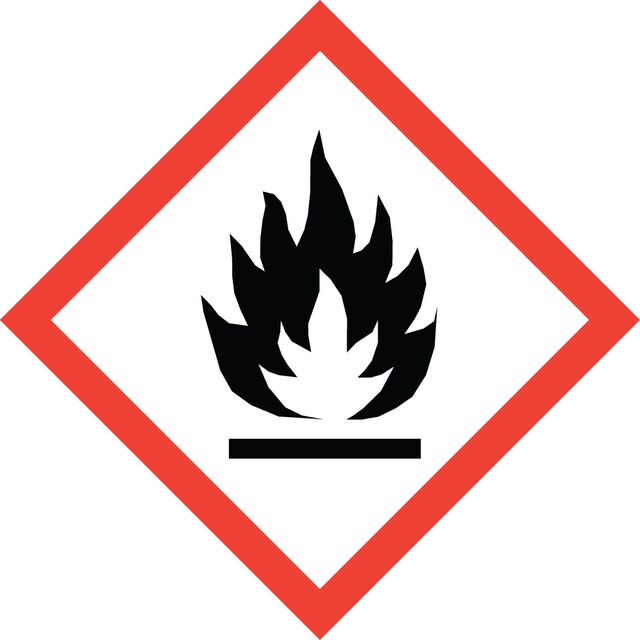
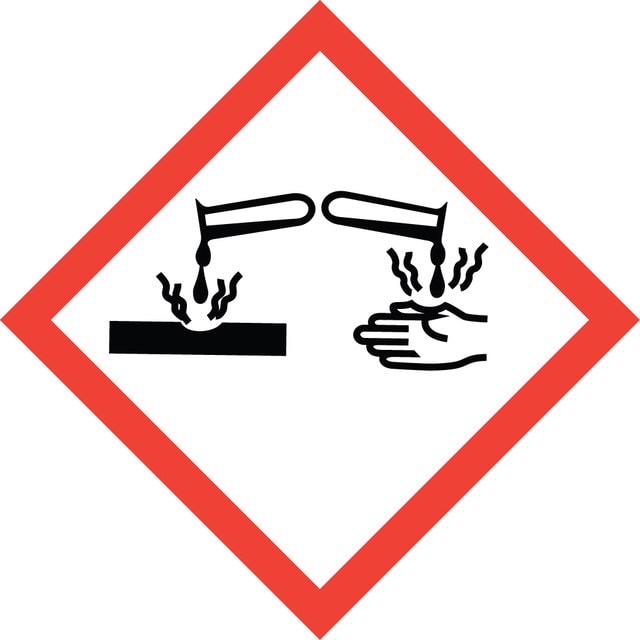
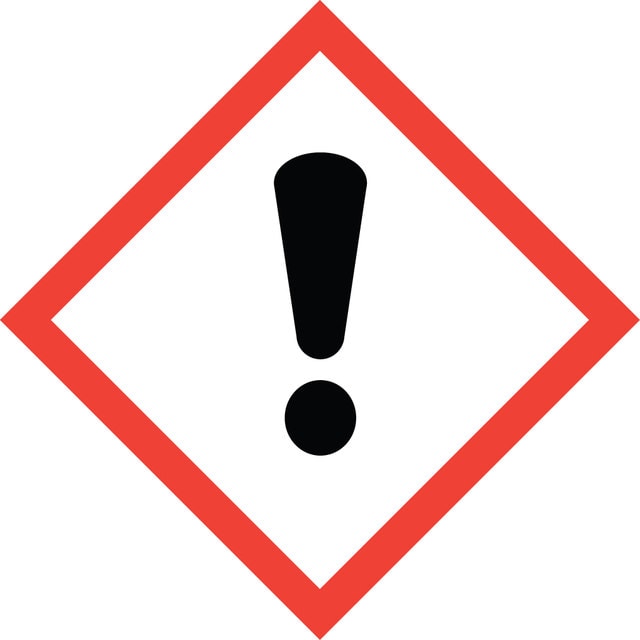
Acute Tox. 4 Oral - Eye Dam. 1 - Flam. Liq. 3 - Skin Irrit. 2 - STOT SE 3
Zielorgane
Central nervous system, Respiratory system
Lagerklasse
3 - Flammable liquids
Was ist los?
WGK 1
Flammpunkt (°F)
95.0 °F - Pensky-Martens closed cup
Flammpunkt (°C)
35 °C - Pensky-Martens closed cup
Zulassungslistungen
Zulassungslistungen werden hauptsächlich für chemische Produkte erstellt. Für nicht-chemische Produkte können hier nur begrenzte Angaben gemacht werden. Kein Eintrag bedeutet, dass keine der Komponenten gelistet ist. Es liegt in der Verantwortung des Benutzers, die sichere und legale Verwendung des Produkts zu gewährleisten.
71-36-3
CAS No.
Hier finden Sie alle aktuellen Versionen:
Besitzen Sie dieses Produkt bereits?
In der Dokumentenbibliothek finden Sie die Dokumentation zu den Produkten, die Sie kürzlich erworben haben.
-
What is a BioRenewable solvent?
1 answer-
Helpful?
-
-
Do BioRenewable solvents have a similar quality to petroleum-based solvents?
1 answer-
BioRenewable solvents can have the same or higher purity level compared to traditional solvents. These solvents are free of the many byproducts of petroleum manufacturing, such as benzene, aldehydes, and ethers.
Helpful?
-
-
Why should you use BioRenewable solvents?
1 answer-
You will contribute to create a sustainable world, significantly lowering environmental impact. Biorenewable solvents also decrease petroleum sources dependency, have higher recovery rates, and/or are safer for handling and disposal.
Helpful?
-