
Fortfahren mit
C0857

Chloramphenicol
meets USP testing specifications
Synonym(e):
D(−)-threo-2,2-Dichlor-N-[β-hydroxy-α-(hydroxymethyl)-β-(4-nitrophenyl)-ethyl]-acetamid, D-(−)-threo-2-Dichloracetamido-1-(4-nitrophenyl)-1,3-propandiol, D-threo-2,2-Dichlor-N-[β-hydroxy-α-(hydroxymethyl)-4-nitrophenethyl]-acetamid, Chloromycetin
Größe auswählen
| Größe/SKU | Verfügbarkeit | Preis |
|---|---|---|
25 g | Warenkorb auf Verfügbarkeit prüfen | € 173,00 |
100 g | Warenkorb auf Verfügbarkeit prüfen | € 601,00 |
500 g | Warenkorb auf Verfügbarkeit prüfen | € 2.180,00 |
Über diesen Artikel
Quality Segment
agency
USP/NF, meets USP testing specifications
assay
97.0-103.0%
form
crystalline
mp
149-153 °C (lit.)
solubility
H2O: insoluble 100% (practically)
antibiotic activity spectrum
viruses
application(s)
pharmaceutical (small molecule)
mode of action
protein synthesis | interferes
storage temp.
2-8°C
SMILES string
OC[C@@H](NC(=O)C(Cl)Cl)[C@H](O)c1ccc(cc1)[N+]([O-])=O
InChI
1S/C11H12Cl2N2O5/c12-10(13)11(18)14-8(5-16)9(17)6-1-3-7(4-2-6)15(19)20/h1-4,8-10,16-17H,5H2,(H,14,18)/t8-,9-/m1/s1
InChI key
WIIZWVCIJKGZOK-RKDXNWHRSA-N
Gene Information
human ... CYP1A2(1544)
General description
Application
Biochem/physiol Actions
Resistenzmechanismus: Die Verwendung von Chloramphenicol-Acetyltransferase führt zur Acetylierung und Inaktivierung des Produkts.
Antimikrobielles Spektrum: Es handelt sich um ein Breitbandantibiotikum gegen grampositive und gramnegative Bakterien, das vor allem in der Augenheilkunde und in der Tiermedizin eingesetzt wird.
Preparation Note
Disclaimer
1 of 1
Dieser Artikel | |||
|---|---|---|---|
| description meets USP testing specifications | description BioReagent, suitable for plant cell culture | description VETRANAL®, analytical standard | description British Pharmacopoeia (BP) Reference Standard |
| antibiotic activity spectrum viruses | antibiotic activity spectrum mycobacteria, Gram-positive bacteria, Gram-negative bacteria, mycoplasma | antibiotic activity spectrum - | antibiotic activity spectrum - |
| mode of action protein synthesis | interferes | mode of action protein synthesis | interferes | mode of action - | mode of action - |
| Quality Level 200 | Quality Level 200 | Quality Level 100 | Quality Level - |
| application(s) pharmaceutical (small molecule) | application(s) agriculture | application(s) clinical testing | application(s) pharmaceutical |
| form crystalline | form powder | form - | form powder |
| assay 97.0-103.0% | assay - | assay ≥98% (HPLC) | assay - |

Still not finding the right product?
Explore all of our products under Chloramphenicol
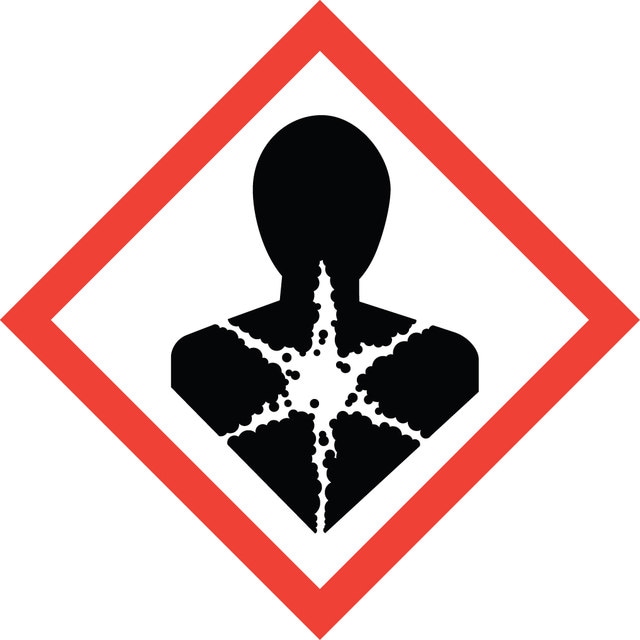
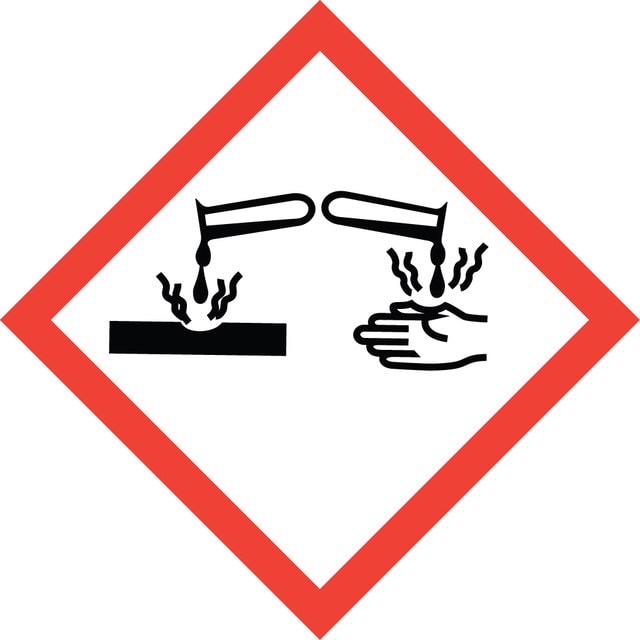
Signalwort
Danger
Gefahrencodes
Sicherheitshinweise
Hazard Classifications
Carc. 2 - Eye Dam. 1 - Repr. 2
Lagerklasse
11 - Combustible Solids
PSA (Persönliche Schutzausrüstung)
Eyeshields, Gloves, type P3 (EN 143) respirator cartridges
Hier finden Sie alle aktuellen Versionen:
Besitzen Sie dieses Produkt bereits?
In der Dokumentenbibliothek finden Sie die Dokumentation zu den Produkten, die Sie kürzlich erworben haben.