Direkt zum Inhalt
Merck

Fortfahren mit

C3118

CPNQ

≥98% (HPLC), solid

Synonym(e):

5-[4-(4-chlorobenzoyl)-1-piperazinyl]-8-nitroquinoline, B2

Anmelden zur Ansicht der Organisations- und Vertragspreise.

Über diesen Artikel

Empirische Formel (Hill-System):
C20H17ClN4O3
CAS-Nummer:
Molekulargewicht:
396.83
NACRES:
NA.77
PubChem Substance ID:
UNSPSC Code:
12352202
MDL number:
Assay:
≥98% (HPLC)
Form:
solid


Quality Segment

assay

≥98% (HPLC)

form

solid

color

brown

solubility

H2O: insoluble <2 mg/mL, DMSO: >5 mg/mL

storage temp.

2-8°C

SMILES string

[O-][N+](=O)c1ccc(N2CCN(CC2)C(=O)c3ccc(Cl)cc3)c4cccnc14

InChI

1S/C20H17ClN4O3/c21-15-5-3-14(4-6-15)20(26)24-12-10-23(11-13-24)17-7-8-18(25(27)28)19-16(17)2-1-9-22-19/h1-9H,10-13H2

InChI key

KLNPVNZJCWIQSK-UHFFFAOYSA-N

Biochem/physiol Actions

CPNQ is a promoter of polyQ and α-synuclein inclusion formation and rescuer of Htt proteosomal dysfunction and α-synuclein toxicity.
Misfolded proteins accumulate in many neurodegenerative diseases, including huntingtin in Huntington′s disease and alpha-synuclein in Parkinson′s disease. The disease-causing proteins can take various conformations and are prone to aggregate and form larger cytoplasmic or nuclear inclusions. CPNQ (B2) was identified as a compound that promotes inclusion formation in cellular models of both Huntington′s disease and Parkinson′s disease. Despite the aggregate-forming specifics the compound prevents huntingtin-mediated proteasome dysfunction and reduces alpha-synuclein-mediated toxicity. These results demonstrate that compounds that increase inclusion formation may actually lessen cellular pathology in both Huntington′s and Parkinson′s diseases, suggesting a therapeutic approach for neurodegenerative diseases caused by protein misfolding. The ability of B2 to prevent toxicity, despite increasing inclusions, suggests that inclusions are beneficial rather than toxic, which will be further explored as the molecular target and mechanism. CPNQ (B2) is a desirable tool for both Huntington′s and Parkinson′s research.

Other Notes

Product is air sensitive.


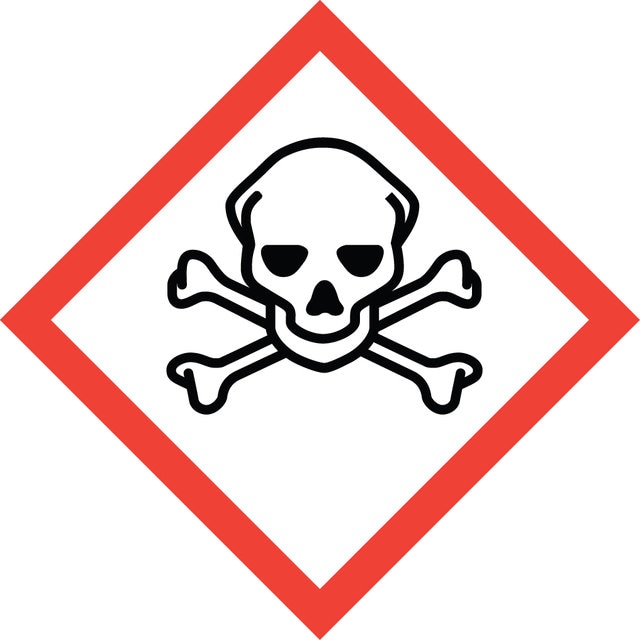
Piktogramme

Skull and crossbones

Signalwort

Danger

Gefahrencodes

Hazard Classifications

Acute Tox. 3 Oral - Eye Irrit. 2 - Skin Irrit. 2 - STOT SE 3

Zielorgane

Respiratory system

Lagerklasse

6.1C - Combustible acute toxic Cat.3 / toxic compounds or compounds which causing chronic effects

Was ist los?

WGK 3

Flammpunkt (°F)

Not applicable

Flammpunkt (°C)

Not applicable

PSA (Persönliche Schutzausrüstung)

Eyeshields, Faceshields, Gloves, type P2 (EN 143) respirator cartridges


Hier finden Sie alle aktuellen Versionen:

Analysenzertifikate (COA)

Lot/Batch Number

It looks like we've run into a problem, but you can still download Certificates of Analysis from our Dokumente section.

Wenn Sie Hilfe benötigen, wenden Sie sich bitte an Kundensupport

Besitzen Sie dieses Produkt bereits?

In der Dokumentenbibliothek finden Sie die Dokumentation zu den Produkten, die Sie kürzlich erworben haben.

Die Dokumentenbibliothek aufrufen


Questions

Reviews

No rating value

Active Filters