


Yield will vary between cell lines and sample types, so the expected loss must be determined empirically for each sample. The technical bulletin notes that typical nuclei yields are greater than 30%, but some cell lines and sample types may experience lower yields.
Fortfahren mit
NUC201

Zellkernisolierungs-Kit: Nuclei PURE Prep
sufficient for 15 nuclei preparations (~1-10×107 cells or 1g of tissue per preparation)
Synonym(e):
Sucrose centrifugation nuclei isolation
Anmelden zur Ansicht der Organisations- und Vertragspreise.
Größe auswählen
Ansicht ändern
| Größe/SKU | Verfügbarkeit | Preis |
|---|---|---|
1 kit | Warenkorb auf Verfügbarkeit prüfen | € 950,00 |
Über diesen Artikel
NACRES:
NA.32
UNSPSC Code:
12352207
€ 950,00
Warenkorb auf Verfügbarkeit prüfen
Technischer Dienst
Benötigen Sie Hilfe? Unser Team von erfahrenen Wissenschaftlern ist für Sie da.
Unterstützung erhaltenusage
sufficient for 15 nuclei preparations (~1-10×107 cells or 1g of tissue per preparation)
Quality Segment
packaging
pkg of 1 kit
storage condition
dry at room temperature
application(s)
cell analysis
foreign activity
nuclease and protease, free
shipped in
wet ice
storage temp.
2-8°C
Application
Zur Präparation reiner Zellkerne und zerbrechlicher Zellkerne aus Zelllinien und festen Geweben.
Biochem/physiol Actions
Das Protokoll beinhaltet die Zentrifugation durch ein dichtes Saccharosekissen, um die Zellkerne zu schützen und zytoplasmatische Kontaminationen zu entfernen. Aus gängigen Zelllinien (Jurkat, HFN7.1, COS7, HEK293 und MDCK) und Geweben (Milz und Leber) wurde eine hohe Ausbeute erzielt. Die Präparationen eignen sich für eine Vielzahl von Zellbiologie-Anwendungen, z. B. als Quelle für Nuklearkomponenten wie Chromatin, genomische DNA, Histone und nukleäre(s) RNA/RNP, die Produktion von Zellkernen für In-vitro-Apoptose-Assays und für funktionelle Studien wie die Untersuchung des Transkriptionsstatus von Zellen.
Das Protokoll beinhaltet die Zentrifugation durch ein dichtes Saccharosekissen, um die Zellkerne zu schützen und zytoplasmatische Kontaminationen zu entfernen. Die für einen bestimmten Zelltyp geeignete Saccharosekonzentration wird vom Anwender empirisch bestimmt. Das Saccharosekonzentrat und der Saccharosekissenpuffer geben dem Anwender die Flexibilität, die Dichte des Saccharosekissens entsprechend zu modifizieren. Aus gängigen Zelllinien (Jurkat, HFN7.1, COS7, HEK293 und MDCK) und Geweben (Milz und Leber) wurde eine hohe Ausbeute erzielt. Die Präparationen eignen sich für eine Vielzahl von Zellbiologie-Anwendungen, z. B. als Quelle für Nuklearkomponenten wie Chromatin, genomische DNA, Histone und nukleäre(s) RNA/RNP, die Produktion von Zellkernen für In-vitro-Apoptose-Assays und für funktionelle Studien wie die Untersuchung des Transkriptionsstatus von Zellen.
1 of 1
Dieser Artikel | |||
|---|---|---|---|
| description sufficient for 15 nuclei preparations (~1-10×107 cells or 1g of tissue per preparation) | description sufficient for 25 nuclei preparations (~1-10×107 cells/preparation) | description For mammalian tissue or cultured cells | description Type II-S |
| Quality Level 200 | Quality Level 200 | Quality Level 300 | Quality Level 200 |
| storage condition dry at room temperature | storage condition - | storage condition - | storage condition - |
| usage sufficient for 15 nuclei preparations (~1-10×107 cells or 1g of tissue per preparation) | usage sufficient for 25 nuclei preparations (~1-10×107 cells/preparation) | usage kit sufficient for 10 extractions (1 ml packed cell volume), kit sufficient for 100 extractions (100 μl packed cell volume) | usage - |
| shipped in wet ice | shipped in wet ice | shipped in dry ice | shipped in - |
| storage temp. 2-8°C | storage temp. 2-8°C | storage temp. −20°C | storage temp. −20°C |
| application(s) cell analysis | application(s) cell analysis | application(s) - | application(s) - |
Nur Kit-Komponenten
Produkt-Nr.
Beschreibung
- Nuclei PURE Lysis Buffer 180 mL
Signalwort
Danger
Lagerklasse
10 - Combustible liquids
Flammpunkt (°F)
Not applicable
Flammpunkt (°C)
Not applicable
Was ist los?
WGK 2
Gefahrencodes
Sicherheitshinweise
Hazard Classifications
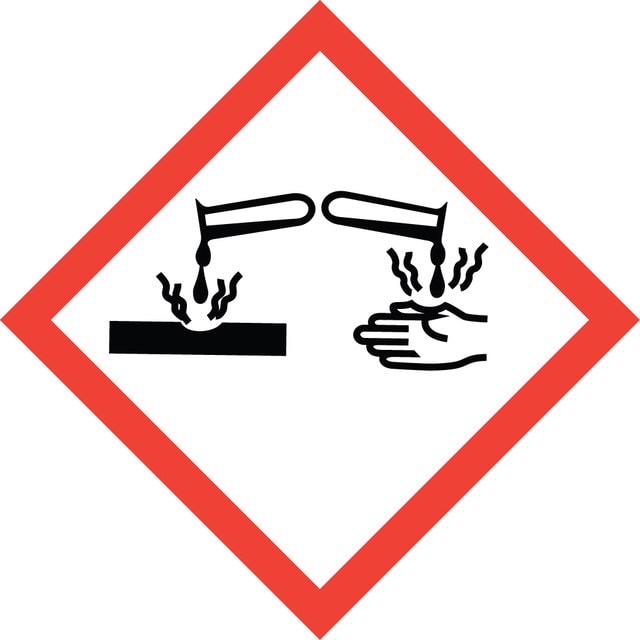
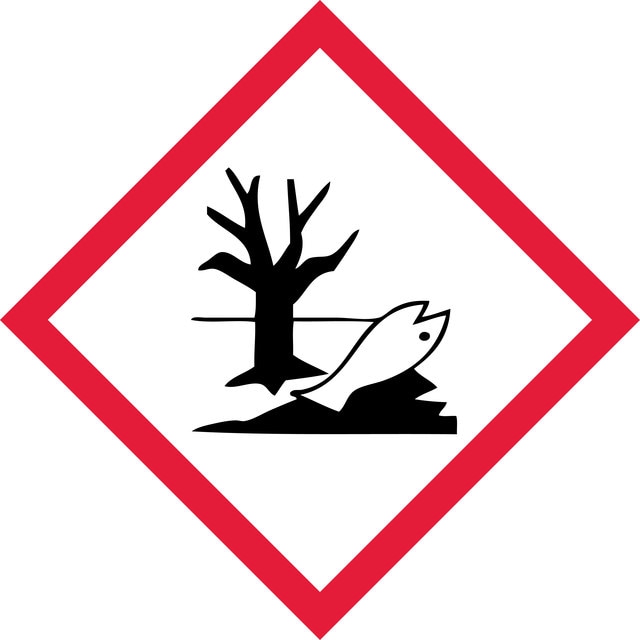
Aquatic Acute 1 - Aquatic Chronic 2 - ED ENV 1 - Eye Dam. 1 - Skin Irrit. 2
Hier finden Sie alle aktuellen Versionen:
Besitzen Sie dieses Produkt bereits?
In der Dokumentenbibliothek finden Sie die Dokumentation zu den Produkten, die Sie kürzlich erworben haben.
-
What is the expected loss (%) of nuclei due resulting from the sucrose density gradient purification step? I am planning an experiment with small tissue masses (50-100mg, ~1x10^6 nuclei) and would like to optimise yield as much as possible.
1 answer-
Helpful?
-
-
Is the kit compatible to frozen tissue stored in RNAlater?
1 answer-
This kit has not been evaluated for use with frozen samples. It is highly recommended to use fresh tissue samples with product. The freezing and thawing processes could potentially damage many of the cells and nuclei, leading to the loss of functionality/stability of some nuclear molecules/entities.
Helpful?
-
-
Is the kit compatible with Tris or DTT, as our internal protocol is not compatible with these components?
1 answer-
The NUC201 kit is compatible with Tris as well as DTT. None of the components in the kit, such as sucrose, Triton X100, and glycerin, are known to be incompatible with Tris. Additionally, as these components do not contain sulfur, there is no reason to expect any incompatibility with DTT.
Helpful?
-
-
Would the nuclei isolation protocol need to be modified when using NUC201 as an alternative to NUC101-1kt?
1 answer-
The NUC201 and NUC101 kits are very different. NUC101 has two components—a different lysis buffer and a storage buffer. In contrast, NUC201 has a different lysis buffer and a total of 5 kit components. Additionally, DTT needs to be used, although it is listed as a required but not provided reagent. Instructions for Use will be included with each kit. If the procedure is not provided with the kit, a PDF of the kit instructions can be downloaded from the product detail pages for each kit. Due to the significant procedural differences, it is important to use the specific Instructions for Use for each kit.
Helpful?
-
-
Is it possible to start the nuclei isolation process from animal tissue or cells by using a frozen sample or cell pellet (kept in -80°C)?
1 answer-
The freezing and thawing processes could potentially damage many of the cells and nuclei, leading to the loss of nuclear components and possible contamination of the nuclei with cytoplasmic or other cellular components. Testing on NUC201 has been conducted on fresh tissue.
Helpful?
-
-
Is there EDTA present in buffer L9286? Additionally, is the lysis buffer L9286 hypotonic or isotonic/hypertonic?
1 answer-
The lysis buffer is an isoosmotic sucrose buffer and it does contain EDTA.
Helpful?
-
-
Is it possible to start with frozen tissue?
1 answer-
It is probable that the freezing and thawing processes may harm a significant number of cells and nuclei, potentially resulting in the loss of nuclear components and/or contamination of the nuclei with cytoplasmic or other cellular components.
Helpful?
-
-
Is it possible to split the sample in half if the right size tubes for one of the steps are not available?
1 answer-
As per internal notes, the kit can be scaled down to as small as 1.5 ml tubes, provided that the centrifugation speed and time are not deviated from. For example, the sucrose cushion centrifugation step must be carried out for 45 minutes at 30,000 × g, preferably in an ultracentrifuge swinging rotor, as recommended in the Technical Bulletin.
Helpful?
-