



If this product has an expiration or retest date, it will be shown on the Certificate of Analysis (COA, CofA). If there is no retest or expiration date listed on the product's COA, we do not have suitable stability data to determine a shelf life. For these products, the only date on the COA will be the release date; a retest, expiration, or use-by-date will not be displayed.
For all products, we recommend handling per defined conditions as printed in our product literature and website product descriptions. We recommend that products should be routinely inspected by customers to ensure they perform as expected.
For products without retest or expiration dates, our standard warranty of 1 year from the date of shipment is applicable.
For more information, please refer to the Product Dating Information document: https://www.sigmaaldrich.com/deepweb/assets/sigmaaldrich/marketing/global/documents/418/501/product-dating-information-06-25-mk.pdf
1.03726

Methanol
99.9% (GC), suitable for UHPLC, LiChrosolv®
Synonym(s):
MeOH, Hydroxymethane, Carbinol, Methyl alcohol
Select a Size
About This Item
LC/MS: suitable
UHPLC: suitable
410 mmHg ( 50 °C)
97.68 mmHg ( 20 °C)
Skip To
Product Name
Methanol, for UHPLC-MS LiChrosolv®
Agency
suitable for ASTM® 7968
suitable for ASTM® 7979
suitable for DIN 38407-42
suitable for EPA 1621
suitable for EPA 1633
suitable for EPA 533
suitable for EPA 537.1
suitable for EPA 8327
suitable for EPA ACB B21-02
suitable for EPA ACB B23-05b
suitable for EPA OTM-45
suitable for GB 31604.35-2016
suitable for GB 5009.253-2016
suitable for ISO 21675 2019
suitable for ISO 25101
suitable for ISO/CEN 15968-2010
Quality Level
reg. compliance
suitable for FDA C-010.02
vapor density
1.11 (vs air)
vapor pressure
128 hPa ( 20 °C)
410 mmHg ( 50 °C)
97.68 mmHg ( 20 °C)
product line
LiChrosolv®
Assay
99.9% (GC)
form
liquid
autoignition temp.
725 °F
expl. lim.
36 %
technique(s)
HPLC: suitable
LC/MS: suitable
UHPLC: suitable
refractive index
n20/D 1.329 (lit.)
kinematic viscosity
0.54-0.59 cSt(20 °C)
bp
64.7 °C (lit.)
mp
−98 °C (lit.)
transition temp
flash point 9.7 °C
density
0.791 g/mL at 25 °C (lit.)
SMILES string
CO
application(s)
PFAS testing
format
neat
storage temp.
2-30°C
InChI
1S/CH4O/c1-2/h2H,1H3
InChI key
OKKJLVBELUTLKV-UHFFFAOYSA-N
Looking for similar products? Visit Product Comparison Guide
1 of 4
This Item | 1.06018 | 1.06035 | 1.00837 |
|---|---|---|---|
| Quality Level 200 | Quality Level 100 | Quality Level 100 | Quality Level 100 |
| technique(s) UHPLC: suitable | technique(s) HPLC: suitable | technique(s) LC/MS: suitable | technique(s) GC/MS: suitable |
| assay 99.9% (GC) | assay ≥99.8% (GC) | assay ≥99.9% (GC) | assay 99% (GC) |
| form liquid | form liquid | form liquid | form liquid |
| bp 64.7 °C (lit.) | bp 64.7 °C (lit.) | bp 64.7 °C (lit.) | bp 64.7 °C (lit.) |
| autoignition temp. 725 °F | autoignition temp. 725 °F | autoignition temp. 725 °F | autoignition temp. 725 °F |
General description
Application
The product is used as a solvent in studies such as the following:
- high resolution mass spectrometric (HRMS) analysis of per- and polyfluoroalkyl substances (PFAS) in environmental water samples[1]
- UHPLC-MS/MS study of PFAS and/or perfluorooctane sulfonate (PFOS) in sewage sludge[2] and soil samples[3][4]
Features and Benefits
- suitability tested and specified for UHPLC-MS and UHPLC-UV: for analytical flexibility
- specified quality in positive and negative in positive and negative electrospray ionization (ESI) and atmospheric-pressure chemical ionization-mass spectrometry (APCI-MS) for lowest detection limits and confidence in analyses for all important MS modes (test 1)
—ESI/APCI (-) < 10 ppb
- lowest impurity profile: for interference-free baselines (test 2)
- microfiltered through 0.2 μm filter (test 3) to provide:
—reduced risk of column clogging
- packed in borosilicate glass bottles for minimized metal ion contaminations
- lowest levels of trace metal impurities for a minimum metal ion adduct formation
- lowest level of polyethylene glycol (PEG) impurities in UHPLC-MS solvent lineup (PEG S/N signal-to-noise-ratio < 50)
Analysis Note
Other Notes
Legal Information
accessory
related product
Signal Word
Danger
Hazard Statements
Precautionary Statements
Hazard Classifications
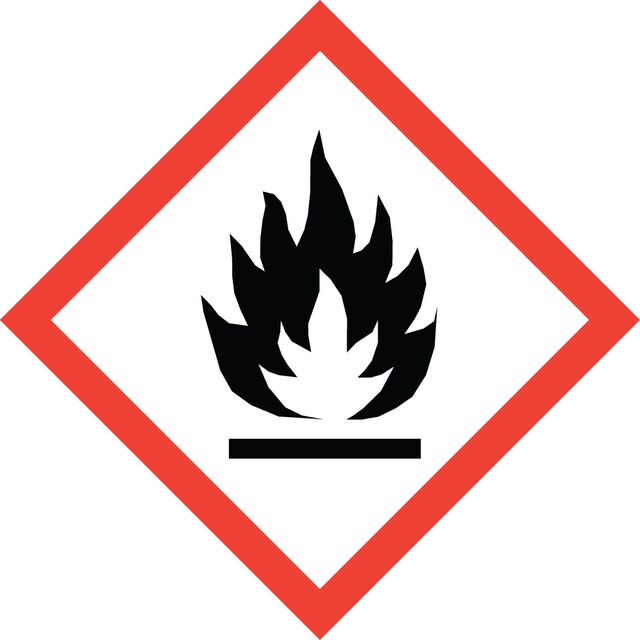
Acute Tox. 3 Dermal - Acute Tox. 3 Inhalation - Acute Tox. 3 Oral - Flam. Liq. 2 - STOT SE 1
Target Organs
Eyes,Central nervous system
Storage Class Code
3 - Flammable liquids
WGK
WGK 2
Flash Point(F)
49.5 °F - closed cup
Flash Point(C)
9.7 °C - closed cup
Certificates of Analysis (COA)
Search for Certificates of Analysis (COA) by entering the products Lot/Batch Number. Lot and Batch Numbers can be found on a product’s label following the words ‘Lot’ or ‘Batch’.
Already Own This Product?
Find documentation for the products that you have recently purchased in the Document Library.
Articles
Accurate steroid analysis in blood serum using Supel™ Swift HLB DPX Tips; UTAK and NIST standards.
Nitrosamines analysis by solid phase extraction (SPE) and subsequent gas chromatography-tandem mass spectrometry (GC-MS/MS) according to GB 5750.10-2023.
Pesticide residue analysis of 331 pesticides and 44 metabolites in cabbage samples using Supel™ QuE QuEChERS mixes and Purospher® STAR RP-18e column.
Simultaneous LC-MS/MS determination of vitamins D₂ and D₃ in infant milk powder meeting GB 5009.296-2023 criteria for accuracy and sensitivity.
Related Content
Les FAS, ou "substances chimiques éternelles", persistent dans l'environnement et présentent des risques pour la santé humaine. Découvrez nos outils de surveillance environnementale pour la quantification des PFAS, qui peuvent aider les chercheurs, les organismes de réglementation et les laboratoires à tester les PFAS.
-
How can I determine the shelf life / expiration / retest date of this product?
1 answer-
Helpful?
-
-
How is shipping temperature determined? And how is it related to the product storage temperature?
1 answer-
Products may be shipped at a different temperature than the recommended long-term storage temperature. If the product quality is sensitive to short-term exposure to conditions other than the recommended long-term storage, it will be shipped on wet or dry-ice. If the product quality is NOT affected by short-term exposure to conditions other than the recommended long-term storage, it will be shipped at ambient temperature. As shipping routes are configured for minimum transit times, shipping at ambient temperature helps control shipping costs for our customers. For more information, please refer to the Storage and Transport Conditions document: https://www.sigmaaldrich.com/deepweb/assets/sigmaaldrich/marketing/global/documents/316/622/storage-transport-conditions-mk.pdf
Helpful?
-
Active Filters
Our team of scientists has experience in all areas of research including Life Science, Material Science, Chemical Synthesis, Chromatography, Analytical and many others.
Contact Technical Service